Food insecurity is rising again — even in Ireland 
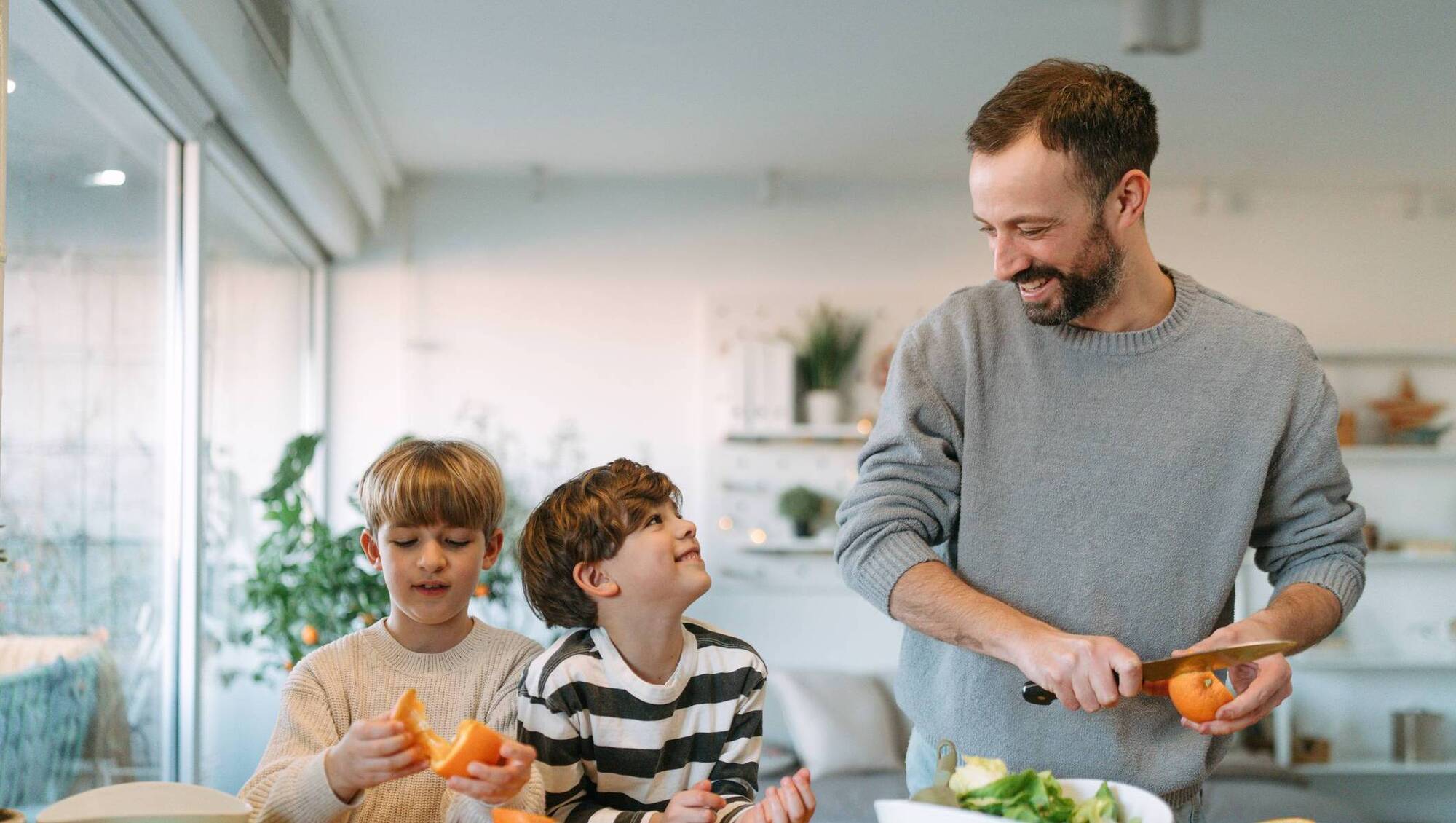
Food security is a huge challenge internationally, but access to good food and the skills to prepare it has to begin at home — and in our schools
We also need to make a radical reconnection in children's minds with why, what and how they eat.

We also need to make a radical reconnection in children's minds with why, what and how they eat.

The State of Food Security and Nutrition in the World report published recently states 645 million people, or 7.8% of the global population, were experiencing hunger, and 2.1 billion were experiencing moderate or severe food insecurity in 2025. 

The figures for both hunger and food insecurity show a modest improvement on 2024, indicating some progress. Nearly 86 million fewer people experienced food insecurity in 2025 compared to 2024, and 135 million fewer compared to 2020.

However, according to the report, published jointly by the Food and Agriculture Organization, the International Fund for Agricultural Development, Unicef, the World Food Programme and the World Health Organization, the number of people facing hunger is still above levels recorded in 2019, prior to the covid-19 pandemic. 

The prevalence of both hunger and food insecurity has reduced, but the absolute number of people affected is higher. The headline figures do not take into account that hunger has continued to rise in Africa and Western Asia, and the United Nations has warned El Niño — a climate and weather pattern associated with negative outcomes for food security — and the recent blockades in the Strait of Hormuz could place further pressure on global food security.

Although the scale of food insecurity is lower in Ireland, we are also not on track to deliver on Zero Hunger in four and a bit years. 

In this country, one in 11 people are experiencing food insecurity: the inability to access or afford a nutritionally adequate diet or quality of food. 

According to Barnardo’s Cost of Living: Impact on Children 2026 report, 20% of parents said they or their children had to go without or cut back on food, compared to 19% in 2025, 44% skipped meals, up from 40% in 2025. Thirty per cent felt at some point they didn’t have enough food to feed their children, up from 28% in 2025.

My job is in food rescue and redistribution. I do not have either direct or professional experience of the underlying causes of food poverty in this country, but I do get to learn about what communities are doing to try and alleviate both causes and symptoms from those who are experts.

Duhallow Community Food Services in Cork cooks 4,000 school meals for 30 primary schools. Picture: Chani Anderson

In Cork, Duhallow Community Food Services stands out for the scale of what it is achieving in terms of local access to good food. It has a large kitchen employing over 20 staff and offers not only meals on wheels but cooks 4,000 school meals for 30 primary schools in its vicinity, and a community café with space for anyone to come and eat together or have a cuppa.

According to the 2026 Sustainable Progress Index commissioned by Social Justice Ireland, Ireland ranks 12th out of 14 broadly comparable EU member states on progress measured against economic, social and environmental indicators. 

In this report, Ireland performs poorly on Sustainable Development Goal 2 — which aims to end hunger, achieve food security, improve nutrition, and promote sustainable agriculture by 2030 — mainly due to quality of diet and sustainability of agriculture. I should stress this is only one comparative assessment, not the State’s official monitoring framework.

However, Ireland performs strongly on SDG 4: ‘Quality education’. There is an implicit connection between this report’s recommendation on the extension of hot school meals to Deis post-primary schools, and its recommendation focus on educational disadvantage, which is: "Make the improvement of educational outcomes for pupils from disadvantaged backgrounds and disadvantaged communities a policy priority, with additional resources focused on addressing the persistence of educational disadvantage". 

Dr Katriona O’Sullivan has written two books about poverty, the power of education and what it means to go hungry. She connects the dots between access to food and education. She is quoted in the Guardian: "The noise of my empty stomach made it impossible for me to be good. To demonstrate my full capabilities in class."

When it comes to education in Ireland, with the demand for trades on the one hand, and artificial intelligence on the other, many 80s parents I know are re-examining what "a good education" means. We’re thinking, how on earth are the kids going to earn a living? 

We should stop fretting and focus on what we can control: ensure that practical and social skills are not lost. My mother-in-law, who is a retired teacher, tells me she had cookery class once a week all through fifth and sixth class — she still uses the same scone recipe. 

Ireland’s laudable ambition and all that has been accomplished around school meals in the last few years needs to go further and do better. 

This is not the case anymore. Chef Eilis Davenport is attempting to change that, starting with those who need good food skills most. She set up Learn Local, teaching younger children to cook in their schools, or wherever she can carve out a space. 

She says: "By the time our children are adults, they won’t know how to cook. Life skills are no longer being passed down through generations".

So, my pitch for the future is that Ireland’s laudable ambition and all that has been accomplished around school meals in the last few years needs to go further and do better. 

Yes, it’s about improving performance and a level playing field. We also need to make a radical reconnection in children's minds with why, what and how they eat.

In a future where we had achieved SDG 2 in Ireland, every primary school — but starting with those who need it most — would have the facilities to prepare free, made-from-scratch meals on site, and as part of this, would have the resources to teach fourth, fifth and sixth class pupils to make, serve and clean up after a shared lunch on a rotating basis. 

The premise of social psychologist Jonathan Haidt’s The Anxious Generation is that children’s exposure to technology and social media is incredibly bad for their mental health. In a world where childhood is regularly experienced through screens, our children are increasing out of touch with nature, with food, and with each other.

Achieving Zero Hunger is about more than not being hungry. It’s about nutrition, and access to a healthy diet, sustainable production and supporting small-scale farming. We should be aiming to ensure, if not by 2030, then in the next decade, that not only is no child without the fuel they need to concentrate, but that they leave school with the foundation for a lifelong appreciation of food as something that is precious, and a joy to be shared.

  • Angela Ruttledge is head of policy at FoodCloud

More in this section

Revoiced

Newsletter

Had a busy week? Sign up for some of the best reads from the week gone by. Selected just for you.

Cookie Policy Privacy Policy Brand Safety FAQ Help Contact Us Terms and Conditions

© Examiner Echo Group Limited