Ireland's EU presidency should put trans healthcare reform on the agenda
Let us hope Taoiseach Micheál Martin can show strength to others in showing unity with the trans, non-binary, and intersex community that is seeking the human right to healthcare it has been all but denied to date.
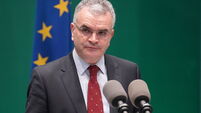
Earlier this week, Taoiseach Micheál Martin outlined the Government’s programme for its presidency of the Council of the European Union in a speech to the EU Parliament in Strasbourg. The programme highlights the agenda will focus on competitiveness, values, and security.
In the same speech, the Taoiseach criticised the EU for its failure to pressure the Israeli government to end its "increasingly extreme" behaviour in Palestine.
He said: “I fully respect and understand that this is a difficult topic for many countries, and is challenging many long-established connections and policies, but we simply must do more.”
In his pledge to support action in response to the humanitarian needs in Gaza and the West Bank, the Taoiseach is aware that, in holding the presidency, he will be making decisions that will be viewed as unpopular by many, with consequences he himself will likely never have to face. He is aware it will challenge connections and policies, and he has still pledged to do it anyway.
Read More
With that in mind, we must ask what will he do to address another difficult topic, this time at home, for a group he may never have to face but who nonetheless need him in his position of power to act with their interests in mind?
More than 10 years after the Gender Recognition Act, Ireland is still considered to be the worst country in the EU for trans healthcare. This type of healthcare addresses not only the medical but the social and mental health needs of trans, non-binary, and intersex people, according to the .
A 2025 study in the found in a survey of more than 2,800 LGBTQI+ participants in Ireland, 30% identified as trans and gender non-conforming. Of which, more than half “reported having had occasion to educate healthcare professionals about LGBTQI+ identities, and a majority reported healthcare professionals made incorrect assumptions about their LGBTQI+ identity”.
Last December, Labour health spokesperson Marie Sherlock told the Dáil there were “over 2,000 people on a waiting list for healthcare”, going on to add young people have to wait more than four years before they get their first appointment with the National Gender Service, adding some are resorting to “self-medicating on the black market”.
This is a service that not only provides — in theory, at least — hormone therapy and support to accessing gender-affirming surgery (for those who can afford it) for adults, but also mental health support, support with social transition, and relationship and family support.
However, the current National Gender Service model has been heavily criticised by many trans, non-binary, and intersex people who have attempted to seek care.
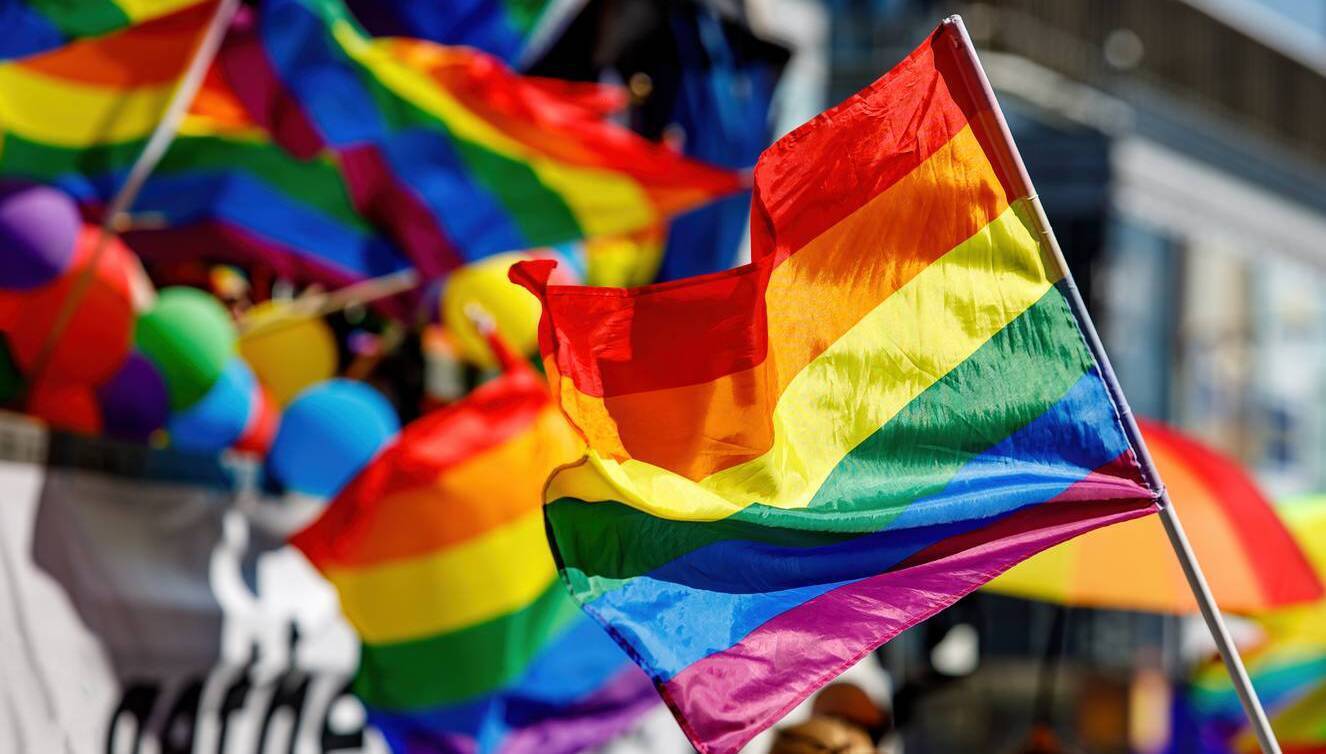
Trans and Intersex Pride Dublin returns to City Hall this weekend, calling for trans and intersex people to have agency over their own bodies. Writing in , activist Ollie Bell noted a key demand was “to abolish the [National Gender Service] in favour of an informed consent-based model where a trans person can go to their GP and be prescribed HRT [hormone replacement therapy]”.
While the free HRT scheme for women, which was launched in June 2025, does not specifically exclude trans women, there has been confusion reported among pharmacies over who was eligible for the scheme, leading to some women being denied HRT.
All of which, and this is merely a small sample of a larger issue, goes to show the current model of care compared to countries such as Malta and Spain is not fit for purpose, and people are suffering because of it and the lack of action in Government to address the failings.
But now, with the attention of EU member states firmly set on Ireland for the next six months, the Taoiseach and Government can show it can lead by example and do more for those in need, even if it challenges both its own policies and those of other member states where LGBTIQ+ rights are being dismantled in by far-right politicians.
Under values, the presidency programme states: “We will maintain support for and engagement with the United Nations and the wider multilateral system, and continue to promote human rights, including women’s rights, gender equality and the rights of LGBTIQ+ persons, democracy and the rule of law.”
It has also said it will support the implementation of the EU LGBTIQ+ Strategy 2026-2030, which is aware that “trans, non-binary and intersex people also continue to face severe violations of their bodily autonomy: Some EU member states still impose surgical or medical intervention requirements for legal gender recognition”.
Clearly, Taoiseach Micheál Martin has a mandate to bring Ireland in line with other countries that operate an informed-consent model to trans healthcare. And there is work currently being done, or appearing to be done, to improve the model of care in Ireland.
The HSE convened its national clinical programme model of care working group in November 2025, and the model of care for gender healthcare is due to be completed this year. Hopefully, with the rest of the EU watching, it will conclude with a model that brings trans and intersex people closer to living a fundamental right of access to healthcare that grants them bodily autonomy.
On the presidency programme’s website, you will see a popular Irish seanfhocail: Ní neart go cur le chéile. Strength with unity.
As the leader of the country that is hosting the presidency of the Council of the European Union, Taoiseach Micheál Martin set the bar for what the EU will accomplish in terms of global engagement over the next six months.
Let us hope he can show strength to others in showing unity with the trans, non-binary, and intersex community that is seeking the human right to healthcare it has been all but denied to date.
- Trans and Intersex Pride Dublin returns on Saturday, July 11. Protesters will be gathering at City Hall for 2pm

CONNECT WITH US TODAY



Be the first to know the latest news and updates