Our pilgrim paths offer a massive tourism opportunity for rural Ireland
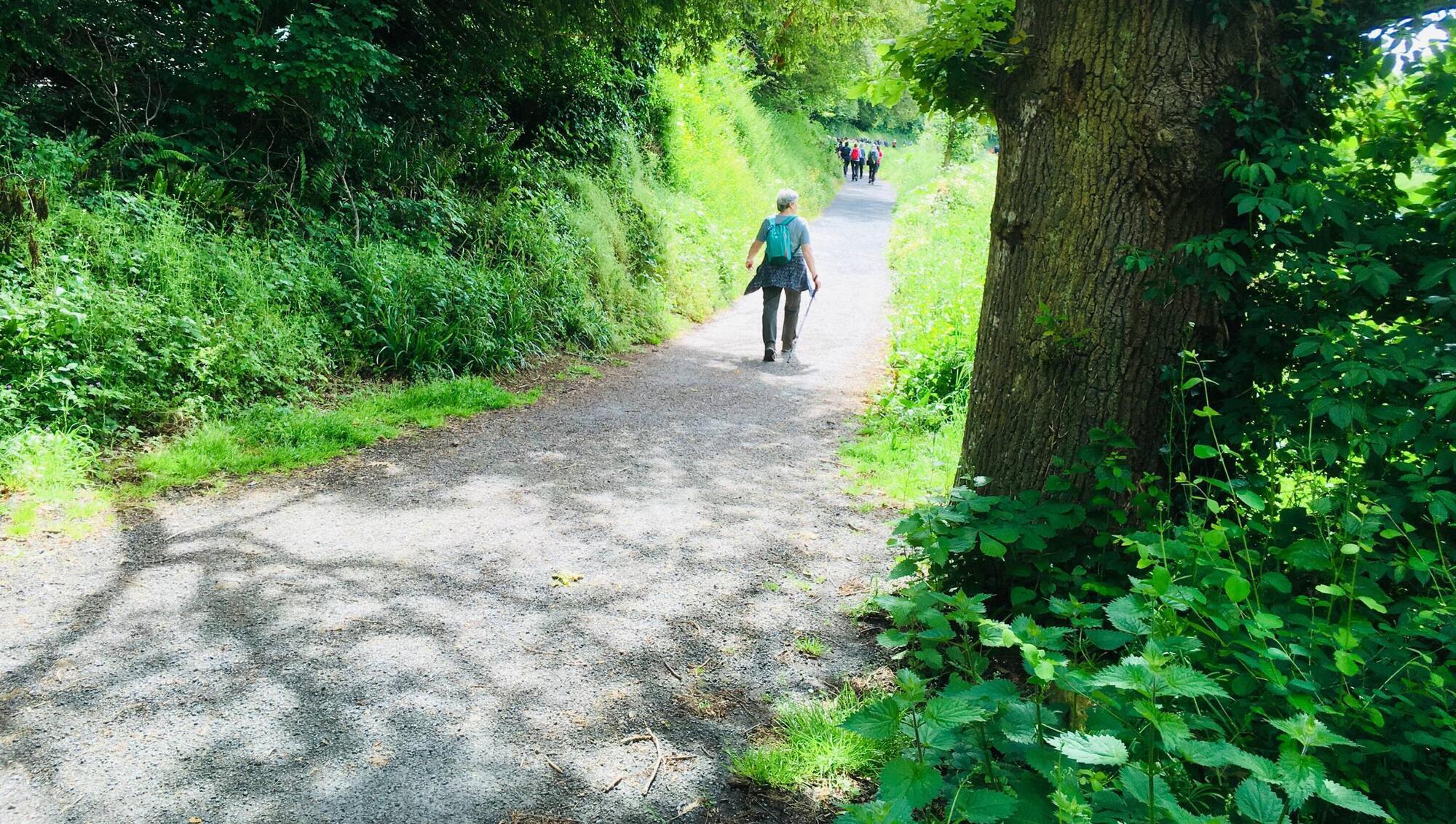
Almost 1,000 people took the route along St Declan's Way earlier this year.
It is one of the tourism phenomena of the 21st century. In record numbers, people have begun freeing themselves for a time from the mundane obligations of daily living to follow the simpldified life offered by a pilgrim path. Most will go on to hike the ancient fishing net of ways footed by past generations on the winding roads to Santiago. Stressing not so much the destination as the journey, the numbers completing these routes have risen from fewer than 1,000 in 1985 to an astonishing 531,000 last year.
And the figures only account for pilgrims applying for certification on completion of at least 100km of the Spanish Camino. The actual number of completions is likely much greater, since the statistics do not include those who do not register their walk or those completing a section that doesn't finish in Santiago.
This footfall has transformed the economy of the hitherto untouristy northwest of Spain since new-age pilgrim walkers are, in many ways, the ideal visitors. Differing from traditional tourists in how their expenditure is, of necessity, heavily concentrated close to the path, Camino pilgrims transfer their spending into the rural countryside. They also prioritise slow and sustainable tourism, facilitate family-owned business start-ups and revitalise rural hospitality offerings.
Read More
The Galician region now benefits to the tune of €500m per year, with the University of Santiago estimating that the Camino has created 20,000 additional jobs. And these benefits accrue from a discerning and cohesive visitor group renowned for a light footfall and the fact that a higher percentage of their spending is made locally and remains in the community.
Until recently, few of the pilgrim walkers contributing so generously to the Spanish economy would have imagined Ireland as an alternative destination. Received wisdom held that this country, despite its reputation as “the island of saints and scholars”, possessed little in the way of reverential trails.
On the contrary, Ireland has a dense network of paths that were held sacred by our ancestors. All Irish routes long predate the Camino, some by up to a thousand years, but with the passage of time and the coming of the Penal Laws, these ancient trails moved beyond the realm of human consciousness and were seldom walked.
Communities are coming together to reopen and promote the ancient reverential trails in their locality, with the result that pilgrim walkers are now returning to them in increasing numbers. It may surprise some readers to learn that Knockmealdown Active, an entirely volunteer-driven community organisation, attracted almost a thousand participants and created hundreds of bed nights with an organised walk along St Declan’s Way, which took place earlier this year.
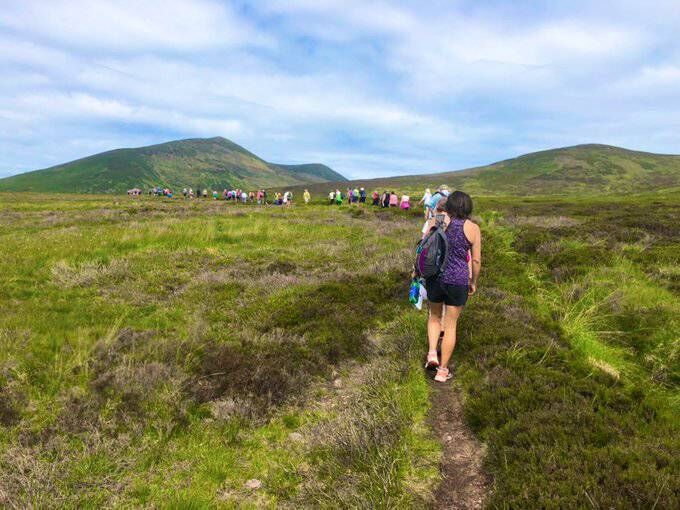
It may also be a surprise to discover that Ireland now offers more than 500km of fully waymarked pilgrim paths. Most reach back to pre-Christian times and all are comparable in standard and attractiveness with any available overseas.
And undoubtedly there is latent demand for pilgrim walking in Ireland, especially among our diaspora. Once made aware of Ireland’s abundance of sacred trails from past times, many come to see them as a way of reconnecting with their roots. Figures from Pilgrim Paths Ireland show that, since the inauguration of the Irish Pilgrim Passport, which is available from Ballintubber Abbey, Co Mayo, almost half the walkers, who completed the 120km walk on five Irish paths to claim a Teastas Oilithreachta (completion certificate), came from overseas.
The private and community sectors have been taking note of this footfall. As an example, the growing popularity of St Declan’s Way means there has been a noticeable increase in hospitality investment along the route. The former Cistercian Abbey at Mount Melleray, Co Waterford, now boasts a state-of-the-art hostel specifically aimed to service walkers. A community-owned pod park in Lismore and a farm-based pod park at Newcastle, Co Tipperary, have recently opened, while a boutique accommodation offering is nearing completion at the former Walsh’s Hotel in Cappoquin.
Undoubtedly, much more business for rural Ireland could be created with targeted overseas promotion of our pilgrim inheritance, but there seems to be little awareness within Tourism Ireland of the untapped potential offered by Ireland’s ancient paths.
While details of a few pilgrim walks can be found by searching the Discover Ireland website with the keywords “pilgrim walks”, there is no dedicated portal for the pilgrim paths, with St Declan’s Way, the most popular long-distance path, not mentioned. Simply put, anyone trying to research the full offering of pilgrim walks in Ireland is flying blind. What is need is a dedicated portal for the Irish pilgrim paths on Discover Ireland, with an updated listing of organised pilgrim walk events.
A number of Irish community groups are currently working together as Pilgrim Paths Ireland to increase footfall on their local trails, yet there it seems that nobody is mandated to coordinate their efforts. A need now exists for a Failte Ireland role specifically mandated with the task of developing and promoting pilgrim walking and liaising with local groups.
Incentives should also be provided to encourage the development of small rural guest houses and B&Bs that are close to the busiest trails and are prepared to offer drying facilities and luggage transfer, when needed. This would allow for unsupported walking without the need for motorised backup and should make our paths more attractive for overseas walkers.
While we now look ahead to a bright future for Irish tourism, it may be that it is from the past we will find the best answers.
- Further information on the Irish Pilgrim Paths can be found here
- John G O’Dwyer’s latest book, 'Great Irish Pilgrim Journeys', is available from Gill Books.

CONNECT WITH US TODAY



Be the first to know the latest news and updates