What have we really learned from the Enhanced Games?
The Enhanced Games presents as the future of elite sport, but it looks like a merger with Silicon Valley, writes Colin Sheridan
What have we really learned from the Enhanced Games?

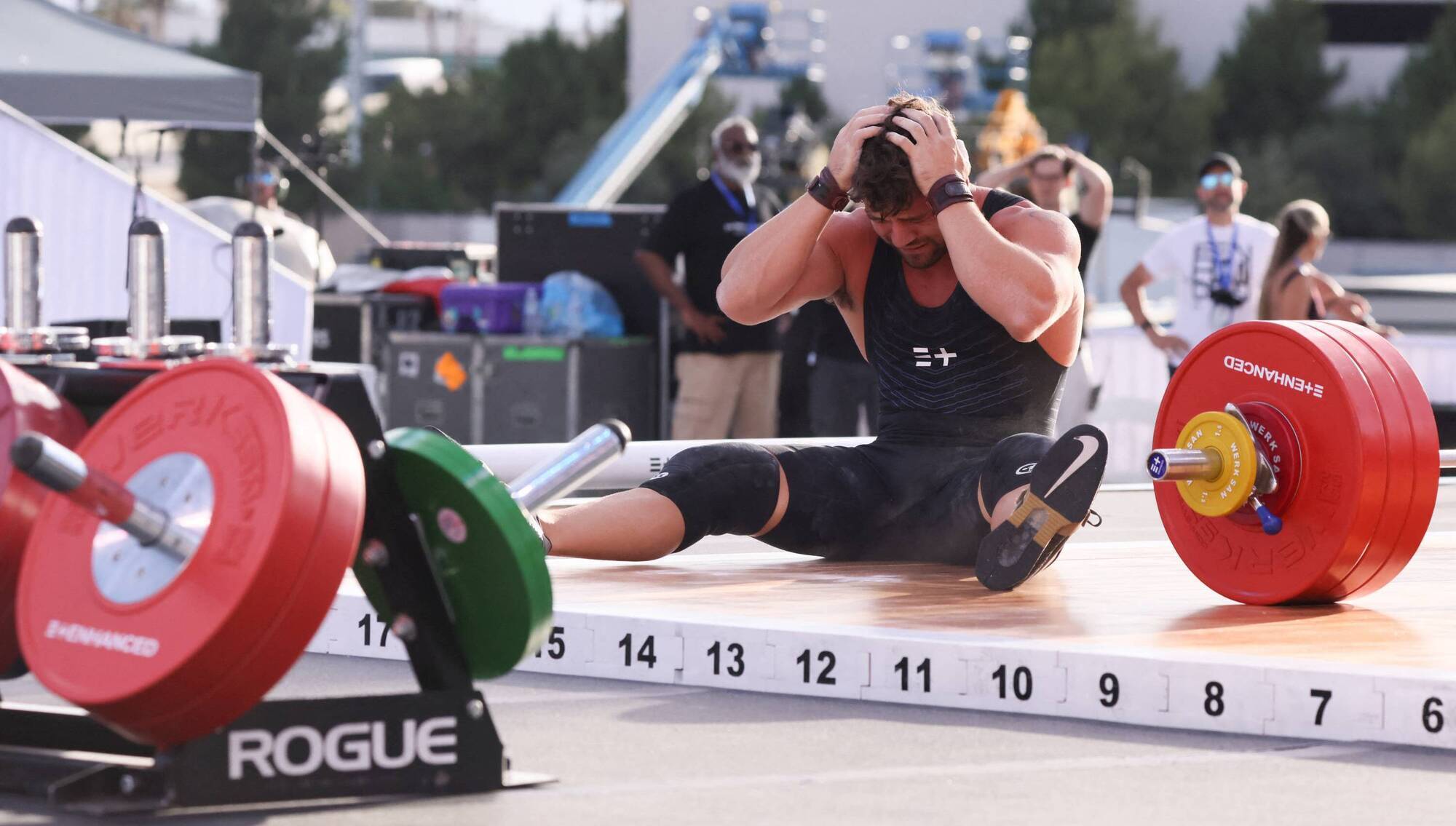
Canadian weightlifter Boady Santavy gestures from the floor as he competes during the deadlift event at the Enhanced Games at Resorts World in Las Vegas, Nevada, on May 24, 2026. Pictures: Etienne Laurent /AFP via Getty

If the name of the man chosen to lead your morally dubious enterprise is Maximilian Martin, you must know no good can come of it.

Martin, the CEO of the Enhanced Games, sounds less like a sports administrator than the villain in a Bond film who attempts to destroy Monaco with a genetically modified virus.

Which, in fairness, is roughly the aesthetic the Enhanced Games has cultivated since they first announced themselves to the world: Part Olympic spectacle, part Silicon Valley Ted Talk, part pharmaceutical fever dream.

This week, after years of hype, controversy, and billionaire backing, the first Enhanced Games finally took place in Las Vegas.

The concept is simple enough. Athletes are allowed — encouraged, even — to use performance-enhancing drugs under medical supervision in pursuit of faster times, heavier lifts, and world records.

Sport Top Pics

Testosterone, human growth hormone, erythropoietin, and various other substances banned by every major sporting authority are not hidden away here. They are effectively part of the sales pitch.

The organisers present the event as a rebellion against hypocrisy.

Anti-doping systems, they argue, are inconsistent, invasive, and fundamentally broken. Why pretend elite sport is clean when everybody suspects otherwise? Why punish athletes for seeking every possible edge while leagues, sponsors, and broadcasters make fortunes from their bodies?

There is, uncomfortably enough, some truth in parts of that critique.

Elite athletes live under extraordinary scrutiny. British swimmer Ben Proud, an Olympic silver medallist who signed up for the Enhanced Games, recently described anti-doping officers arriving at his apartment at 6am to watch him provide a urine sample.

For years, he and countless others have had to log their whereabouts almost every hour of every day in case testers arrived unexpectedly.

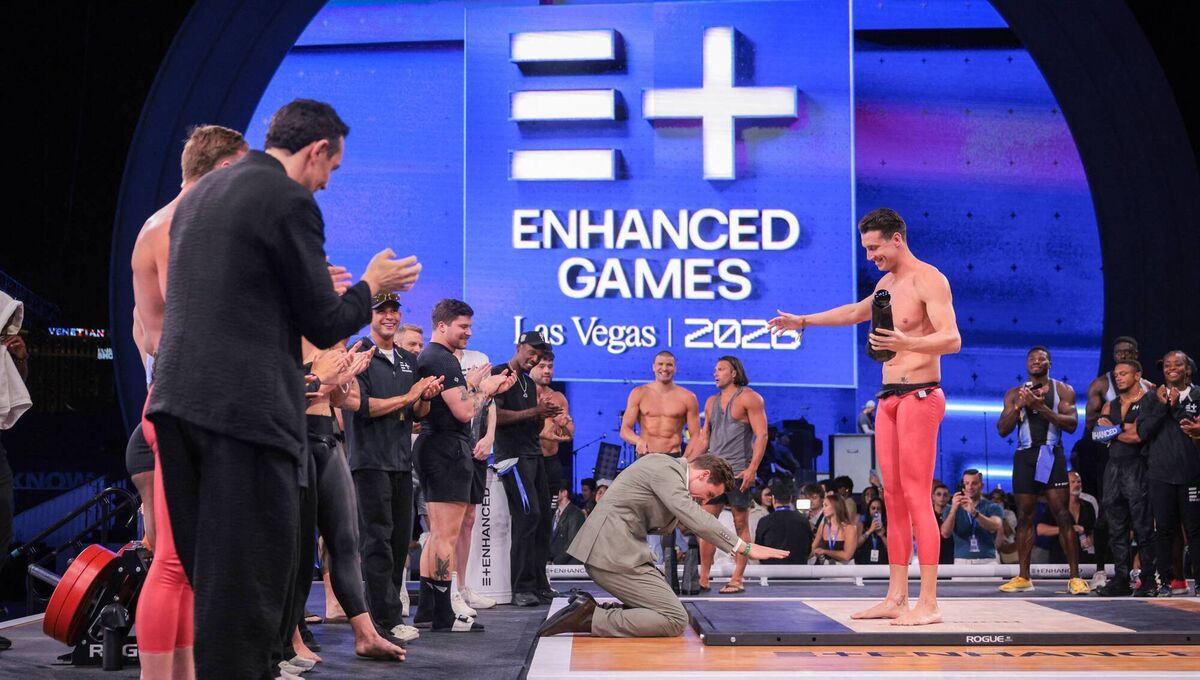
Enhanced Games CEO Maximilian Martin kneels in front of Greek swimmer Kristian Gkolomeev during the medal ceremony following the Enhanced Games at Resorts World Las Vegas on May 24, 2026.

The system often appears arbitrary. Russian state-sponsored doping programmes poisoned entire competitions for years. Chinese swimmers who tested positive for banned substances were controversially allowed to compete. Athletes from smaller countries frequently feel the rules are applied unevenly depending on who has political influence and who does not.

The Enhanced Games emerged from that frustration but also from something much stranger and more ideological.

The movement’s spiritual home is not really the athletics track or the swimming pool. It is Silicon Valley.

The Games has attracted backing from libertarian tech investors, longevity obsessives, and wealthy biohackers who increasingly view the human body as another system to be optimised. Their language is revealing. They speak constantly about “enhancement”, “performance”, “protocols”, and “engineering” human potential.

The Enhanced Games presents itself as the future of elite sport. In truth, it looks more like the final merger of Silicon Valley, influencer wellness culture, and late-stage capitalism: An Olympics where the podium doubles as a pharmaceutical marketing campaign and every world record is also a sales pitch.

That is because the athletes are not really the point. The products are.

It functions largely as advertising for a much bigger commercial ambition: Selling enhancement drugs, hormone treatments, longevity therapies, and personalised wellness programmes to ordinary consumers. In that sense, the competition in Las Vegas resembled less a sporting event than a biotech trade show with a starting pistol.

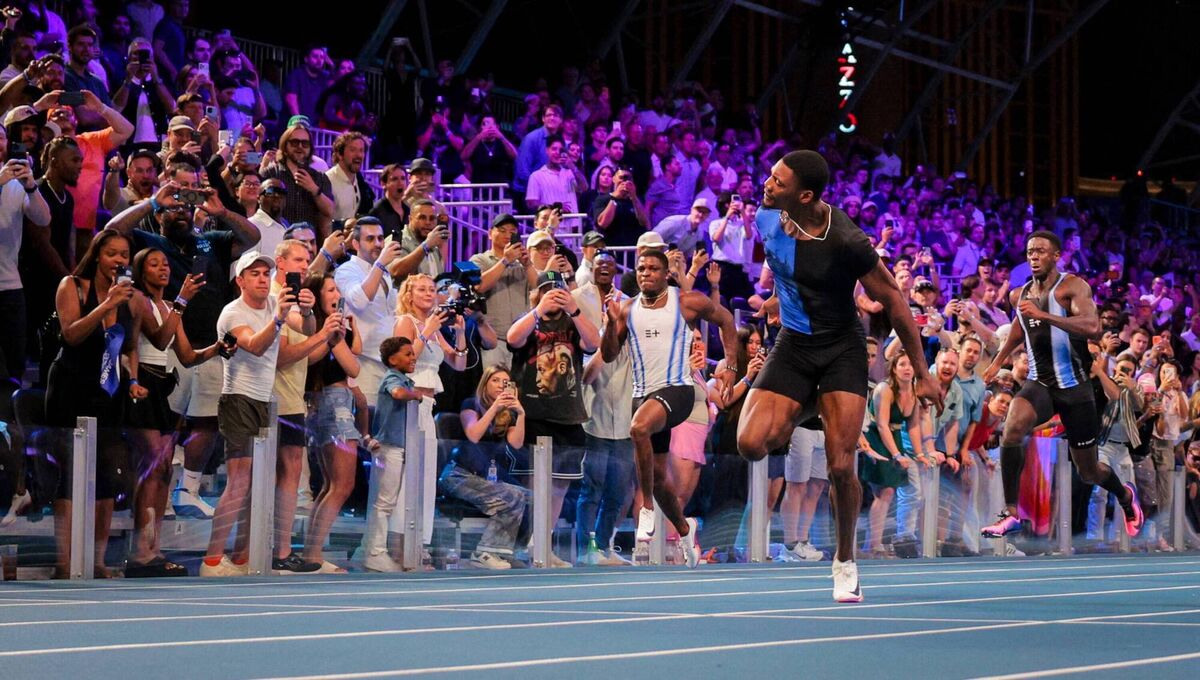
US sprinter Fred Kerley, centre, wins the men's 100m in front of US sprinter Marvin Bracy-Williams, left, and English sprinter Reece Prescod during the Enhanced Games.

And yet it would be too easy to dismiss all the athletes involved as cartoon villains or chemically inflated narcissists. Many of them are simply desperate.

Professional sport remains extraordinarily brutal economically. Outside football and a handful of global superstars, most elite athletes live far less glamorous lives than the public imagines.

Swimmers, runners, and weightlifters often spend years surviving on grants, sponsorship scraps, and prize money that disappears the moment injury strikes.

That desperation runs through almost every story attached to the Enhanced Games. Athletes speak about ageing bodies, mounting medical bills, and the terror of becoming irrelevant. Ben Proud is 31, ancient by swimming standards, his body worn down after years chasing fractions of a second.

American sprinter Marvin Bracy-Williams admitted turning to banned substances after injuries derailed his career and sponsorship deals evaporated overnight.

For athletes like these, the Enhanced Games offered something mainstream sport rarely does: Money

Winners in Las Vegas were promised enormous prize purses, with bonuses reportedly reaching $1m for world records.

Some athletes are believed to have received substantial salaries simply for signing up.

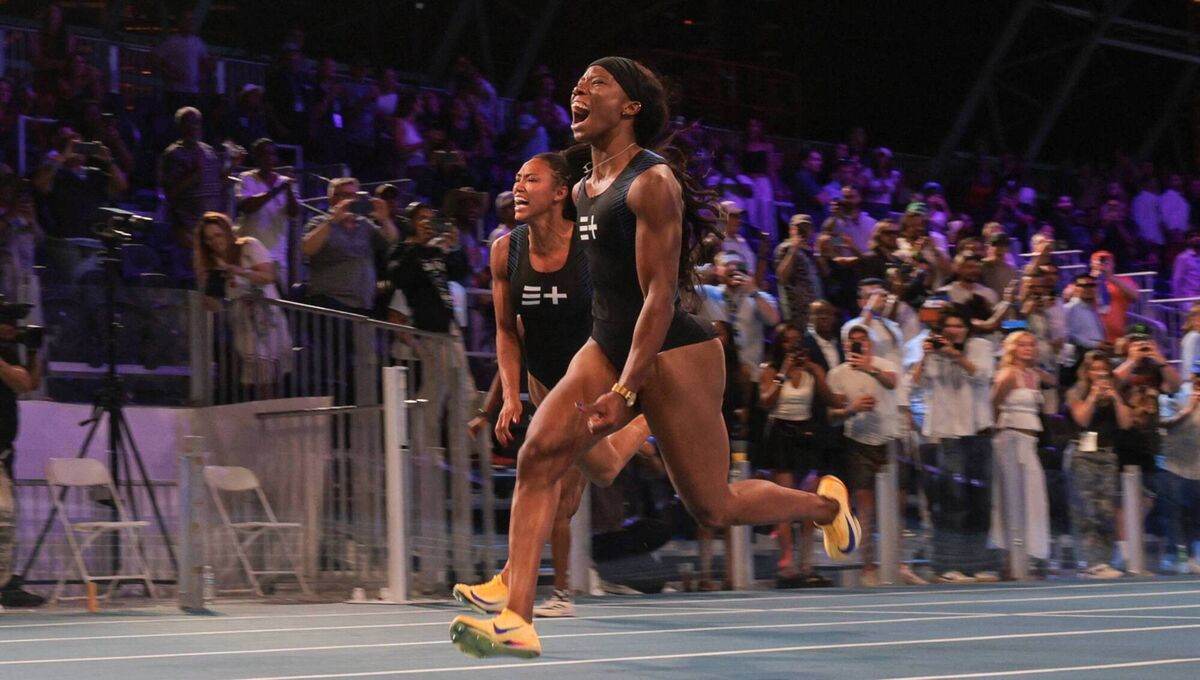
Barbadian sprinter Tristan Evelyn, right, runs next to US sprinter Taylor Anderson as she wins the women's 100m during the Enhanced Games.

The moral ambiguity lies precisely there. The Enhanced Games exploits the same vulnerabilities it claims to liberate.

Exhausted athletes, discarded by a system that wrings every drop from their bodies, are now being invited to chemically re-engineer themselves for one final payday.

The organisers insist this is all being done safely, under clinical supervision. Doctors associated with the games have argued that monitored enhancement may actually be safer than the reality of underground doping already present across elite sport.

However, many experts remain deeply sceptical.

Pushing beyond normal treatment

The long-term effects of high-level steroid and hormone use remain uncertain, particularly when athletes push dosages beyond normal medical treatment.

Critics also fear the broader cultural message. If enhanced athletes become celebrities, what follows? Teenagers chasing online physiques? Amateur gym-goers experimenting with black-market peptides? A world where chemical optimisation becomes socially expected rather than exceptional?

That concern matters because the Enhanced Games is arriving at a moment when wellness culture has already drifted into something quasi-religious.

Influencers document supplement “stacks” with the intensity of medieval monks copying scripture.

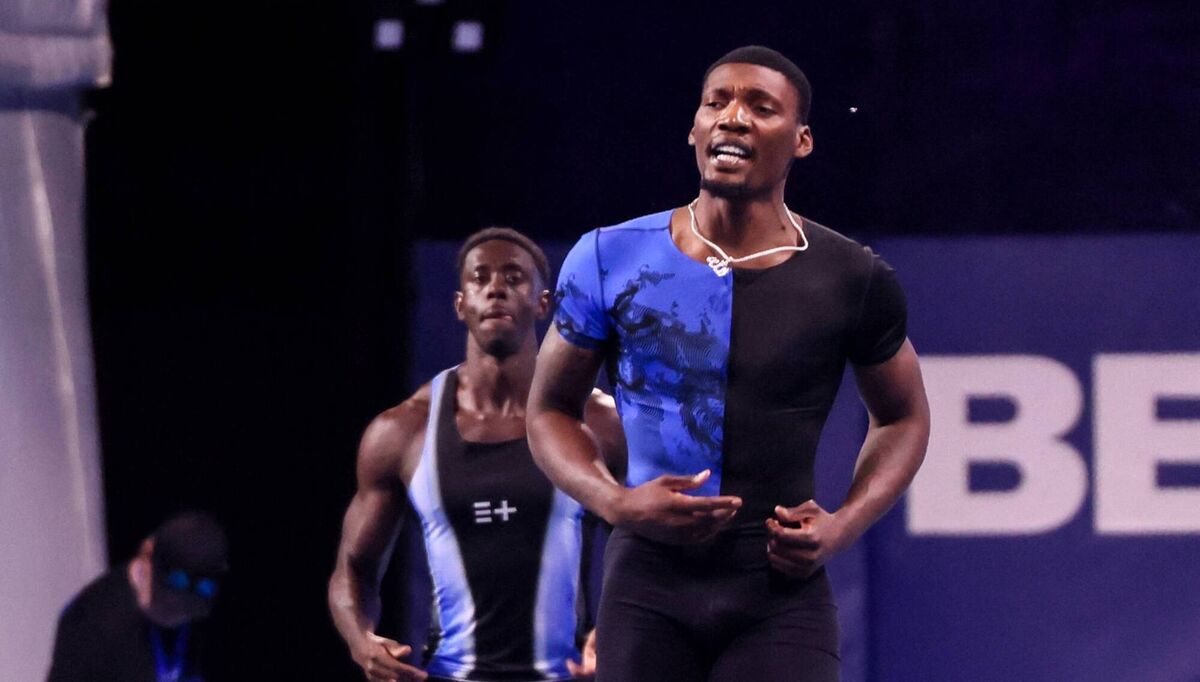
US sprinter Fred Kerley, right, reacts after a third false start in the men's 100m race at the Enhanced Games.

Tech entrepreneurs publicly pursue immortality through blood testing, fasting regimes, and experimental therapies.

Cosmetic enhancement, once niche, is now mainstream. The body has become a project to endlessly refine.

The Enhanced Games simply pushes that logic to its endpoint.

And for all the talk of revolution, the actual event in Las Vegas appears to have been considerably less triumphant than promised.

Reports described sparse crowds, organisational chaos, and a strangely flat atmosphere.

The futuristic spectacle marketed online often looked, in reality, closer to an over-funded exhibition meet wrapped in crypto jargon and testosterone fumes.

That anti-climax may ultimately prove significant.

Sporting legitimacy cannot simply be purchased by venture capitalists with podcasts.

The Olympics, for all its corruption and hypocrisy, still carries emotional weight because people believe the achievements mean something larger than commerce alone.

That belief is harder to manufacture when the central premise is effectively: Imagine how fast humans could run if everyone was on steroids.

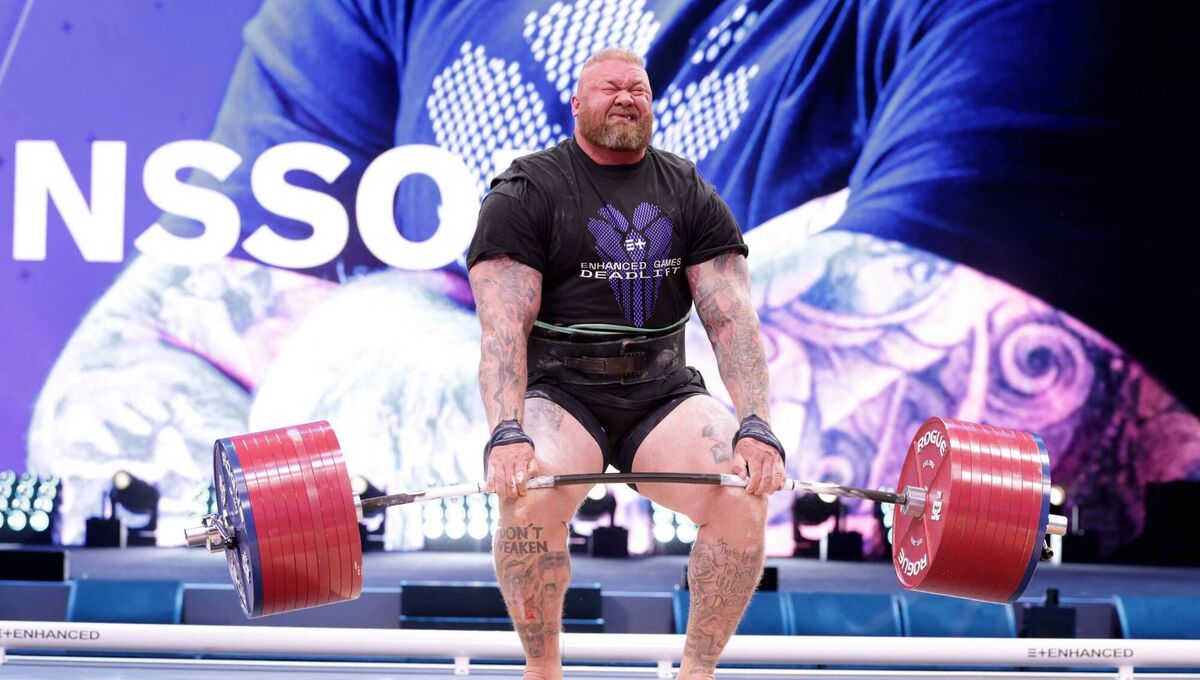
Hafþór Júlíus Björnsson competes during the Enhanced Games at Resorts World Las Vegas on May 24, 2026 in Las Vegas, Nevada. Picture: Greg Doherty/Getty

In the end, the games could only lay claim to beating one world record when Greek swimmer ­Kristian Gkolomeev swam 20.81sec in the men’s 50m freestyle. This won’t count officially but was, undoubtedly,  a huge relief to the organisers. 

Three “clean” athletes won their competitions - Fred Kerley won the men’s 100m, Tristan Eveyln won the women’s 100m and Hunder Armstrong won the men’s 50m backstroke. All three walked away with $250,000 in winnings with Tristan Evelyn dropping the quote: “This proves that winning takes more than chemistry.”

Still, dismissing the Enhanced Games entirely would probably be a mistake. It may fail as sport while succeeding as culture.

The real business opportunity is not athletics. It is the rapidly growing market for enhancement itself — testosterone clinics, longevity medicine, peptide therapies, and biohacking products aimed at ordinary people terrified of ageing, weakness, or decline.

In that sense, the Enhanced Games might tell us less about the future of sport than about the future of society.

Elite athletics has always involved a degree of bodily sacrifice.

What the Enhanced Games proposes is something more radical: Enhancement itself should become a lifestyle aspiration, openly commercialised, and medically normalised. Not just for Olympians, but eventually for everyone else too.

Perhaps that is why the whole thing feels simultaneously ridiculous and unsettling.

On one level, it is impossible not to laugh at the absurdity of billionaire-backed “steroid Olympics” hosted in Las Vegas by men named Maximilian Martin.

On another, it feels like an eerily logical product of our current moment: A world obsessed with optimisation, monetisation, and turning every human limitation into a business opportunity.

The Enhanced Games may never replace the Olympics.

But it may prove to be something more revealing: A glimpse of where modern culture is already heading.

More in this section

Revoiced

Newsletter

Had a busy week? Sign up for some of the best reads from the week gone by. Selected just for you.

Cookie Policy Privacy Policy Brand Safety FAQ Help Contact Us Terms and Conditions

© Examiner Echo Group Limited