Umar al-Qadri: We can be both proudly Irish and proudly Muslim this Eid
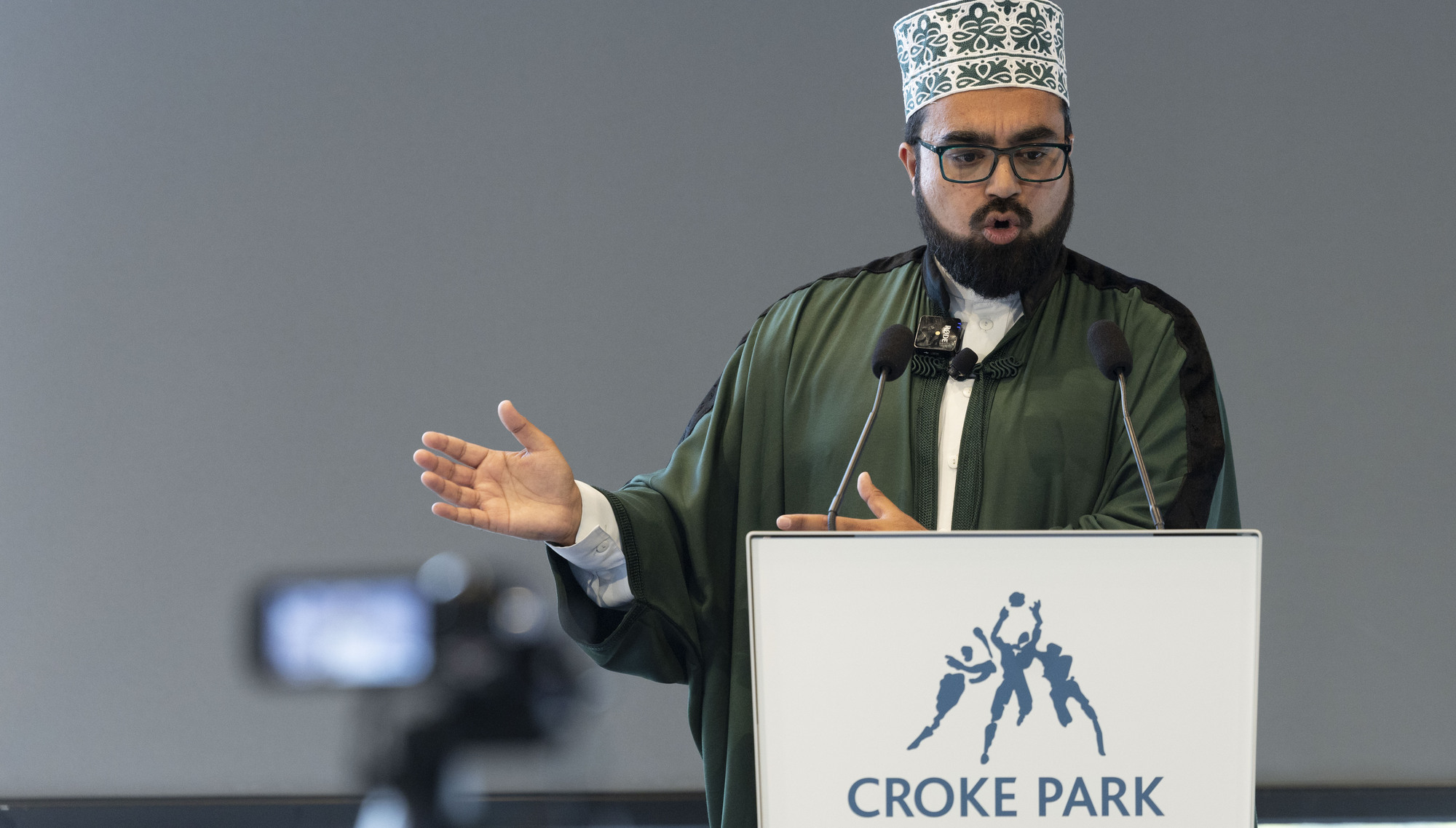
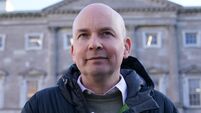
Dr Muhammad Umar Al-Qadri: 'To see hundreds of Muslim families welcomed at Croke Park again this year is a reminder that identities do not weaken when shared; they grow stronger.' Photo: Sam Boal/Collins Photos
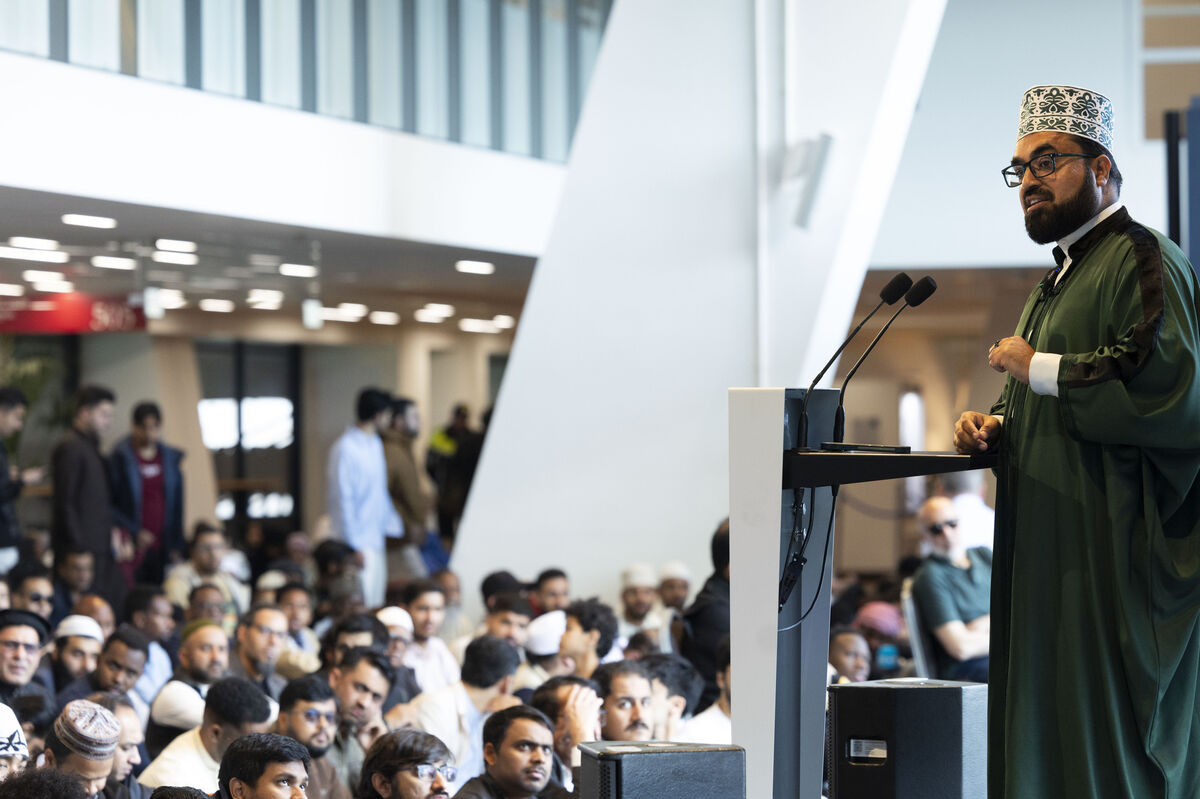
For the seventh year in a row, Muslims are gathering this week in Croke Park to celebrate Eid al-Adha prayers, one of the most important moments in the Islamic calendar, in the symbolic heart of Irish sporting and cultural life.
For many Muslims in Ireland, including myself, it is a deeply meaningful occasion. Croke Park is more than a stadium. It represents community, resilience, history and Irish identity itself. To see hundreds of Muslim families welcomed there again this year is a reminder that identities do not weaken when shared; they grow stronger.
As someone who has spent close to two decades working on pluralism and integration through interfaith and intercultural efforts, I see in this gathering something hopeful about the future of Ireland. It shows that it is possible to be proudly Irish and proudly Muslim at the same time.
Yet alongside these positive moments, there is also a growing anxiety in public debate about who gets to belong in Ireland and who gets to call themselves Irish. We seem to be working with different definitions of what it means to be Irish.
Read More
For some, Irishness is primarily ethnic and ancestral. It is tied to generations of family history, inherited culture and deep historical roots on this island. That perspective is not inherently wrong. Heritage matters. History matters.
However, taken exclusively, such an understanding can become limiting and dangerous. It risks excluding people whose loyalty, attachment and contribution to Ireland have been formed through lived experience rather than ancestry alone.
There are many people in Ireland today who may not share centuries of family history on this island, but who have built their lives here, raised families here, contributed to society here and formed deep emotional connections to this country.
These two ideas do not have to contradict each other. We can honour the special heritage of native Irish people while also recognising that contemporary Ireland includes people who became Irish through belonging, contribution and shared civic life.
Irish identity itself has never existed in isolation. The Ireland that absorbed Norse and Norman influences, preserved its identity through colonisation and carried its culture across a global diaspora was never built on closed-mindedness. Even Christianity, now deeply woven into Irish identity, originated in the Middle East.
In short, Irish identity has always evolved through encounters, exchanges and adaptation. I understand this complexity on a personal level.
I was born in Pakistan and moved to the Netherlands at the age of two. Growing up there, I considered myself both Pakistani and Dutch. When I moved to Ireland in 2003, and after spending more than two decades here raising a family, contributing to society and becoming an Irish citizen, Ireland has also become a central part of my identity.
That does not mean I am Irish in exactly the same way as someone whose family has lived here for generations. Identity is not a competition, nor does one form of belonging invalidate another.
That is why moments like Eid prayers in Croke Park matter so much. They demonstrate that integration is not about erasing identities but about creating space for them to co-exist within a shared national story.
Of course, integration also works both ways. Those who come to live in Ireland should seek to learn about Irish culture, respect its traditions, contribute positively to society and participate fully in the country’s civic life. A healthy multicultural society is built on mutual respect, shared values and shared responsibility.
Ireland of the future will not look exactly like the Ireland of the past. Change can feel uncomfortable, but change is also part of every living society. The question is whether Ireland chooses to respond to that change with fear or with confidence.
This debate became particularly visible recently following the appointment of Suad Mooge as Dublin Rose.
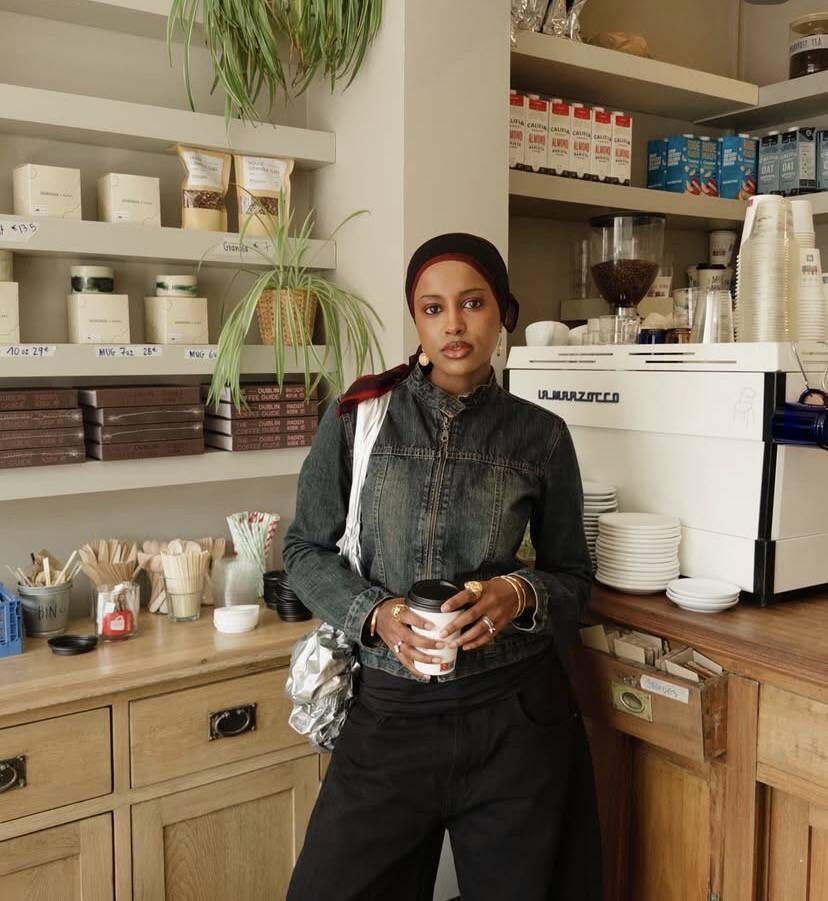
Mooge was born and raised in Ireland. She is a medical scientist in Histology and a small business owner. Yet for some, her Somali heritage and Muslim identity appeared to place her outside their understanding of what Irishness looks like.
The reaction to her appointment revealed how unsettled some people remain by the idea that Irish identity can expand while still remaining distinctly Irish.
To me, however, Suad Mooge represents something positive about modern Ireland. She reflects a generation that is fully part of this country while also carrying different cultural and religious backgrounds. That reality does not diminish Irish identity. It reflects its continuing evolution.
Irish identity has survived colonisation, famine, suppression and mass emigration. It survived because it was carried by people who believed deeply in this country, both on this island and far beyond it, often under circumstances far more difficult than these.
The future of Ireland will not be built by excluding people who have made this country their home. It will be built by finding ways for old and new Ireland to co-exist together; respecting heritage while accepting that Irish identity, like every living identity, continues to evolve.
- Shaykh Dr Umar Al-Qadri is chair of the Irish Muslim Peace and Integration Council
CONNECT WITH US TODAY



Be the first to know the latest news and updates