Jim Clarken: Ebola is spreading in DRC because of cuts to global aid funding

Elon Musk with a chainsaw he received from Argentina's president Javier Milei, right. The chainsaw was a reference to Musk's cuts to USAID. Picture: AP/Jose Luis Magana
What is unfolding in the Democratic Republic of Congo (DRC) is not just a localised health emergency, it’s a warning sign of a much deeper and dangerous global failure.
A year ago, Dr Manenji Mangundu, country director for Oxfam, laid out the bleak outlook when he estimated USAID had funded 88% of healthcare in eastern DRC. When that funding was slashed, healthcare providers closed their doors and those locked out immediately suffered.
Dr Mangundu highlighted 1,500 cases of cholera and 70,000 cases of monkeypox. Most chillingly, he described how the DRC was a “reservoir for Ebola”.
And so it has come to pass: the deadly spread of Ebola in the Democratic Republic of Congo (DRC). This abandonment from international states arrives at a moment where the country’s systems are failing due to mass displacement, humanitarian disaster and ongoing, ruthless conflict.
The instinct is to see Ebola as a distant crisis, but this outbreak did not happen in a vacuum. High-income nations have a major role to play. It is, in part, the predictable result of decisions made far from the affected communities: decisions to scale back funding, close programmes, and withdraw support from already fragile health systems.
Ebola is not a new disease. It has been contained, with great loss of life, thanks to scientists and leaders in global health responses. Oxfam was on the ground in 2018, funded by Irish Aid, working through the emergency and providing help alongside trusted partners.
This outbreak, driven by a rare strain with no specific vaccine, has already resulted in more than 600 suspected cases and 134 deaths. The virus is spreading beyond its initial epicentre into major cities and across borders into neighbouring countries. In a region marked by high levels of displacement and population movement, that spread is deeply concerning, but the most troubling aspect is the context.
In the past year alone, the DRC has experienced severe cuts to humanitarian funding. The consequences are stark. Health facilities have closed, supplies of essential medicines have dwindled, and disease surveillance systems (the early warning mechanisms needed to detect outbreaks before they spread) have been weakened. At the same time, reduced funding has affected access to clean water and sanitation, further accelerating the spread of disease.
Read More
For millions of people, it means fewer clinics to turn to, fewer health workers on the ground with training to assist them, and fewer basic protections against infection. Across eastern DRC, more than 70 health facilities have been destroyed.
This is the landscape into which Ebola has re-emerged.
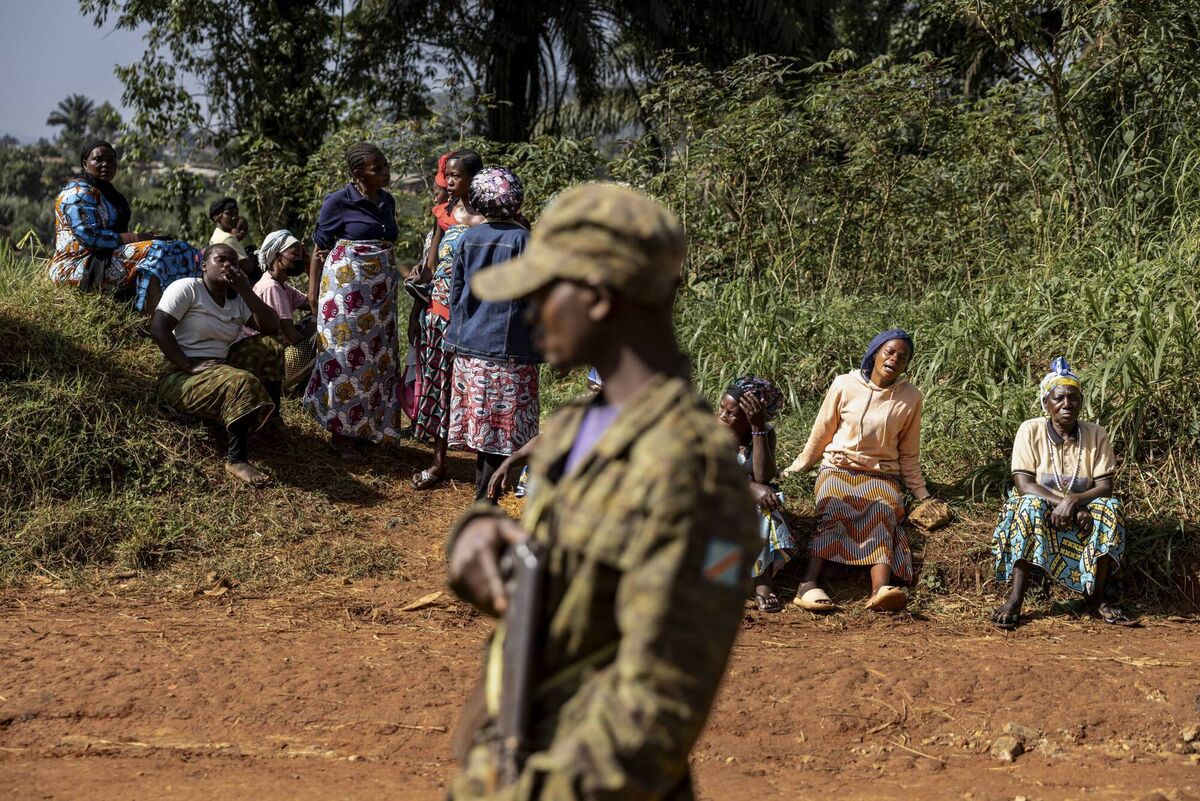
Eastern DRC is one of the most complex humanitarian environments in the world. Years of conflict have displaced about 5.6 million people internally, with millions more living in extremely precarious conditions, without reliable access to basic needs.
When a disease like Ebola enters this context, containment becomes far more difficult — not because the disease is unstoppable, but because the systems needed to stop it have been hollowed out. Here, the global dimension becomes unavoidable.
The DRC is often described as a “forgotten crisis”, but that label now carries real risk. In 2025, the UN humanitarian response plan for the country was just 24% funded, leaving a massive gap between what was needed and what was delivered.
There is still a window to contain the current Ebola outbreak, but it narrows every day.
Health authorities have already warned of geographical spread beyond the initial epicentre, with cases linked to major cities like Goma and Kinshasa and confirmed cases in neighbouring Uganda. A doctor from the United States is already being treated in Germany after contracting the virus while providing medical care in the DRC.
In a region with high population mobility, this increases the risk of wider regional spread. Containing an outbreak is always far less costly than responding to a full-scale crisis. It requires rapid action, strong local systems, and sustained investment.
It’s important to be clear — this is a story about how global decisions on funding shape the resilience or fragility of health systems. It concerns whether the world is willing to invest in prevention, or whether it will continue to pay a far higher price for inaction.
For countries like Ireland, supporting global health responses is not simply an act of charity/solidarity. It is a necessity in an interconnected world. We saw that during the cross-border response in Northern Ireland and the UK during the covid pandemic. Reducing the risk of outbreaks escalating into wider crises is in everyone’s interest.
The spread of Ebola in the DRC is a warning. It encapsulates what happens when fragile systems in vulnerable countries are left to weaken, when early warning signs are missed, and when powerful states do not uphold its responsibilities to humanitarian assistance.
- Jim Clarken is chief executive of Oxfam Ireland

CONNECT WITH US TODAY



Be the first to know the latest news and updates