Losing my dad during covid is something I will never get over
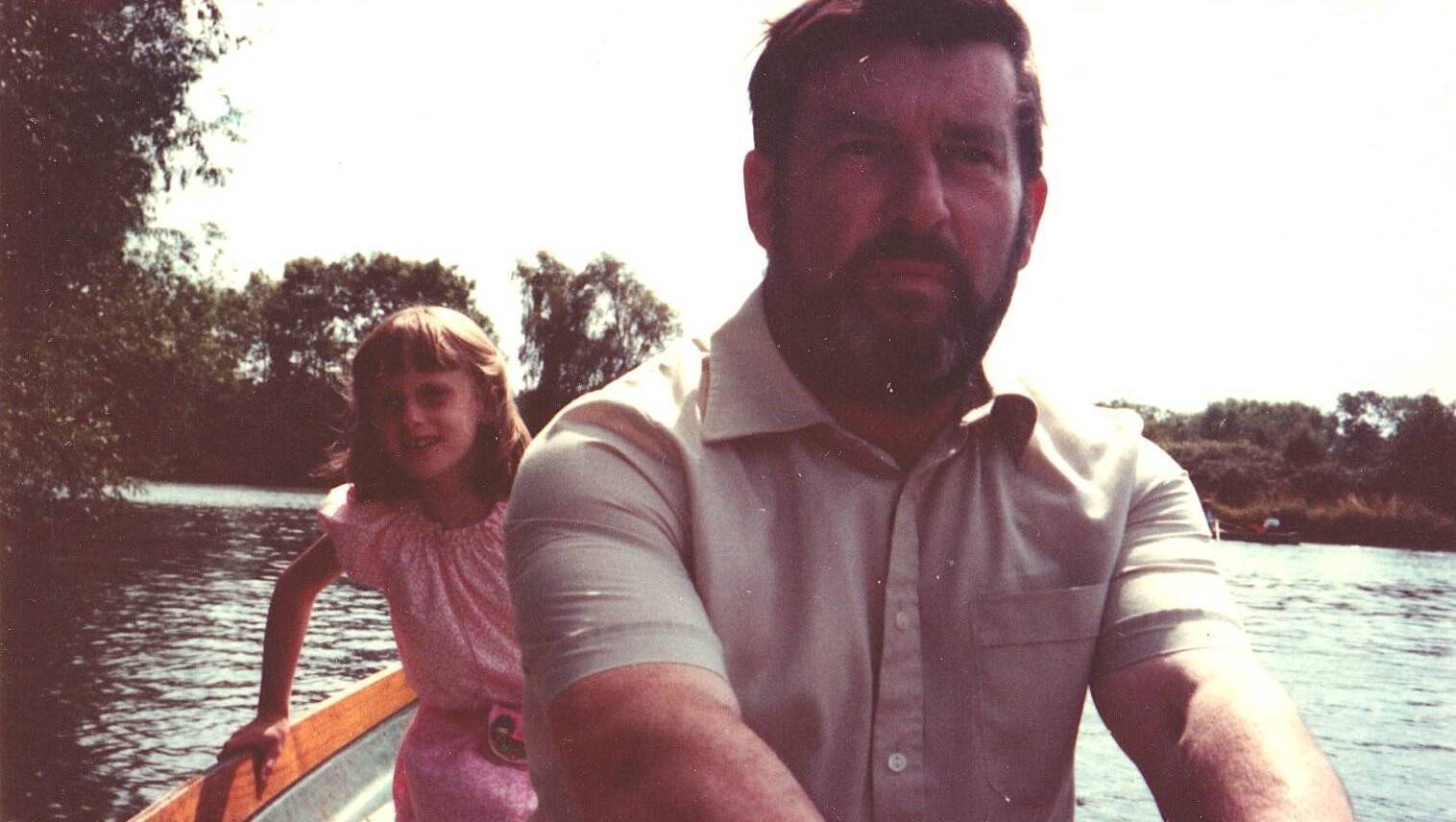
Darina Clancy and her late father, Patrick Clancy.
Losing my dad was immeasurable. The loss of a parent is always hard, but during a Level 5 lockdown, it was cruel. The interim findings of the Government-appointed independent review into how Ireland handled the covid-19 pandemic have come in the same month that marks the fifth anniversary of his death.
My relationship with Dad went beyond the normal daddy-daughter bond for a few reasons, but mainly because he believed that women were equal.
We fished together, we went to plays together, we talked politics together. Nearly every month he’d be called to my convent school after I’d faint from extreme period pains, bring me home, and give me sugary tea before returning to his own school.
Dad (and Mam) sat far too many times by my hospital bed through spells in intensive care and, thankfully, recovery. It was when I was expecting my son in the late 90s that our relationship stepped into a new area.
Dad stepped up when my son’s father didn’t, and ensured that no one would ever challenge me on my decision to raise him on my own, ‘out of wedlock’. Dad became one of the first men in my home town to walk a baby in public every day, so much so that the wheels came off the buggy!
Now, reading the interim findings of the committee, it’s difficult to reconcile how anyone would have the emotional capacity, let alone the scope to examine how the decisions made by government etc affected any individual, because the detailed pain is ineradicable.
How do I explain that it took over a year before I could walk into Broderick’s yard — the last place we queued together during the pandemic, and the local hardware store where Dad was known and respected? Dad, with his baseball cap and pencil behind his ear, would always be met with a steady stream of greetings — “Hi Mr Clancy”, “Hello Sir”, “Ah Pat!” — from men whose lives he had shaped, whether by teaching them to hang a shelf or building their livelihood.
The first time I tried to walk the yard, my chest seized, ugly big tears poured, and I physically couldn’t push myself across the threshold.
It was a time of thresholds. So many lines drawn or pushed further away.
In early 2021, I realised that there was something alarmingly wrong with Dad’s movement. From here, decisions were difficult. Everything was. Going to A&E wasn’t an option. GPs were phone-only. Hospitals, for Dad, were his worst nightmare, but he was admitted to the Mater in Cork for over a month.

Knowing Dad was on his own — no visits allowed — was a very particular kind of torture. For a man normally surrounded by people, I knew his mental health would suffer.
He found it so hard to talk on the phone. He was alone. To say this was a difficult time is perhaps the worst kind of understatement.
The diagnosis was severe.
Dad came home for a short spell with a treatment plan. Sitting in his chair overlooking the estuary, in the house he had built with his own hands for all of us, he was happy. I was with him the day his legs gave way. Inevitably, an ambulance was called, and Dad left home.
He spent weeks in CUH, alone, requesting repeatedly to go home. The doctors brought us together in a room — everyone but Dad — and gave us the harsh truth. I could handle that there would be no further treatment, but when we asked to see him, we were told no. That’s when something inside me broke.
It was inconceivable to me that after Dad had taken so much care of us all throughout our lives, that we could not be with him after he had been given this, the worst of news. I rallied. I knew what I had to do. The next morning, I rang the hospital.
“Get me on a phone with him please! I know what’s wrong”. I don’t know the name of the nurse, but she believed me. She put the phone up to Dad’s ear and I spoke to him the way we always spoke to each other — with compassion and purpose.
Before signing off, I said to the nurse: “You have to get him into a private room.” And she did.
We all visited him the following morning. I didn’t leave again until a decision was somehow made to move him to a hospice. At the entrance to the hospice, another blow fell right between my two lungs on my breast bone. “Only two visitors allowed”.
In this strange place, instead of his beautiful home, only two of us instead of all five would be with him.
It was better than others had experienced in 2020. The PPE was ridiculous. When I got into the private room, Dad was frightened by the sight of me. Instinctively, I ripped off the two facemasks, headgear and gloves, holding his hand, desperately reassuring him that it was me. I stayed and made sure he wasn’t alone again.
Dad stayed till dawn on April 25, 2021. 4.45am to be exact. I was lucky. I was tenacious. I fought to be with him and stay with him to the very end.
He should have gone out with a bang and not a whisper — a final cruelty. When I attend funerals now, it seems we had a blip in the matrix — a beat was skipped that can never be retrieved. Then the glitch of having to tell people over and over he was gone — hardly anyone knew, because we were all so cocooned.
As April draws to a close, I will mark the fifth year without my incredible Dad in my life. He was a man who spent his life in public service — a civil servant, a constant volunteer, a soldier who served in the Congo in 1960 — and a teacher whose woodwork students still seem to stand taller when they speak of him.
He defied the opinions and authorities of the nation to support his daughter, and he had a gift for bringing people together and making them laugh.
As the committee returns to its work, it may hear of people like him. But it will never have to bear the cruelty of leaving him alone, nor the diminutive funeral marked by a single piper to bid him slán.


CONNECT WITH US TODAY



Be the first to know the latest news and updates