Enoch Burke's case highlights Ireland's problem with reincarceration
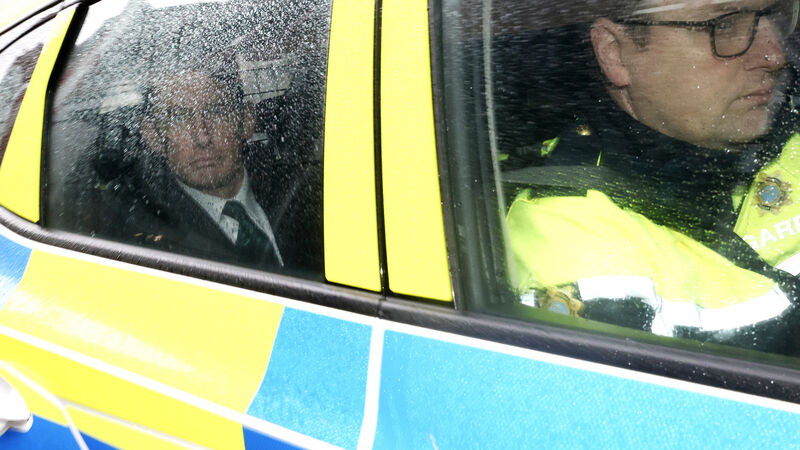
Enoch BUrke arriving at the Four Courts where he was sent back to jail.
Enoch Burke has been imprisoned again. Across comment sections on social media and in the kitchens of Ireland, a slow murmur is audible. The recognition that maybe imprisonment is disproportionate in this case.
Mr Burke was first imprisoned in September 2022 — since then he has been incarcerated for more than 550 days across four separate periods. Mr Burke's incarceration is as a result of repeatedly breaking a court order to stay away from his former place of work, Wilson’s Hospital school in Co Westmeath.
Mr Burke's case highlights the lack of apparatus available to the courts when an individual repeatedly commits a crime or violates a court order. However, what is striking and also rarely heard is that Mr Burke is not alone, and many citizens of our State are frequently imprisoned for repeated offences or breaching orders.
Across western societies including Ireland, there is a problem with reincarceration. It is what some individuals working in the area refer to as "doing life in instalments". In my own research in Northern Ireland, many of the men could not recall the number of times they had been to prison; some recalled it as being at least 100.
Justice systems are based on the logic that an individual commits a crime, is punished and therefore learns through their punishment not to commit this crime again. Most people are aware it is far more complex than this.
Nowhere is it clearer than in the data on reoffending published by the Central Statistics Office: 44% of individuals released from a custodial sentence in 2022 were reconvicted within one year of release. Those who were imprisoned for a public order offence (75%) were the most likely to be convicted of a re-offence within three years of being released.
Although there are many reasons for individuals to engage in a public order offence, the contribution of mental health and substance use issues to this type of offending behaviour is undeniable.

Research on mental health and substance use issues in Irish imprisoned people carried out by the University of Limerick in 2019 found that the pooled prevalence estimates were 3.6% for psychotic disorders, 4.3% for affective disorders, 28.3% for alcohol use disorders, and 50.9% for substance use disorders.
If people experience mental health and/or substance use issues, but services cannot adequately respond, then they can find the symptoms of their illness and subsequent behaviour are being criminalised.
If, as a society, we think the blunt instrument of imprisonment is hopeless in the case of Mr Burke and is unlikely to change his behaviour, why do we accept it for the other, often vulnerable citizens of our State who experience the same frequency of reincarceration?
The unmet mental health needs of Irish imprisoned people has been highlighted by a range of bodies including the Irish Penal Reform Trust, the Mental Health Commission and the Office of the Inspector of Prisons.
All have highlighted the commitment of individual staff working in this area to meet the needs of imprisoned people with mental health issues, however, their commitment alone is unlikely to solve the more systemic issues.
I can make no assessment of what Mr Burke's individual needs may be, however, his case does highlight a more fundamental issue. It is time to recognise patterns of perpetual reincarceration are fruitless and costly, that imprisonment is too blunt an instrument for those whose behaviour is linked to unmet health and social care needs.
That it is unlikely to deter them from future reoffending and that robust systemic change is needed not just within our justice system alone, but particularly within our health, social protection and social care systems at large.
- Dr Daniel McFadden is assistant professor in social work at Maynooth University