Ireland's support is crucial in tackling Kenya’s femicide crisis
Irish Aid funding is making a difference to women’s lives in Kenya
Ireland's support is crucial in tackling Kenya’s femicide crisis

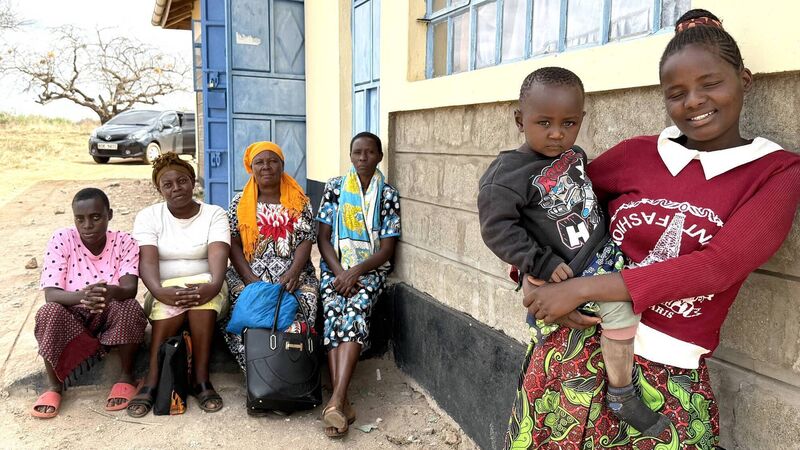
Members of the Sauti Ya Wanawake group at the Kishushe Resource Centre, which has become a place of renewal and dignity in Kenya. File picture

Wearing bright kanga wraps, many with babies tied snugly to their backs, the chattering women began streaming into the Kishushe Resource Centre in Taita Taveta County in eastern Kenya for their weekly meeting. Laughing and teasing one another, the room buzzed with a warmth and camaraderie that belied the horror of abuse they each had experienced.

I was there to meet members of the Sauti Ya Wanawake (Swahili for Women’s Voices) group. Each woman had survived brutal violence at the hands of a husband or partner. Some had fled marriages marked by years of beatings; Others had survived attacks with knives, sticks, or machetes. Several had been cast out by their families for daring to report the abuse.

And yet here they were energetic, purposeful, and grounded. Women who had once been silenced now claiming their space with confidence.

Mother of three Evelyn shared her story. Cradling her four-month-old baby girl, she spoke softly, her voice dropping to a whisper as she revisited the years of abuse she endured.

Evelyn was 15 when she became pregnant and was forced by her family to marry the father. The violence began soon after. What followed was a pattern familiar to millions of women who survive abuse across the world: Violence, apology, and more violence.

“At first he used his hands,” she said. “Then sticks. Sometimes the side of a machete.”

The attack that almost killed her came during a funeral vigil they had both attended. When she slipped out to use the bathroom, her husband, drunk and jealous, followed.

He started shouting, then took out a knife. He stabbed me in the arm and slashed my stomach. 

Left bleeding on the ground, she was presumed dead. Witnesses alerted police. Her husband, believing he had killed her, fled.

Evelyn received emergency treatment and, against the odds, survived. She lifted her dress to show me the deep scar that runs across her abdomen, a stark reminder of how close she came to becoming another statistic.

And the statistics are grim. Kenya is in the grip of a worsening femicide crisis. Killings of women, femicide, increased by 79% in 2024, amounting to a national emergency. In 2023, 152 women were murdered in gender-related killings, one every two days and human rights groups fear the real numbers are far higher. 

Some 45% of Kenyan women report experiencing physical or sexual violence, while police data shows gender-based violence cases have risen more than 30% in five years.

Experts point to several reasons for this crisis: Entrenched gender norms, economic dependence, an under-resourced justice systems, and the cultural discouragement of reporting abuse, especially in rural areas where police stations, courts, and hospitals can be hours away.

For Evelyn, things began to change when she joined Sauti Ya Wanawake, a grassroots women’s movement and a partner of ActionAid, supported by Irish Aid funding. Through counselling and practical support, she slowly rebuilt her confidence.

A small livelihood grant helped her start a poultry business.

The chickens multiplied. I now earn enough to provide for my family.

Mother of six Mary is chairwoman of the Sauti Ya Wanawake group. One of the area’s first female councillors, her political rise angered her husband and male community leaders. The abuse escalated until he attacked her with a knife and machete. She survived only because a farm worker intervened. Reporting the attack led to her husband’s arrest, and to her in-laws ostracising her and accusing her of “shaming” the family.

Today, Mary leads this group of 40 survivors. The Kishushe Resource Centre holds vocational courses in a range of skills including tailoring, beekeeping, and agroecology. It has become a place of renewal and dignity. The women plant on the land here, and their recent tomato harvest earned 40,000 Kenyan shillings, which was shared and used to pay school fees and food.

But the centre’s deeper value is emotional: A space where women talk, laugh, and begin to piece their lives back together.

Women are also supported to report cases and hold community dialogues with chiefs, elders, and teachers.

“These conversations are shifting mindsets,” Mary told me. “Men are beginning to understand that violence is not discipline. Women have rights.”

Irish Aid’s long-term, flexible support has been critical to sustaining this change. Last year its funding of ActionAid Ireland resulted in 5,000 women in Kenya accessing safe spaces, counselling, medical care and legal aid. More than 1,200 women were able to take their first steps towards independence through leadership training, financial literacy and livelihood opportunities.

“Irish Aid funding allows us to stay in communities long enough to build trust and challenge harmful norms,” said ActionAid Ireland CEO, Karol Balfe. 

Ending femicide is a long road, but survivors are leading the way.

Femicide and gender-based violence are global crises not confined to Kenya.

“Femicide is rising at an alarming rate in many countries,” said Ms Balfe. 

“According to the World Health Organization, about one in three women worldwide — roughly 30% — have experienced physical and/or sexual violence by an intimate partner or non-partner at some point in their lives. The UN estimates that around 50,000 women and girls were killed in 2024 by intimate partners or family members worldwide.”

In Ireland, 277 women have been killed since 1996; in nine out of 10 cases, the killer was a man known to the victim. One in two women in Ireland experiences sexual violence.

Standing among the women in Kishushe, I felt I was witnessing a quiet revolution. This was not a group of victims, rather a group of survivors who had found healing and a collective voice.

x

More in this section

Revoiced

Newsletter

Sign up to the best reads of the week from irishexaminer.com selected just for you.

Cookie Policy Privacy Policy Brand Safety FAQ Help Contact Us Terms and Conditions

© Examiner Echo Group Limited