Millions are starving in Sudan and the situation is getting worse day by day

Nyahok Diew with her 10-month-old daughter Nyariek who was treated for malnutrition at a health care centre in Unity State, South Sudan, which is supported by Concern. We can use words like ‘famine-like’ conditions but to be brutally frank, this means that children are already dying. Photo: Ed Ram/Concern Worldwide
Today in Sudan, five million people are facing catastrophic food insecurity and 220,000 children and more than 7,000 new mothers are likely to die in the coming months unless they receive immediate humanitarian assistance.
That is the reality and the fact that this year’s appeal for $2.6 billion for Sudan is less than 5% funded is disgraceful. No one should die of hunger due to a lack of funding while waiting for peace.
Sudan is facing one of the fastest unfolding humanitarian crises globally. More than half the population — 25 million people — need humanitarian aid and a staggering 3.7 million children are in need of urgent nutrition support.
This crisis has not yet hit the worst levels of suffering, with the situation expected to deteriorate further in the coming months unless urgent action is taken.
Food production has been devastated. The production of key staples, sorghum and millet, fell by 24% and 50% in 2023. In the markets of Kadugli, South Kordofan, where Concern is working, the price of wheat, a main staple in Sudan, is up 118% compared to this time last year. People can no longer afford to eat.
The World Food Programme and the UN’s Food and Agriculture Organisation report that the food security situation has significantly deteriorated even faster than anticipated and that there is a risk of “catastrophic conditions” in many parts of the country.
We can use words like ‘famine-like’ conditions but to be brutally frank, this means that children are already dying. The situation in the Darfur and Kordofan States is particular worrying. Our teams there report a rapid deterioration in the condition of children presenting at health facilities.
The conflict has especially affected Sudanese women, who are being robbed of their access to livelihoods and their right to safety.
Women such as Mariam who I met in West Darfur at the Ardamata health centre, supported by Concern, where rates of hunger and acute malnutrition are rising daily. Miriam had lost her husband, her home, her livelihood but not her determination to protect her only surviving daughter.
She is one of more than eight million people who have fled their homes since the conflict erupted between the Sudanese army and the Rapid Support Forces in Khartoum a year ago. Sudan now has the highest number of displaced people globally.
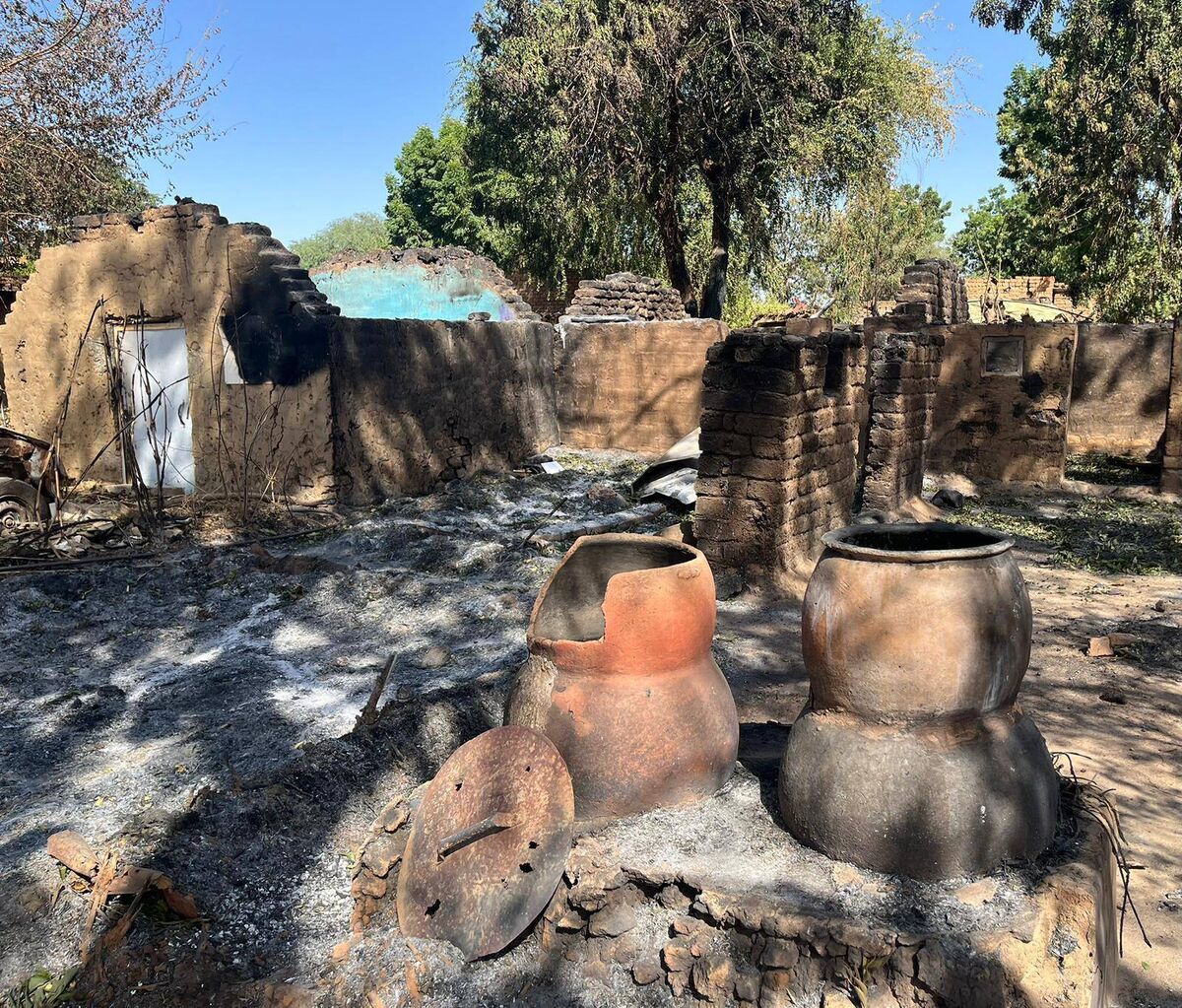
The drive to Ardamata, where Mariam was living, was itself a brutal reminder of the scale of destruction. Village after village had been abandoned, houses destroyed, fields lay empty. The town itself appeared to be deserted until you approached the health centre, around which thousands of displaced families were crammed into temporary shelters.
The health centre itself was intact but had been stripped of equipment right down to doors, windows and even light fittings. Despite this, the 12 nurses who worked there managed to find enough boxes of therapeutic food, essential for treating severe acute malnutrition, that allowed them to treat 569 children in one month, with all but 13 surviving.
And then the medicines ran out. There is nothing more dispiriting for professional health workers to be surrounded by empty shelves and nothing to treat the growing numbers of sick and starving children on their doorstep.
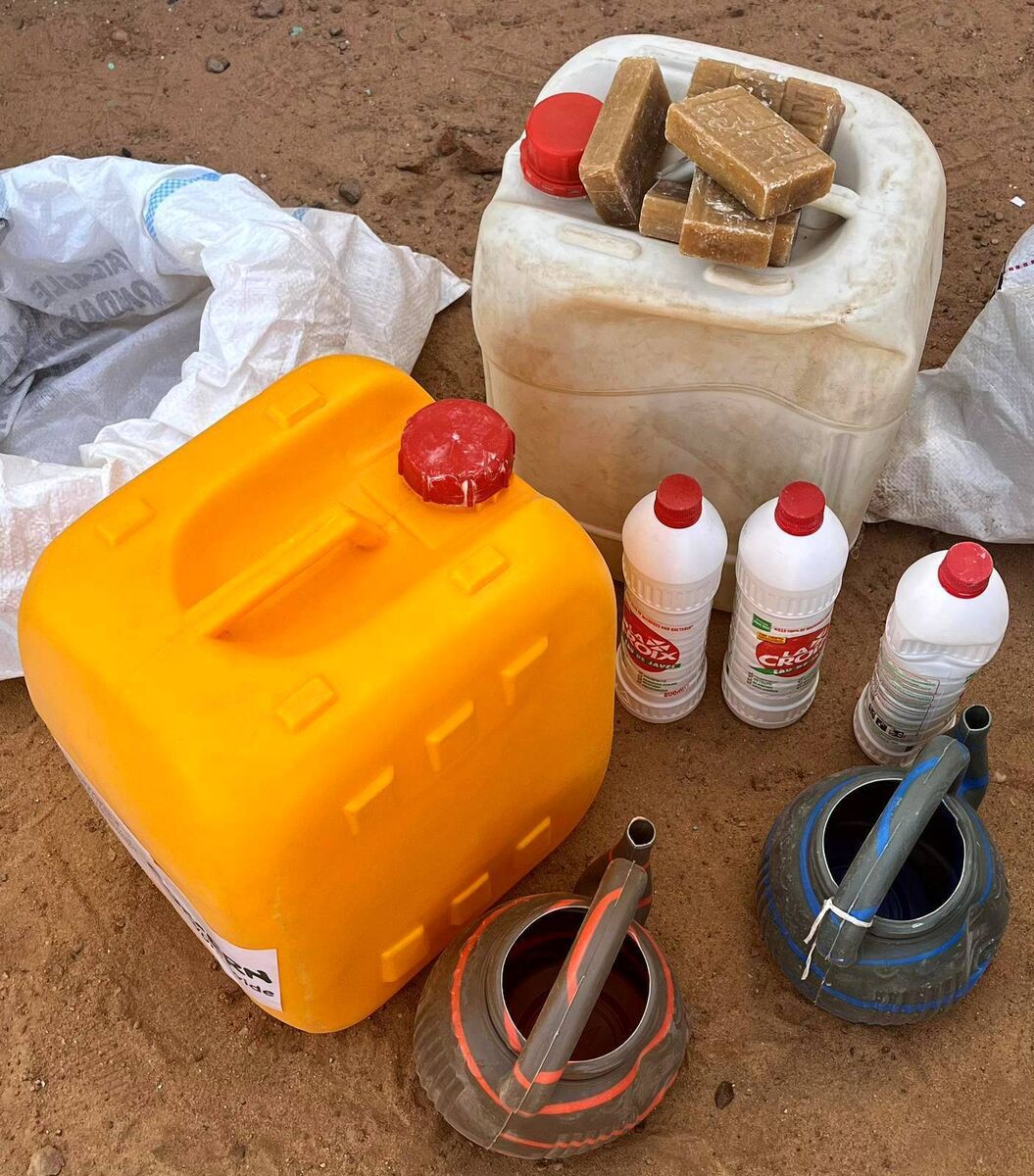
The years of training and support were still intact. Conflict has disrupted, but not destroyed, local capacity and these women, along with the community volunteers and the mother-to-mother groups were demanding to be supported. Concern was there to re-supply the medicines but there are many more centres where supplies are still urgently needed.
The thin line between starvation and survival, between hunger and hope, is often held through the courage and commitment of women such as these working on the frontlines of conflict. They are the centre of the humanitarian response, taking huge risks to save lives and support communities. They must be supported with supplies, equipment, and a fully funded response.
While insecurity, complex and costly logistics, as well as bureaucratic impediments continue to hinder the international humanitarian response, much more can be done if resources were available.
Currently the international response is woefully underfunded. More than half of Sudan’s population needs assistance and protection; yet the appeal for $2.6 billion is less than 5% funded.
With famine, looming this is unacceptable.
The international community cannot simply watch yet another crisis unfold. Despite a recent UN Security Council call for a cessation of hostilities, the conflict is raging and the humanitarian situation is getting worse. Urgent action is needed on three fronts:
- Donors must urgently fund a massive mobilisation of supplies and resources to limit the impact of this humanitarian catastrophe. The upcoming pledging conference for Sudan in Paris on April 15 is a real opportunity for donors to step up and close the funding gap;
- UN member states, especially those on the Security Council and those with the greatest influence in the region, must use their power to press for an immediate cessation of hostilities, and a peaceful and negotiated political solution to the conflict.
- Donors and UN member states must redouble efforts to ensure parties to the conflict facilitate safe access for humanitarian actors and for communities to receive humanitarian aid.
Twenty years after the horrors of Darfur shocked the world, the next generation of Sudanese is reliving the same hell, except this time we are failing to pay attention.
The preventable death of any one child should never be ignored and yet the very survival of 220,000 children who suffer from severe acute malnutrition is under threat, largely unnoticed.
- Dominic MacSorley, who is Concern Worldwide's Humanitarian Ambassador, has just completed a seven-month assignment as the organisation’s Interim Country Director in Sudan. For details about Concern’s work visit concern.net

CONNECT WITH US TODAY



Be the first to know the latest news and updates