John Gibbons: We are fast approaching climate change tipping points
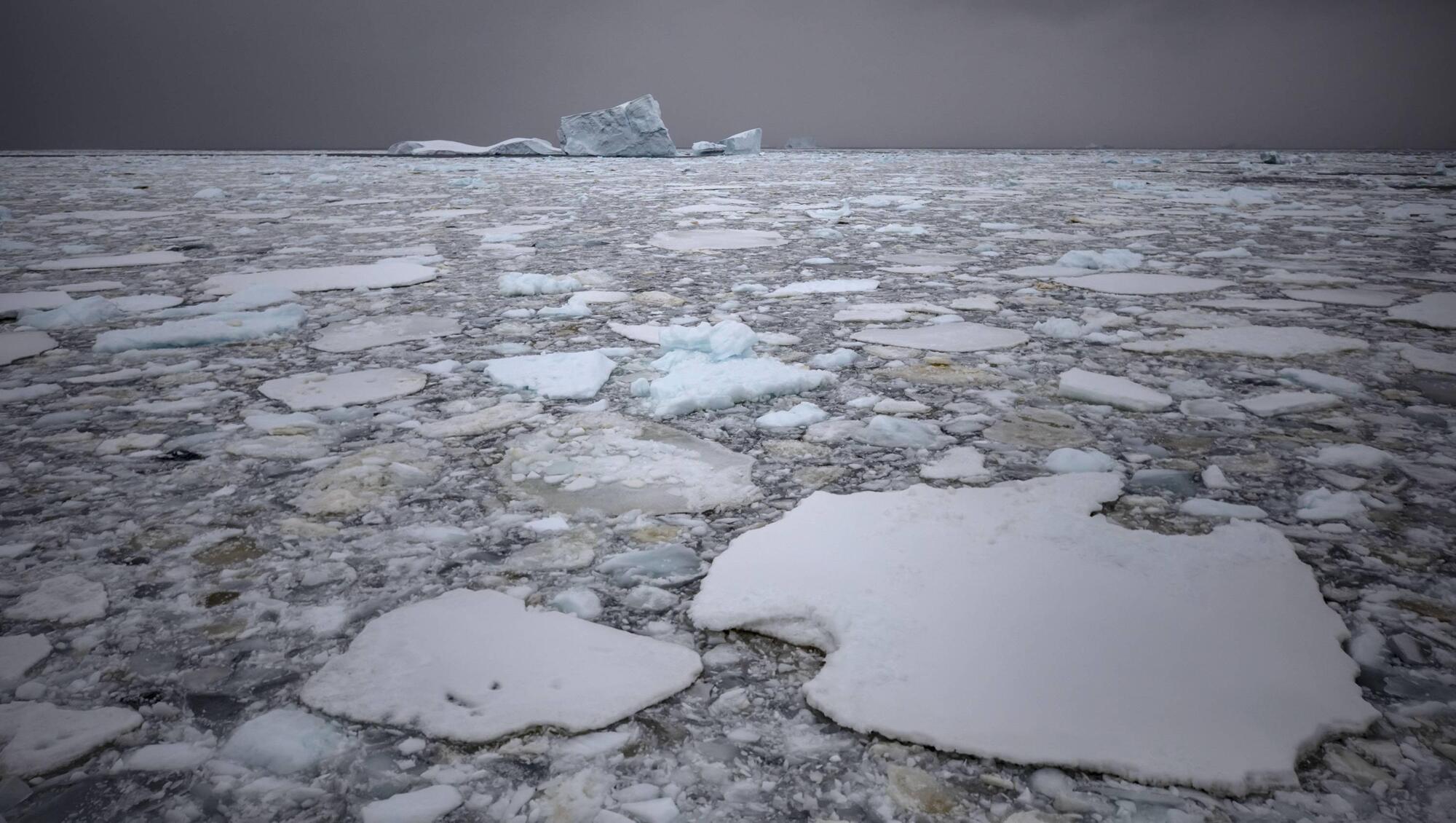
Ice melting due to global climate change in Antarctica, a loss of which would add three metres to global sea levels. Picture: Getty Images
We are fast approaching one or more tippings point that will drastically reshape the climate of the Northern hemisphere, but exactly where these points lies is âthe billion dollar questionâ, according to leading oceanographer, Prof Stefan Rahmstorf
With global warming already having pushed up the Earthâs average surface temperature by over 1.1C, Prof Rahmstorf of Potsdam University, Germany, warned that multiple climate tipping points could be crossed once temperatures have risen by 1.5-2C. This will likely lead to a âdomino effectâ with catastrophic consequences.
The critical systems most vulnerable to collapse in the relatively near term include the West Antarctic Ice Sheet, the loss of which would add three metres to global sea levels, as well as the Amazon rainforest, the worldâs coral reefs, and the Greenland ice sheet.
The massive system of ocean currents known as the Atlantic Meridional Overturning Current, or AMOC, is the reason why Ireland, Britain, and most of northwestern Europe enjoy a relatively mild climate and are ice-free all year round.
This enormous submarine system of currents up to 100 times greater than the flow of all the worldâs rivers combined, transfers around one petawatt of heat energy from the tropics into the northern hemisphere. This is equivalent to the total energy produced by one million nuclear power stations.
Research studies published by Prof Rahmstorf and colleagues, including Dr Levke Caesar of Maynooth University, have established that the AMOC, sometimes referred to as the Gulf Stream, has weakened by around 15% since the 1950s and is now at its weakest in at least 1,000 years. This is already having impacts on weather systems, including fuelling an increase in European heatwaves.
âNew studies on the stability of the AMOC are really quite worryingâ, he added. âIâm now a lot more concerned than I was 10 or 20 years agoâ, he told the .
In the southern hemisphere, new research has revealed that the deep ocean current around Antarctica which is part of the same global system and which has been stable for thousands of years is now expected to collapse in the coming decades as a result of carbon emissions, with unfathomable implications for the global climate system.
While a complete shutdown of the AMOC, which is part of a global overturning system of deep ocean currents, would likely take decades to play out, its implications are profound. Ireland and our neighbours in northwestern Europe would experience a sharp drop in temperatures as well as rainfall, and an increase in powerful storms, although the temperature drop would be partly offset by the overall global warming effect.
âWeâve had decades of very clear warnings from the scientific community on climate change, yet the world is really only starting to wake up to the danger nowâ, Prof Rahmstorf added. âWhatâs important to bear in mind is that once it shuts down, the AMOC is, in human timescales, gone foreverâ.
His message to politicians and policymakers was blunt: âThe key is they simply have to start putting climate at the top of their agendas; they cannot allow it to be pushed off the agenda by other short-term priorities. This is an extremely urgent situationâ.
Since there is no possible way of mitigating the devastating consequences of a full-scale collapse in our weather systems, Prof Rahmstorf was adamant that the only way to avoid the worst outcomes is to take the science seriously and cut emissions from every sector in half by 2030.
âThat means we really only have seven years to turn this around. We have to stop making excuses and do whatever is necessary, no matter how difficult, to preserve the climate system we all depend onâ, he added. âWe need really fast and decisive actionâ.
Apart from his extensive published research, Prof Rahmstorf is also a committed science communicator. âI have a duty, if you see a danger, you have to let people know. If a house is on fire, you have to call the fire brigade. For me, this is a moral duty. Also, my research is funded by the taxpayer; they pay my wages and they are entitled to be told of our findings.â
 Prof Rahmstorf called for an all-of-society response to the unfolding climate emergency. âAs a scientist, I have learned that simply informing the public of the facts is not enough to shake people out of their inertia. We need everyone on board â artists, media, communicators. This is too big a task just to be left to the climate scientistsâ.
At the moment, politicians are fearful of being voted out if they propose climate action that is seen as unpopular, such as banning oil or gas boilers. As the climate emergency begins to really bite, âwhat they should be afraid of is that theyâre going to be voted out if they donât make climate their top priorityâ, Prof Rahmstorf added.
CLIMATE & SUSTAINABILITY HUB