Telling ourselves we have no role to play in climate change is rubbish
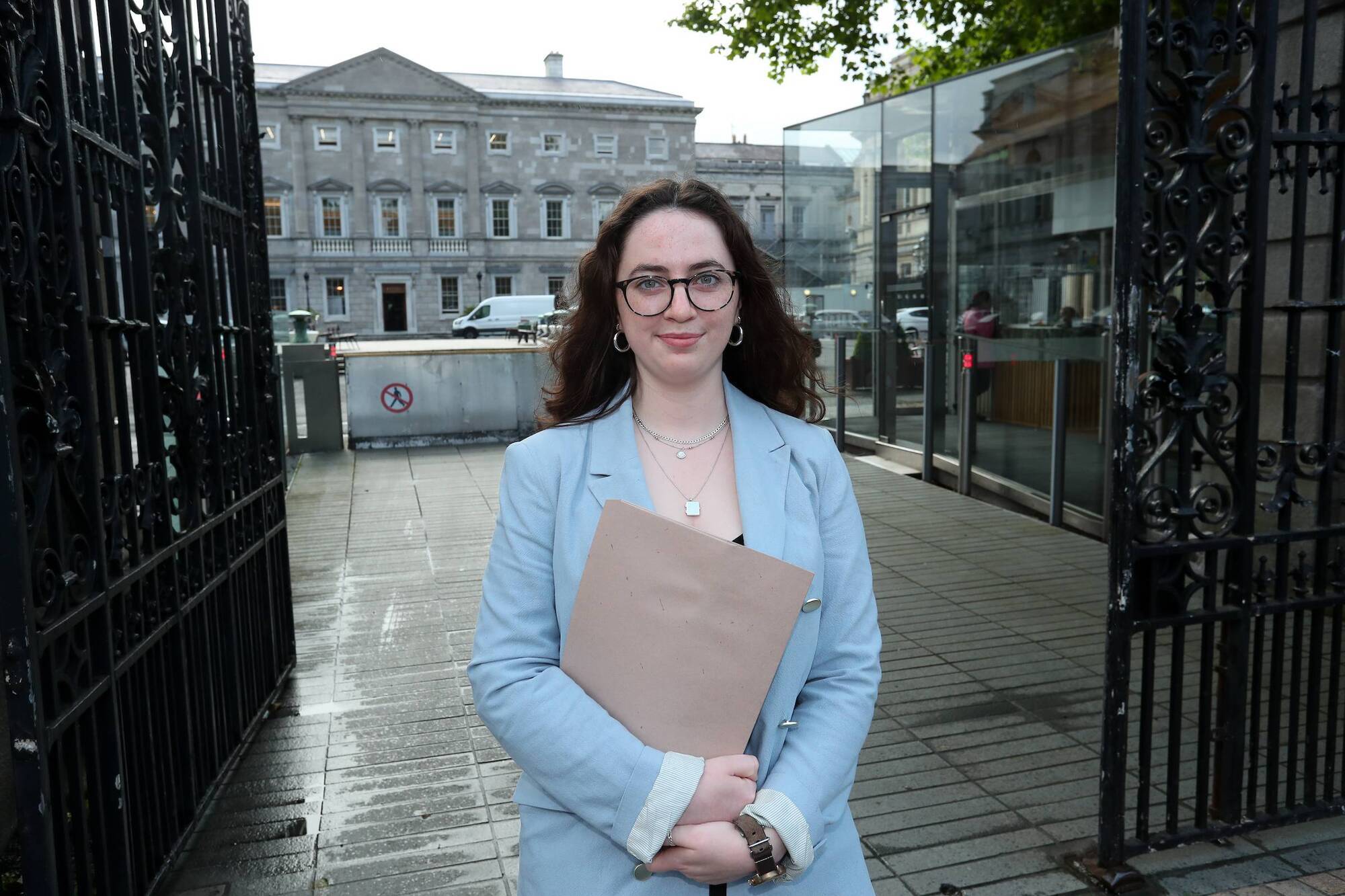
Mae Weir, from Dromahair in Letrim, a member of youth organisation Foróige, addressed the Joint Oireachtas Committee on the Environment and Climate Action in the Seanad earlier this year.
Why is it that we all know climate change is real, and that tackling it is something we must do, yet we don’t act? Could it be that we are the problem?
I’ve noticed that we constantly try to absolve ourselves by belittling the impact we as individuals can make. We see it as a problem for governments to fix. Unfortunately, the meagre progress made so far cannot keep up with our rapidly deteriorating situation.
“What difference does one person recycling make really?” “Ah sure it’s all them big corporations making the mess, it’s hardly my problem.” “Realistically nothing is going to change if I stop buying fast fashion.”
That’s rubbish.
The values of a consumer society have been deeply ingrained in us, and it’s really hard to get past that. And it’s true that governments and big businesses should be doing much more. But we shouldn’t deprecate the power of personal action alongside that.
As Rebecca Solnit said: “The world as we knew it is coming to an end, and it’s up to us how it ends and what comes after.”
So then — how to change our ways? How has it happened before? And what’s stopping us now?
With the firehose of media messages we get, we are constantly bombarded with climate change headlines that either make us angry or scared.
And as a defence mechanism to all this negativity and anxiety, we become passive. We are presented with a challenge that seems insurmountable, we feel powerless, and we, as a people, become disempowered.
But research tells us people do respond to positive achievable goals. We need to see the concrete outcomes of these goals in our lives, in order to accept ownership of the problem.
I’ve always thought there are two parts to being an activist: there’s the part that lobbies politicians for change at the policy level, and then there’s the part that has to win over the hearts and minds of ordinary people.
For both of these to happen, education has to be the starting point — from pre-schoolers through to postgraduate programmes and beyond.
What we need is a holistic approach to educating Ireland on climate action. As I’m reaching the end of my secondary school education and with the Leaving Cert on the horizon, I want to overhaul almost every aspect of Irish education, but before I lose the run of myself, I know integrating climate education must come as a priority.
To start with, every university in Ireland should have a research centre for climate action that is funded by the Government and the EU — after all, research is the foundation for change, so why not make Ireland a world leader in climate research?
With over half our adult population being university educated, it is clear we excel at third-level education, so let's utilise this. Think how impactful it would be if the Department of Higher Education made it a requirement to incorporate climate awareness across every degree programme in Ireland.
We would develop an Irish workforce that has an understanding of the ecological implications of their jobs and pave the way for the green transition we desperately need.
However, climate awareness isn’t just for people who attend universities — it needs to become an integral part of primary and secondary education too.
In a pluralistic society, the emphasis in our education should be on the needs of the 21st century and the challenges faced by the whole community. Children are hungry for information and responsive to new ideas, but what are we teaching them?
Through my schooling I have experienced brilliant programmes, of course, such as An Taisce’s Green Schools programme and Green Flag Award, that engage with communities and transform the ethos of every school that participates.
However, the success of these programmes is too often reliant on the enthusiasm and creativity of hard-working teachers.
Climate education should be incorporated across the curriculum under the guidance of the Department of Education, creating a reliable standard for children across the country.
I can’t help but applaud the new Leaving Cert topic of Climate Action and Sustainable Development; the next step is to incorporate these issues into the Junior Cert curricula, particularly for subjects such as science, business, and geography.
As I get older, I’ve felt the burden of responsibility for progressing climate action. I see it in my peers too. It is an anxiety based on the lack we see: lack of action, lack of resources, lack of leadership.
Focusing on the fatalistic belief that “it’s too late” is what keeps anxious teens up at night.
But if you ask experts, be they scientists, policymakers, or activists, they’re busy providing solutions, persistently organising the next move, and rolling with the punches. And this has to start with a standardised baseline of climate education for young people to help abate this anxiety.
I used to give myself headaches over the apathy I was surrounded by, and how little people seem to care. It was baffling to me how someone could see this calamity of cosmic proportions ahead, and just… ignore it. “Wake up!” I would think, “You’re not immune to this — every aspect of your life will change, you can’t avoid this.”
But now, I look at it differently. I think I get it. A lot of people lead difficult lives as it is, and it’s easier to maintain the status quo. Trying to be climate conscious limits your options, is much more expensive and requires constant dedication.
I honestly can’t blame people who want to ignore our collective responsibility.
But what I do care about is that the next generation doesn’t grow up like you or me. I want them to be optimistic, flexible, and grounded. I need them to care about and be committed to climate action.
Ingraining the values of protect, conserve, and progress from a young age, through education, is the way forward.
- Mae Weir, from Dromahair in Leitrim, is a member of youth organisation Foróige


CLIMATE & SUSTAINABILITY HUB
CONNECT WITH US TODAY



Be the first to know the latest news and updates