Ireland second in the EU for per-capita emissions of greenhouse gases — we must act
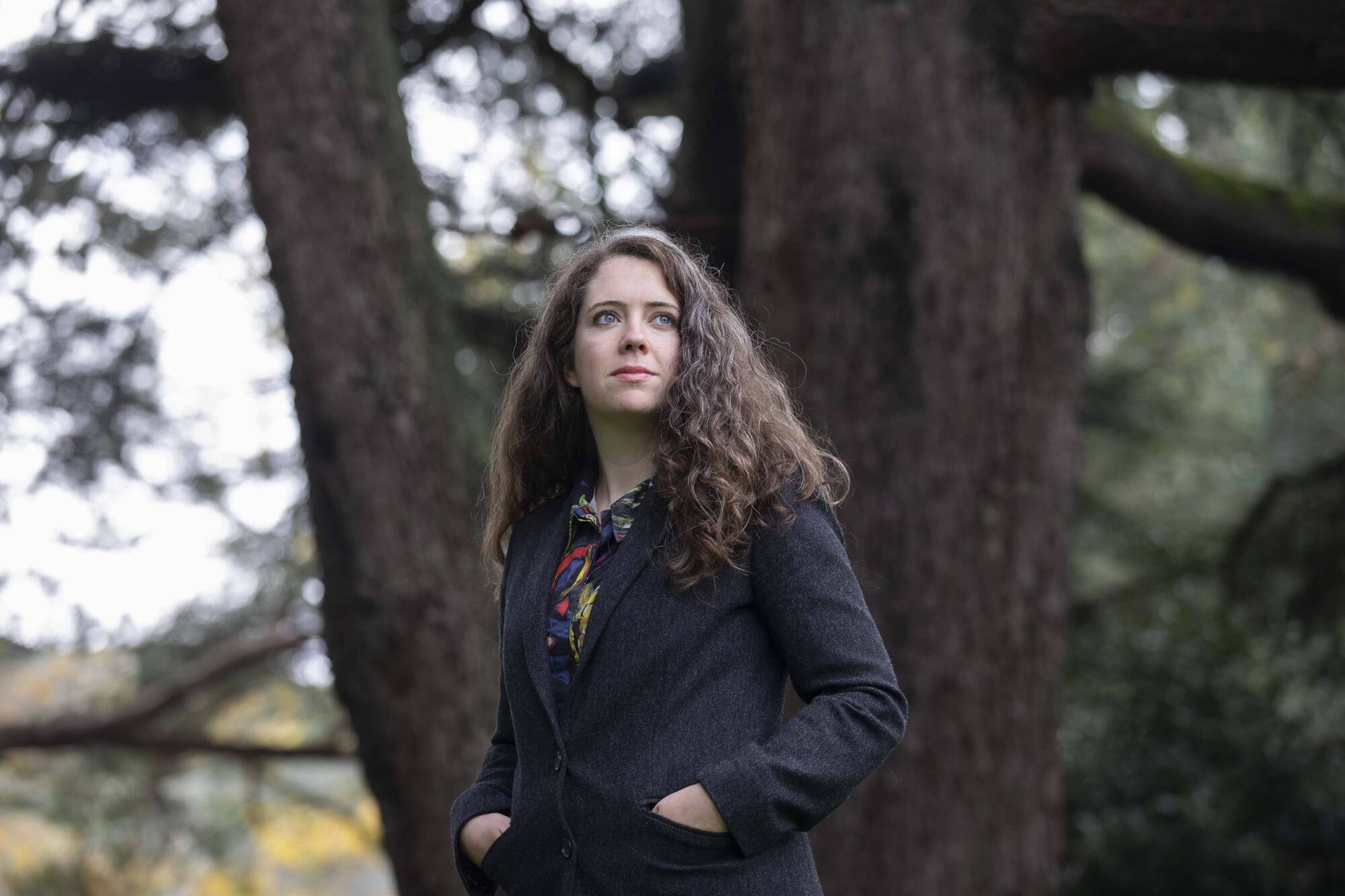
University College Cork's Professor Hannah Daly is one of Ireland's leading experts on climate change and energy transition and part of the university's delegation in Egypt. UCC, as the only Irish university with official observer status at the UN Cop27 conference, is sending a delegation of researchers and students to the climate summit in Sharm El-Sheikh. Picture: Clare Keogh
Cop27 is likely to see highly contentious negotiations between countries on the topic of “loss and damage”.
This annual summit is an opportunity for representatives from poor and vulnerable countries to confront leaders of rich, high-emitting countries to demand actions to address the gross injustice of climate change.
Climate change is already irreparably damaging people and nature, through floods, extreme heat, food insecurity and rising sea levels, and this damage will keep growing while we add greenhouse gases to the atmosphere.
Climate change is shockingly unfair - damages are concentrated in poor and vulnerable countries, particularly the least-developed countries and low-lying island states, who are least responsible for causing it.
Developed countries, who enjoy the benefits of fossil-fuel based industrialisation and are less vulnerable to climate change, are mainly culpable.
Europe, for example, with only 6% of the global population, has been deforested and burning fossil fuels since the industrial revolution, and is responsible for 22% of the excess carbon in the atmosphere, whereas the whole continent of Africa, with more than twice the population, is responsible for only 3% of global warming.
Moreover, access to modern energy is hugely unequal.
Despite our small size, Ireland punches above our weight in terms of our impact on global warming. As the EU's second-highest per-capita emitter of greenhouse gases, if every country in the world had emitted as we do, the world would already have heated by a truly catastrophic 3C already, instead of 1.2C.
To address this injustice, developing countries are demanding a firm financial mechanism for this “loss and damage” to funnel financial compensation from rich countries following disasters and losses caused by climate change. But this will be politically fraught. Developed countries will not easily admit liability.
The valuation of the damage climate change will cause is theoretically limitless. How can you put a value on the cultures, ecosystems, livelihoods and lives that will be lost and irreparably damaged from making parts of the world hostile to life from rising temperatures?
The best outcome we can hope for at these talks is a firm agreement on a financial mechanism to direct money on an ongoing basis to compensate for damage caused by climate change, as well as financial commitments to allow developing countries to decarbonise and adapt. Innovative mechanisms, like an insurance fund, have been tabled, which could spread the risk across vulnerable countries, but the principle and details are very far from being agreed.
Scotland and Denmark have been at the forefront so far, committing tens of millions of euros to climate justice and loss and damage funds. While this is a tiny drop in the ocean relative to what will be necessary, it demonstrates the value of small, developed countries in diplomacy and leadership, an arena in which Ireland should use its valuable influence.
- Hannah Daly is a Professor in Sustainable Energy and Energy Systems Modelling at University College Cork (UCC), the only Irish university with official observer status at Cop27 and is part of UCC's delegation in Sharm-el-Sheikh.
CLIMATE & SUSTAINABILITY HUB
CONNECT WITH US TODAY



Be the first to know the latest news and updates