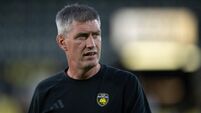
Elaine Loughlin: Can EU leaders agree on what is needed on energy?

With 27 differing views, can a combined response to soaring gas an oil prices be found and will member states agree to a long-term plan that will see renewables come to the fore? Picture: AP/Darko Bandic
Unity was the key word being pushed by Taoiseach Micheál Martin as he made his way into a meeting of EU leaders to discuss the energy crisis.
But with 27 differing views, can a combined response to soaring gas an oil prices be found and will member states agree to a long-term plan that will see renewables come to the fore?
Money will also be a dictating factor, and getting any sort of agreement on the brass taxes is never easy.
Going into the meeting, 15 EU states had come out in favour of a price cap on gas but any sense of unity quickly unravelled when it came the details of how such a price ceiling would be introduced or implemented.
Mr Martin stressed it is the interest of all countries to come up with an agreed plan as "everyone stands to lose" if Europe cannot agree a unified emergency response to the energy crisis.
“Different member states are coming to this from different positions, we all want to arrive at the same destination to try and limit the exponential growth in prices, but also making sure that we have security of supply."
Mr Martin said practical solutions would have to be found that do not involve political wish lists.
Mr Martin's comments came after Germany, often considered to be the head of the EU family, had come up with its own magic answer.
Instead of trying to hammer out a united response, Olaf Scholz, Germany’s chancellor, decided to it alone by pumping €200bn into a domestic plan to protect households and businesses.
The 'protective umbrella' unveiled by Germany caused a level of surprise that was quickly followed by anger from other EU leaders ahead of the two-day meeting.
Leaders attending the summit lined up to vent their varying degrees of frustration on Germany's move, which has been seen as giving an effective two fingers to a unified approach.
Polish prime minister Mateusz Morawiecki was among the strongest in his criticisms: "So the Italians couldn't do that, the French couldn't do that, the Poles couldn't do that, but they can do it."
"If that is equal, fair and just treatment of the principle of the European Union's common market then I am very sorry but there is something I don't understand," he said.
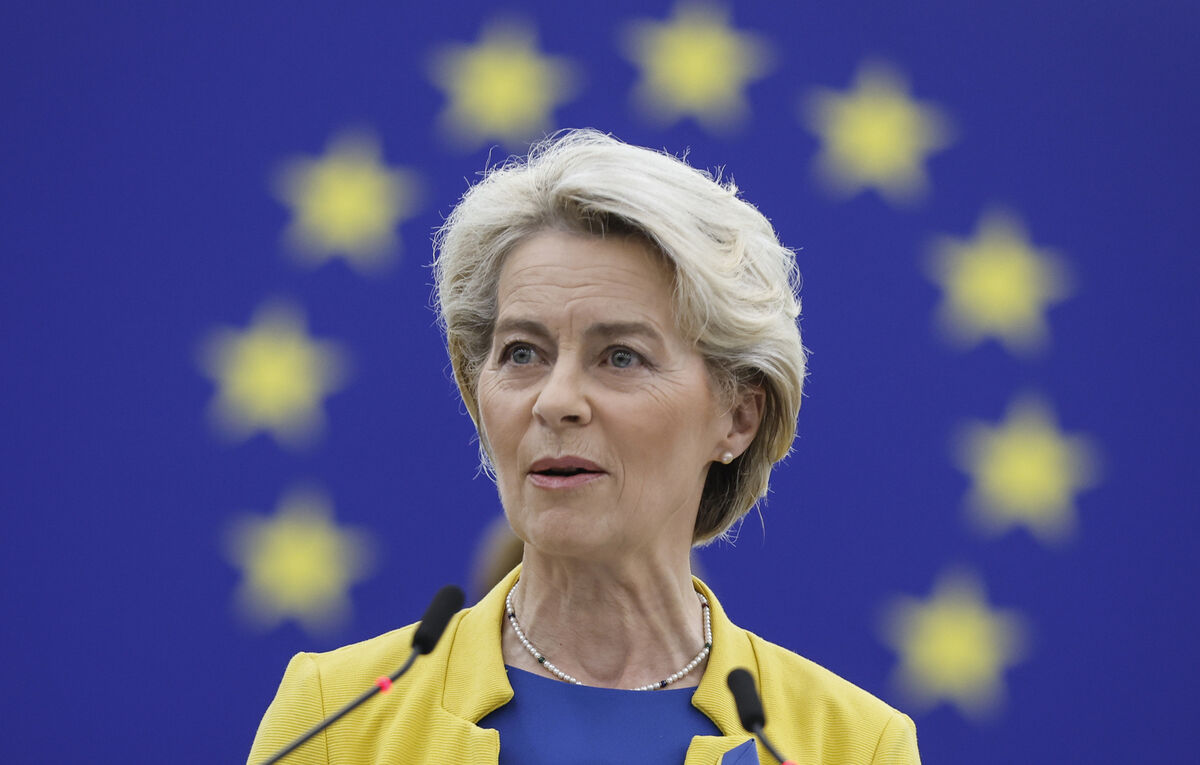
Behind the closed doors of Prague Castle, EU Commission president Ursula von der Leyen laid out the latest proposals in relation to how a joint approach to energy might look.
She recommended negotiations with "reliable suppliers" such as Norway be stepped up to reduce the prices of imported gas of all kinds
Ms Von der Leyen also wants joint purchasing of energy to avoid a scenario in which member states are outbidding each other and driving prices up.
Arguing for an "intervention" on prices, the commission president stressed that high gas prices are driving high electricity prices.
"We should limit this inflationary impact of gas on electricity, everywhere in Europe. That is why, accompanying our action on imported gas, we are ready to discuss the introduction of a temporary cap on the price of gas that is used to generate electricity," she outlined to leaders.
However, no agreement was reached and energy ministers, including Eamon Ryan, will meet in Brussels next Wednesday in a bid to progress the discussions before a formal summit at the end of the month.
But it seems considerable work will be required to get sign-off on a pan-European approach to a pan-European crisis.
CONNECT WITH US TODAY



Be the first to know the latest news and updates