Former 'rising star central banker' to speak at Cork event to solve big issues of our time
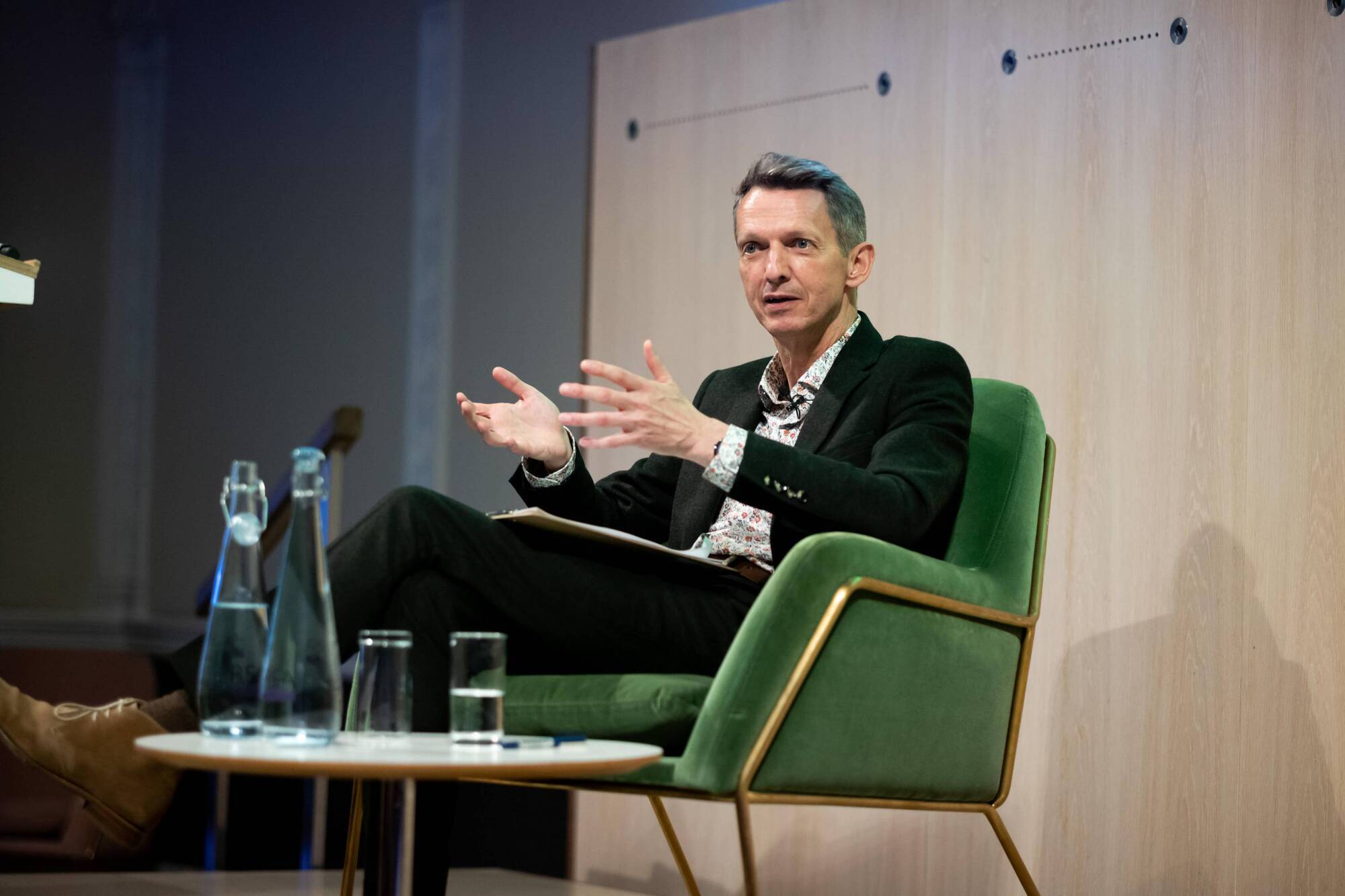
Andy Haldane, chief executive of the RSA, has said the Occupy movement protestors were right to criticise the financial sector.
A former chief economist with the Bank of England once described as a “rising star central banker”, and later listed by Time magazine as amongst the world’s 100 most influential people, Andy Haldane, is a man on a mission, spearheading a global community of changemakers who want to solve the big challenges of our time.
As the new chief executive of the Royal Society of Arts, Manufactures and Commerce, he is preparing to visit Ireland on Saturday for his first overseas event since taking up the role, but will first have to navigate the UK rail strike to catch his flight to Cork.

A minor issue, given the challenges he says we need to face, and the scale of change we need to embrace.
“Of the many areas on which I want us to focus is how we rethink the ecology we have for education, learning and skill-building,” he says.
“It seems very likely that every country on the planet will need to rethink that model, a model that served us well over the last 100 years but which will not serve as well over the next 100 years.
CLIMATE & SUSTAINABILITY HUB
“Education will need to be something that we do throughout our lives. Not just a young person's pursuit - it will need to be genuinely lifelong.
“The things we'll need to learn will change, the sets of skills and attributes we need for the jobs of tomorrow will also go through radical reform.
“Of course, AI will eat some of the existing tasks and existing jobs, and we will need a different set of skills to keep one step ahead of the machine.
“But I hope the RSA can play a role globally in shaping and framing and indeed, implementing those shifts in our education system, our skills-building model to meet those 21st-Century needs.”
That's just one of the areas he's focused on as he sets out to reinvigorate the RSA and promote its work and membership in Ireland. The environment and sustainability will feature heavily too.
The RSA was founded in London in 1754 to work on projects to make Britain better. It focused in the early years on awarding prizes to new ideas, artworks and inventions, including a new chimney sweeping brush which helped end the practice of child chimney sweeps.
Between 1757 and 1835, it ran a campaign to encourage landowners to plant more trees. An estimated 60 million were planted. Charles Dickens became RSA vice president and Benjamin Franklin was its US founding father.
In more recent times, it has awarded its medals to people like Nelson Mandela, Sir Frank Whittle, who is credited with inventing the turbojet engine, and Professor Stephen Hawking.
Today, it has some 30,000 fellows in 90 countries around the world, including in Ireland, but its work is not widely known. Andy hopes to change that.
He joined the Bank of England in 1989, where he worked in monetary analysis and monetary policy strategy, with a secondment to International Monetary Fund.
By 2009, he was the central bank’s executive director of financial stability, and by 2014, he was its chief economist, chairing the industrial strategy council from 2018 to early 2021.
Outspoken and straight-talking, he said the Occupy movement protestors were right to criticise the financial sector, he tried to persuade bankers and politicians "to behave in a more moral way”, and in the wake of the global banking crisis, he told the BBC that public anger was justified, pointing out that bankers' pay had by 2006 risen to four times what it was in 1980.

He resigned from the Bank of England in early 2021 and later took up the role with the RSA, before being appointed as head of Boris Johnson's Levelling Up Taskforce, to coordinate the British prime minister's post-pandemic ‘build back better’ strategy.
But public service has always been at the heart of what he does.
“I've seen myself as being a public servant throughout my life. It's something I’ve felt from very early, not just in my career, but in my life," he says.
“When I was 13 or 14, I decided I'm interested in how to make sense of the things in the economy, in society that isn’t working well, and I want to do something about it. So my career has been framed by that really - working on how to improve the economy for people.
“And in some ways, although it’s a different institution, it’s the same sort of gig at the RSA - it's still public service but across a slightly broader array of issues.
“What's changed is the sets of social issues that I think are most important when growing our societies, growing our economies - regeneration of the three P's - people, place and planet.
“It’s not just what the economy needs, but what a society needs.”
Against the backdrop of a planet-threatening climate crisis, a war in Ukraine, Brexit, spiralling inflation and a cost-of-living crisis, Andy accepts that we have a lot to worry about.
He’s slow to comment on the Brexit strain on Anglo-Irish relations but says it has never been more important to forge links not just between the UK and Ireland, but globally.
“We are essentially wrestling with the same headwinds, the same challenges economically, societally, environmentally," he says.
And he reckons the RSA, through participatory or deliberative democracy techniques like citizens assemblies, can bring together people from different places and backgrounds, people with different perspectives, to deliberate on key societal issues, and then decide what to do about them, stressing that the impacts of the crises we face will be felt disproportionately "by poorer people in poorer places".
“The cost-of-living crisis will hit hardest those places and those people in those places that were worse off to begin with,” he says.
“So yes, we’ve got a lot on our plate, but in some ways, it's the same plate. And that makes the imperative for action even greater.”
Action is a keyword for Andy who insists several times that the RSA is not a think-tank - it’s about thinking and talk leading to real action, read social change.
“Social action takes place most effectively locally, where like-minded, energetic, people come together and make change happen, they don't wait for government to call the shots," he says.
“They just get on and make things happen in their local communities."
“This doesn't have to be change on a grand scale. This can be something at neighbourhood level, maybe town level, but equally it could go citywide or nationwide depending on the idea.
“Some of the most radical and lasting change does happen at the local or hyperlocal level, where people can see the fruits of the actions they're taking.”
Read More
That approach could help address a big issue - a crisis of agency - where people feel that they have lost power over their lives.
He also hopes the RSA can help unlock the potential of the “naturally entrepreneurial” Generation X and millennials - to find and help the "excluded entrepreneurs".
“We can provide the network, we can provide the mentors, we might even be able to help locate that seed financing. That can turn an excluded entrepreneur into a real entrepreneur - and that could be a social entrepreneur rather than a commercial entrepreneur," he says.
“And that could put some people on a completely different branch of the life tree.”
He’s looking forward to the RSA’s one-day, free-to-all conference, entitled Place, Belonging and Reconnecting, in Cork’s Triskel Arts Centre on Saturday.
Tony Sheehan, the Triskel's artistic director, an RSA fellow, and one of the conference organisers, said: "We want to provide a space to reconnect with each other and develop new and exciting relationships. And just as importantly, explore how we can remain relevant across the island of Ireland and build connections.”
The conference will include a talk by poet Tom McCarthy on how the RSA “saved” the famous Cork artist, James Barry, as well as panel discussions featuring broadcaster Philip King, Traveller advocate Brigid Carmody, former Cork Chamber president, Paula Cogan, MTU President Prof. Maggie Cusack, Dr Naomi Masheti from the Cork Migrant Centre and Leon Diop, co-founder of Black and Irish.