Rory Hearne: Referendum on a constitutional right to housing in Ireland is long overdue
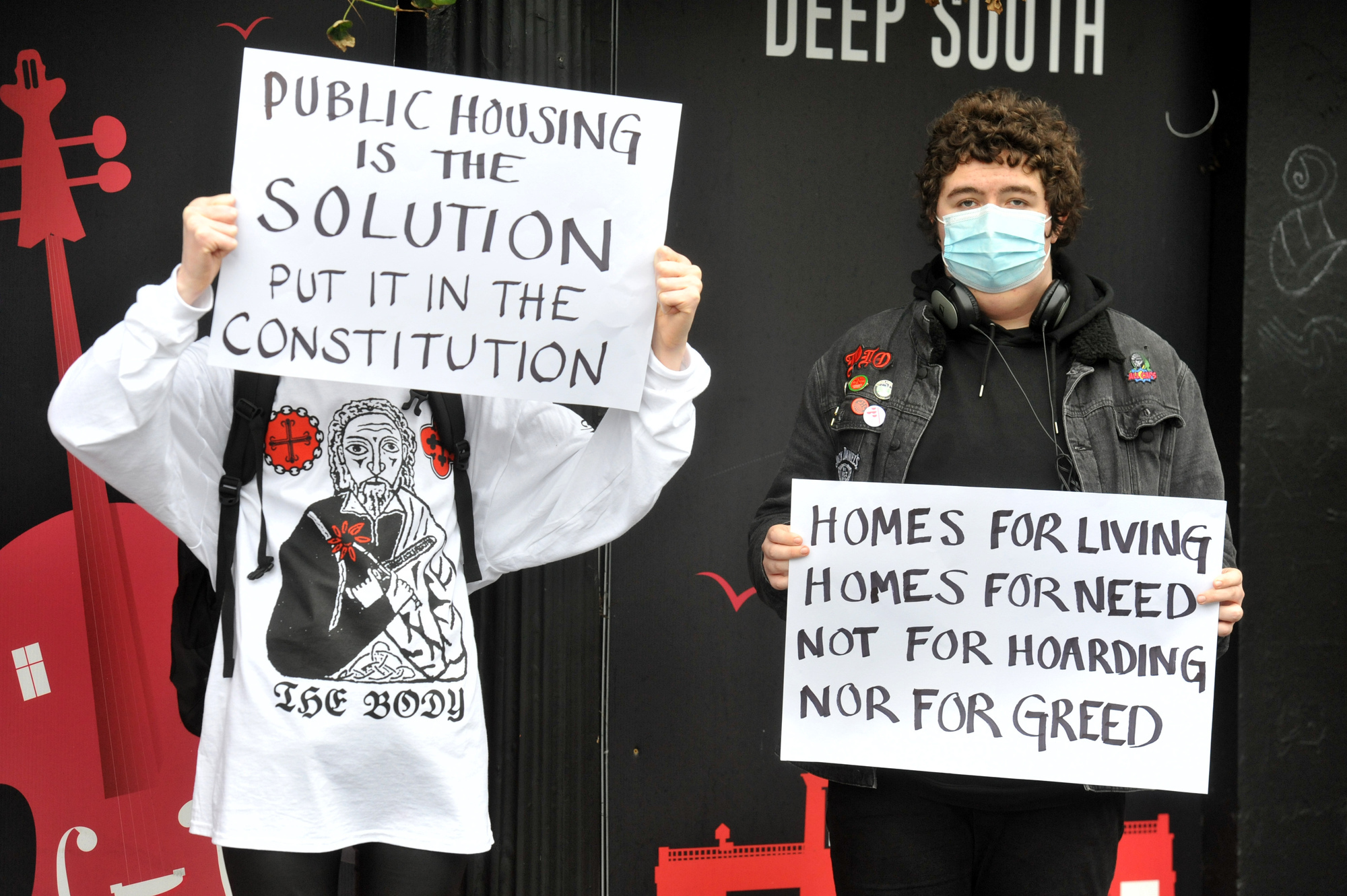
Housing activists in Cork highlight the issue of dereliction and demand an end to the ongoing housing crisis. Picture: Larry Cummins
Our housing crisis — in reality a housing crisis of over three decades — results from a failure to treat housing as a human right.
It is time to hold the referendum to insert the right to housing in the Constitution.
The right to housing was not once mentioned in the previous national housing policy plan, Rebuilding Ireland (Department of Housing, Planning and Local Government, 2016), nor in the current housing plan, Housing For All (Department of Housing, 2021).
This failure to treat housing foremost as a human right has contributed to government policy failing to address the growing housing crisis, while local authorities are not legally obliged to provide adequate housing to homeless families.
Many European countries, such as Finland, Belgium, Portugal and Sweden, include the right to housing in their constitution.

An opinion poll carried out in 2018 for the Irish Human Rights and Equality Commission found that 82% of people generally in Ireland, and 89% of 18 to 24-year-olds, believe that housing should be considered a human right.
Very significantly, a large majority, 63% of Irish people, believe that a right to housing should be entered into Ireland’s Constitution. Just 24% opposed it.
Across age, class and geography, there is a majority in favour in all categories, although the strength of support does vary. In terms of age groups, 78% of 18- to 24-year-olds, 64% of 35- to 44-year-olds and 51% of over-55s were in favour of including the right to housing in the Constitution.
In terms of social class, a majority (58%) of those in the higher AB socioeconomic grouping and 67% of the lower C grouping were in favour.
This shows the understandable stronger support among low-income groups for the right to housing, given that they suffer much more from the lack of housing and from violation of the right to housing.
Interestingly, a majority of Irish people (over 60%) were in favour across all the regions in Ireland.
What would holding a referendum and putting a right to housing in the Constitution do?
In the first instance, the process of holding a referendum would provide an opportunity for a reasoned public debate about the role of housing in our society and economy and why housing should be treated as a human right.
If undertaken in a coherent and strategic way, that involves civil society groups and voices leading the campaign, that involves experts informing and educating, and is progressed as a social equality movement, this has the potential, as with the marriage equality and repeal referendums, to nurture a value shift in society that understands and seeks the provision of housing as home, as a human right, as a fundamental human need as health and education, for every citizen.
The very process of a referendum on the right to housing would offer the opportunity for progressing the right to housing at a socio-cultural level, enhancing a culture of human rights in Irish society.
This itself is likely to provide an important contribution to the Irish State shifting to a right to housing approach, and indeed the private sector/market actors also.
They would all be part of this greater awareness and understanding of why housing should be treated as a human right, what that means in practice, how their practice must change to deliver housing as a human right.
It would also importantly make those who currently do not have their right to housing fulfilled aware that they are rights holders who have a right to affordable, secure, decent standard housing.
If a right to housing was put in the Constitution, this empowerment effect of right to housing could reach across society to groups affected by housing inequalities, empowering them to assert their rights, and engage in getting solutions.
But importantly, it would also educate and inform those who are responsible in, and work in housing services and delivery in the Irish state to also adopt a right to housing approach in their housing policy and practice.
Furthermore, a referendum is a process through which to garner the widespread public support for the major changes in housing policy and practice required to deliver a right to housing. It is a way in which a societal value shift can take place.
This would oblige the State to meaningfully deliver the right to housing in its policy and practice, as set out in UN definition of the right to adequate housing.
The Constitution is our guiding document for our country and sets the key principles to guide State action.
Putting a right to housing in the Constitution would require housing policy to be redesigned and developed to implement and achieve all aspects of a right to housing, it would have to be backed up by the necessary funding, and all arms of state (including local authorities) would have to follow these policy principles.
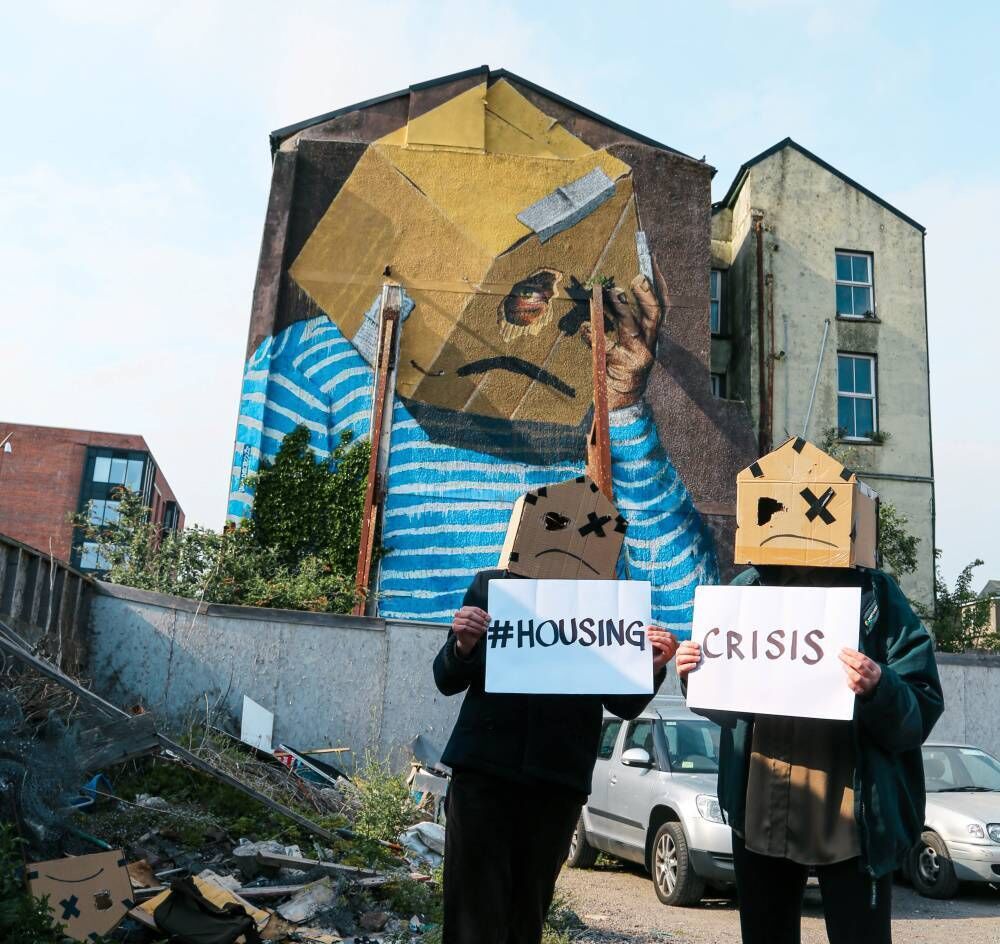
Meeting the Constitutional obligation of the right to adequate housing would require ending homelessness progressively. In particular it would require the rapid ending of child and family homelessness.
It should and would require greater state funding and resources put into ensuring a sufficient supply of affordable, secure, decent standard housing. It would also require the state to support the empowerment and participation of those whose rights are being violated.
It can give us the vision, the principles, the guide — by which all policy will be assessed for its effectiveness. It becomes the target the Government must achieve.
It would strengthen the State’s ability to implement housing policy measures that could provide a greater supply of affordable and secure homes which are currently inhibited by the Constitutional protection of private property rights.
These include:
- Preventing evictions to stop homelessness;
- tackling dereliction and vacancy of property through taxes and levies, compulsory purchase and compulsory sales orders;
- tackling vacant land through taxes and levies, compulsory purchase and compulsory sales orders;
- ensuring increased supply of land to make housing affordable;
- strengthening tenants rights and providing real life-time security of tenure;
- enforcement of standards in private rental accommodation; and
- tackling discrimination in housing provision.
Ensuring habitable housing for all can support action on climate change, such as retrofitting of private rental accommodation, and as enabling the planning and use of property and land to meet housing needs in the most environmentally sustainable way.
This constitutional right to housing would not "give a key to a home for all" but it would place a responsibility on government to provide a housing system that ensures everyone has adequate housing.

CONNECT WITH US TODAY



Be the first to know the latest news and updates