Aoife Moore: It's time to take the boot off women's necks
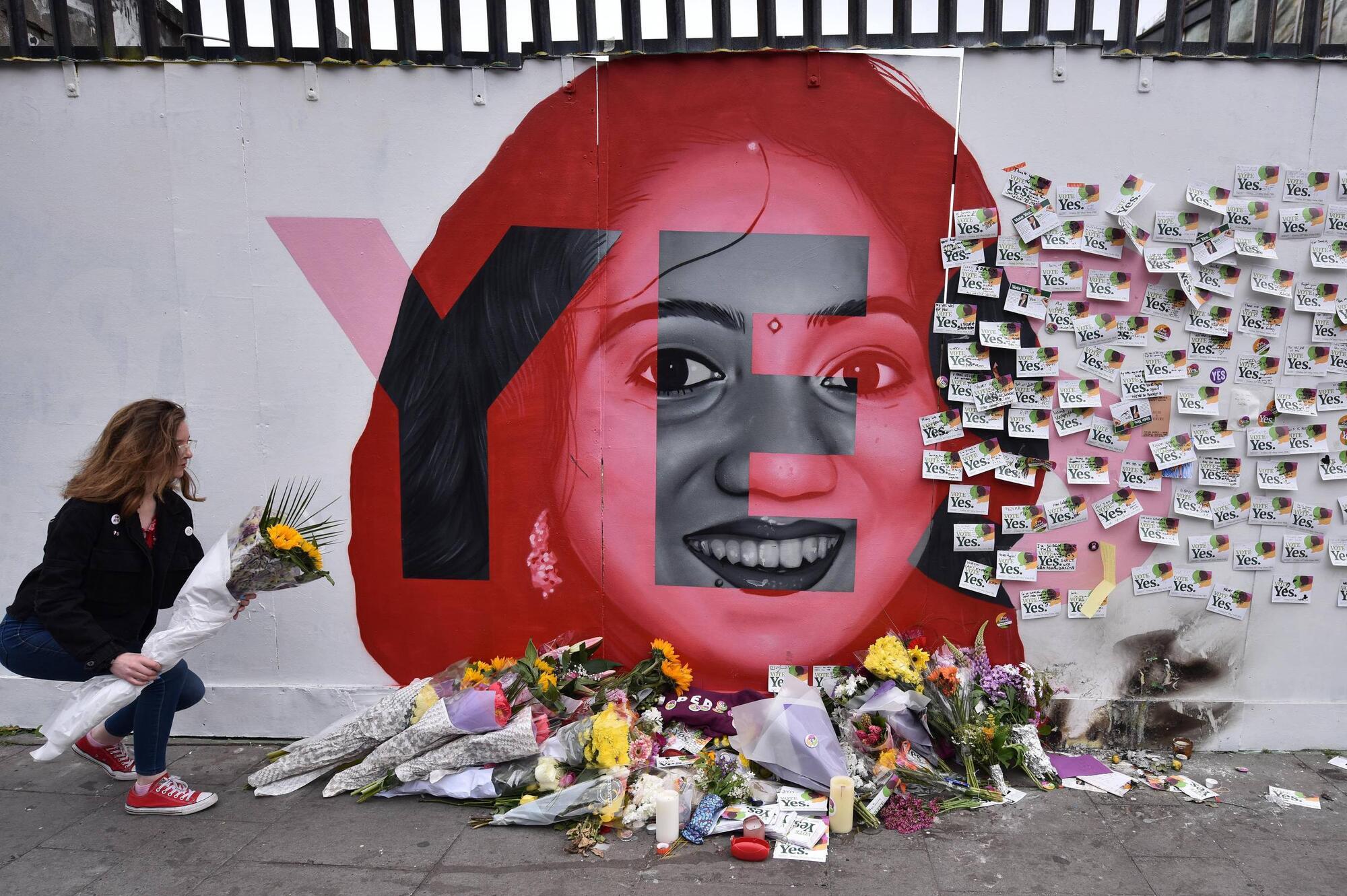
January 1, 2019, should have marked the end of Ireland exporting its women overseas for abortions. Photo: Charles McQuillan/Getty Images
January 1, 2019, should have marked the end of Ireland exporting its women overseas for abortions.
It should have been the end of flights to London and ferries to Liverpool and bleeding alone in taxis. The end of crying on dirty underground tubes, holding paperwork detailing your most intimate medical information while trying to work out if you're supposed to be on the Victoria Line.
The end of women and girls, just hours after a life-altering medical procedure, dragging a wheelie suitcase through airports. The end of sympathetic healthcare workers holding Irish women's hands as they sit alone in a foreign centre to undergo procedures that will stay with them forever.
It should have been the end of all this. But it wasn't.
Despite 66.4% of us voting in the referendum to repeal the Eighth Amendment in May 2018, this is still happening. Pregnant people in Ireland are still travelling for abortions in some of the most devastating circumstances imaginable.
Contrary to what many people believe, a diagnosis of a fatal fetal anomaly still does not mean the right to termination in Ireland.
When two doctors cannot guarantee the baby will die quickly enough to satisfy legislation, which notes there has to be a reasonable belief that the foetus will not survive longer than 28 days, parents are told their baby's condition is "not fatal enough".
There is no provision for parents whose babies' conditions are not fatal but "severe, catastrophic, distressing and profound," according to Termination for Medical Reasons (TMFR), a group that supports parents going through this horrific experience.
These parents are told they have no choice to end their pregnancy in Ireland. They cannot spare their child's suffering at home, no matter their circumstances. Stay, be pregnant, and all the while know that the baby you so desperately wanted is in pain. Or get back on the boat.
So they do. Every week. In 2020, 194 pregnant Irish people travelled to Britain for terminations. The proportion of abortions performed on the grounds of fatal foetal abnormality increased to 32%, from 17% in 2019.
This week, the Abortion Working Group, made up of over 20 civil organisations and healthcare providers, led by the National Women's Council, called on the public to have their say in a review of Ireland's abortion laws.
Once again, just as they did during the campaign for Repeal, Irish women will tear open old wounds, share their trauma and hope that someone is listening. We heard a third of women who travel for abortions now are cases of fatal fetal anomaly, a whole section of society for whom repealing the Eighth Amendment might as well not have happened at all.
For those who do not have a fatal diagnosis, our legislation stands in the way, in a different way. The Act legalises abortion on request, up to 12 weeks of pregnancy, subject to a requirement to wait three days between seeing your doctor and receiving the abortion.
The three-day wait period, a condescending, non-medical, arbitrary regulation which sends women in crisis pregnancy away for a few days "to give it a think" makes a bad situation traumatic. It is a fact that the three-day wait has pushed pregnant people over the 12-week limit for abortions in Ireland.
It is also a fact that the World Health Organisation has stated that waiting periods act as a barrier to safe abortion access. It says mandatory waiting periods can result in delayed care, which can “jeopardise women’s ability to access safe, legal abortion services and demeans women as competent decision-makers”.
A mandatory waiting period is a regulatory way of telling society that you don't trust women to make decisions about their own bodies. That even if a pregnant person has stated categorically to a medical professional that they want an abortion, they're probably not 100%, because women can be fickle, right?
We couldn't be running around taking women at their word. God knows what would happen then, you might have to start providing an appropriate amount of domestic violence refuge places, or making childcare more affordable. The three-day wait is a sop to the imaginary middle Ireland for whom abortion makes them uneasy.
It plays into the myth that women use abortion as contraception or that the decision to have a termination is something that anyone would take lightly. It has no medical basis, it's a moral pat on the head. A government-regulated "go away and think about what you've done".
The time-limited part of the crisis is government-regulated too. The way the Act defines it is 12 weeks of pregnancy is around 10 weeks since conception. Some people could be close to this time limit or beyond it when they find out they are pregnant, such as teenagers or women who have irregular menstrual cycles.
Combined with the three-day wait, the timeframe for access to abortion is too narrow for many people. So, these people have to get back on the boat too. We know these people are usually younger or from vulnerable situations, like refugees or people living in domestic violence situations.
Never let it be said that Irish legislation couldn't make a bad situation worse. The most maddening thing about all of this is we already knew this would happen.
When the legislation was drafted, every single flaw was pointed out, every single red flag was waved, and the government of the day (which looks incredibly like the government of this day) powered on anyway.
Campaigners are pointing out the same flaws, waving the same red flags, tearing open old wounds, reliving old trauma in public, in the hope that this time someone will listen. Official Ireland has a long history of not listening to women, or worse, deciding what's best for women.
These decisions have kept a boot on the neck of Irish women for decades, have imprisoned us, exported us and hurt us, all in the guise of believing they knew what was best for us. Two in three people in Ireland said loudly in May 2018 that it was time to take the boot from our necks.
You either trust women, or you don't. Change the law.

CONNECT WITH US TODAY



Be the first to know the latest news and updates