Alison O'Connor: US experience is a warning to pay attention to Ireland's abortion law review
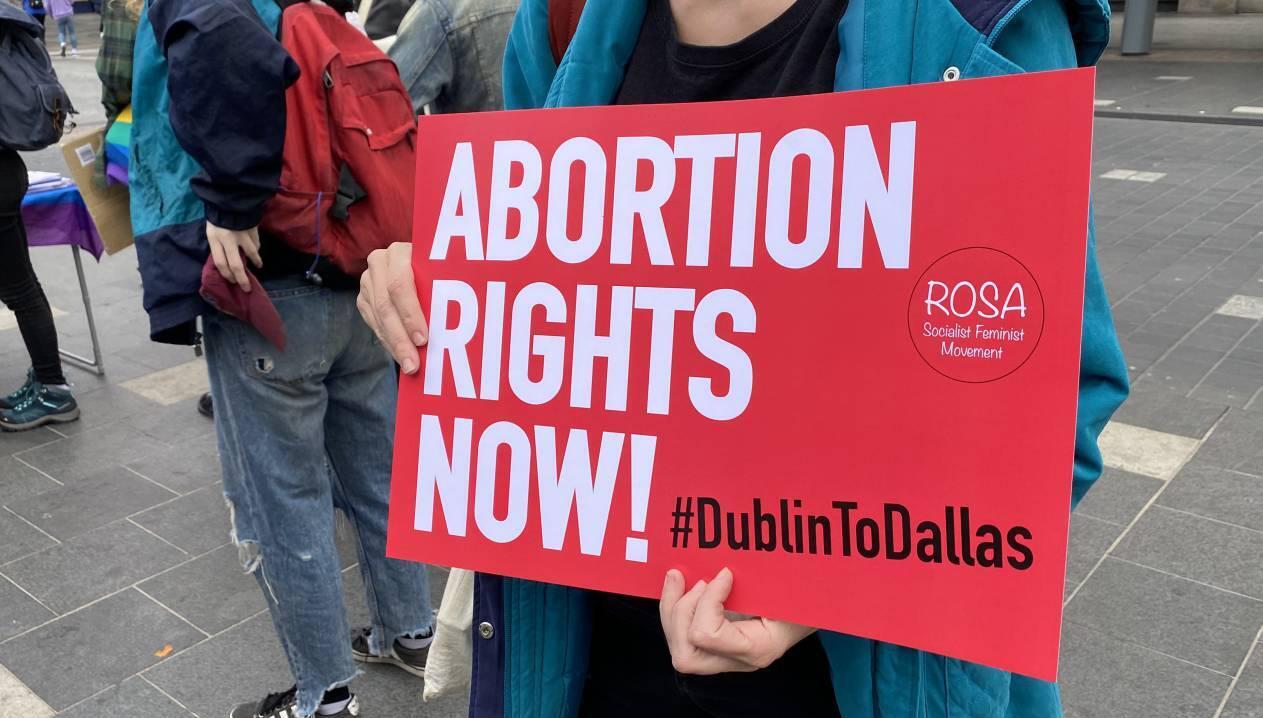
In a remarkable turnaround, abortion rights campaigners have protested in Dublin against moves to restrict access to abortion in the US. Irish women ought to bear in mind that the law governing their own rights are under review at the moment.

IF you are a citizen of the US state of Texas you are free to bring a lawsuit against anyone — friend, taxi driver, doctor — who “aids or abets” a woman there in getting an abortion. If your suit is successful you win a jackpot of $10,000 plus any legal fees incurred.
This now applies to an abortion taking place after a foetal heartbeat has been detected, something that occurs around six weeks.
Alongside Texas, Idaho has most recently introduced its own extraordinary legal constraints where family members can sue doctors who perform the procedure. The Idaho bill allows the mother, grandparents, siblings, aunts, and uncles of the “preborn child”, as well as the father, to sue if an abortion has been performed.
Abortion rights are under siege in the US, a place we would once have looked towards as a beacon of reproductive rights. Not that long ago such developments would have been impossible to imagine.
But hugely aided by the election of Donald Trump as US president, and his nomination of Supreme Court judges, as well as emboldened Republican politicians, the laws are being changed in some of the most pernicious ways possible.
There will be many in Ireland who might wish never to discuss the topic again and for women to quietly accept the historic referendum win of 2018. But while the US is an extreme example of how a situation can flip dramatically, so is Ireland given how we had such strict laws and chose to outsource the issue sending Irish women beyond our borders for terminations.
So it is good that a review is currently being carried out into our still-new abortion laws.
The Regulation of Termination of Pregnancy Act 2018 provides for a review of the legislation three years after its implementation.
The Government recently announced the appointment of barrister Marie O’Shea as the independent chair. As part of that, we are having a public consultation which remains open until April 1. Anyone may contribute.
Afterwards, the independent chair will examine the findings, as well as research the experiences of those using the services. There will also be research provided by service provides themselves.
All of this will be combined into a report with recommendations.
It may surprise some people to discover that 375 women travelled from Ireland to the UK for an abortion in 2020. Those figures were provided by the clinics involved.
We don’t know for sure, but can conclude the main reason would have been a diagnosis of a foetal anomaly that was not fatal, as well as women who were over the limit of 12 weeks pregnant. Who knows the additional burdens that were placed on these women by the pandemic?
One of the positives arising out of Covid was the decision to allow remote consultations between a GP and a woman wishing to discuss abortion. It is hoped this option will be retained. In the majority of cases these early terminations would involve abortion pills.
A very disturbing feature of our abortion care currently offered is that, out of 19 maternity centres only 10 offer a full service to women. In other words, quite incredibly, nine of the hospitals are not providing all services to women.
The HSE had intended addressing this issue two years ago but apparently these efforts were impeded by Covid. We have not been told which hospitals are not fulfilling their obligations and that information should be made known, as well as the reasons why. Under the law, individuals are entitled to a conscientious objection but institutions are not.
This situation means an even higher number of women will go to their GP for abortion care — but further figures show that only one in ten of family doctors are providing this service. That’s according to the National Women’s Council (NWC), and it means only a third of GP surgeries offer these early medical abortions.
The NWC said Freedom of information requests seen by it show that, of the 405 GPs who are early medical abortion providers, just 246 are currently listed through My Options — the HSE unplanned pregnancy support services.
The other GPs only provide services to their existing patients and will not take referrals. “This is very concerning as it indicates the actual pool of providers for the general public is just 7% of the overall GP population.” Half of all Irish counties have less than 10 GPs offering the service currently — in some counties it could be as low as one GP per county said the organisation.
The NWC is one of over 20 civil society organisations that comprise the Abortion Working Group which has submitted a report to the current review process highlighting this and other issues.
It also calls for the full decriminalisation of abortion in line with WHO guidance “to remove the chilling effect on healthcare provided”. Now this is an unlikely development, as is the removal of the 12-weeks gestational limit that would enable abortion on request up to viability to ensure that no woman is forced to travel abroad for essential reproductive healthcare.
More attainable could be the call for the removal of the mandatory three days wait period, which has no medical purpose.
To bolster its case, the Abortion Working Group this week published the results of an opinion poll which showed that 80% of people “agree no woman in Ireland, should still have to travel abroad to access abortion care”, while 71% agree abortion should be treated like any other medical procedure and should not be a matter for criminal law.
The research was undertaken last month by Opinions Market Research with a representative sample of 863 adults.
But, as Health Minister Stephen Donnelly told a recent meeting of the Oireachtas health committee, he wanted to be very clear that this review is all about how the Act operates:
There were very clear heads of Bill published before the 2018 abortion referendum so that people knew what they were voting for at that time, such as the 12-week limit.
So, he told that December meeting of TDs and senators that it is not in the “scope of this review”.
The three days was not up for consideration, but how it was operationalised was, he explained. This review could, for example, consider if, operationally, there are ways “that the three days is working, is not working and are there potentially changes required. The policy question as to the waiting period is not in scope.” Or with the 12 weeks limit.
GPs might say they are really nervous about the 12 weeks and were tending to provide the services to women where they thought the pregnancy was around eight or nine weeks. “That clearly is an operational issue because the policy position is 12 weeks… that could be addressed,” said Donnelly.
The abortion “fight” is never over. We can see from the US how shockingly things can regress. The results of our current review, and the actions taken arising out of it, will be important.
CONNECT WITH US TODAY



Be the first to know the latest news and updates