Alison O'Connor: Time for proper debate on Irish neutrality
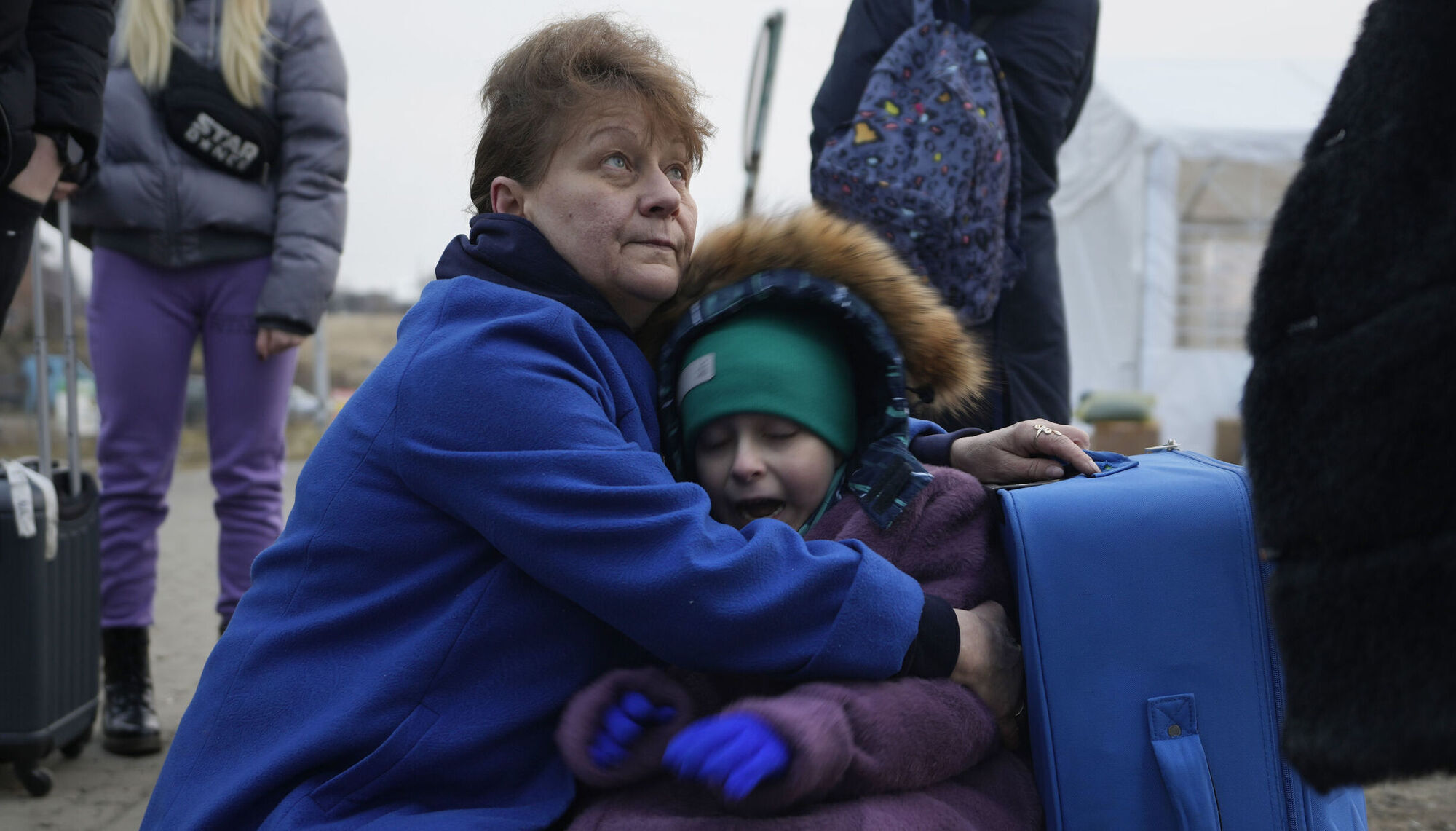
A woman holds a small girl at a border crossing in Medyka, Poland, as Ukrainian refugees flee the Russian invasion. Picture: Markus Schreiber/AP
How do you stay neutral in the event of a wraparound war that is not only taking place on the edge of the continent in which you live, but digitally experienced in real time here, the instant it happens there?
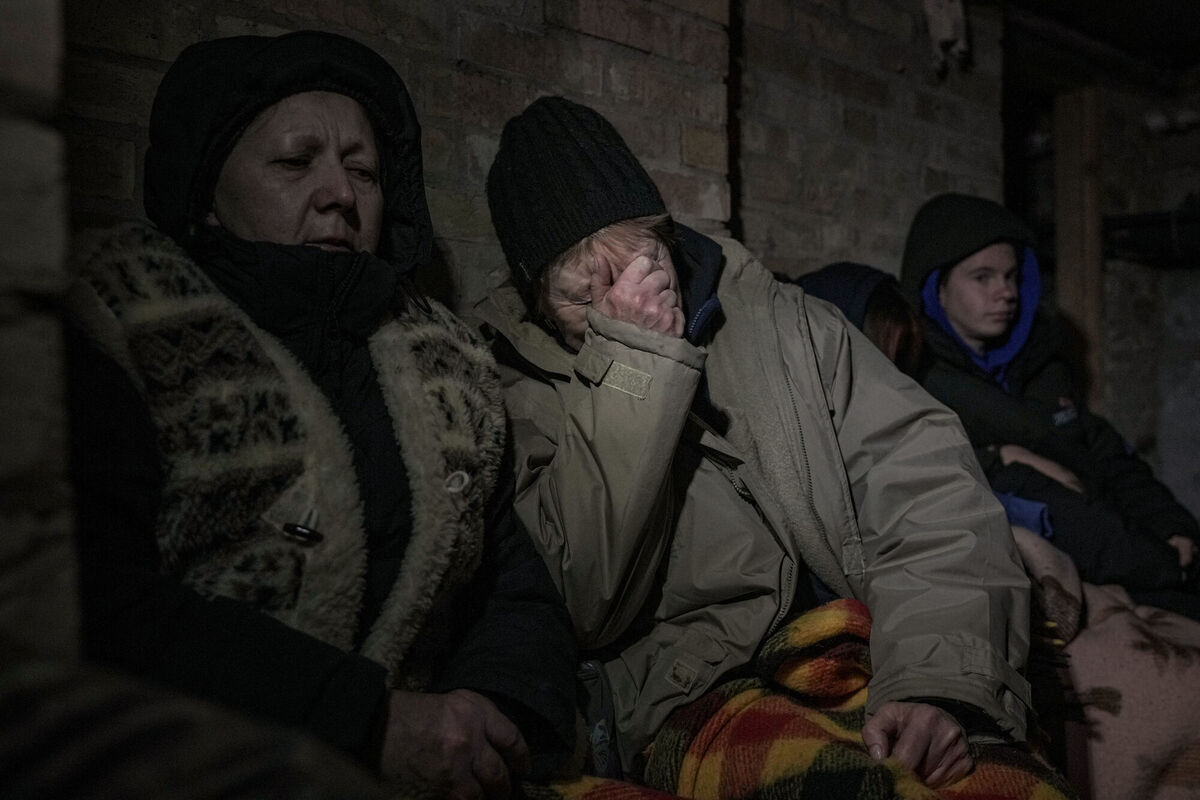
We can’t taste and smell what is happening in Ukraine but it does feel we can almost touch the horror that has befallen the country since Russia began it’s war over a week ago. We are seeing it all live on social media — the tiny babies plucked from hospital neonatal wards bedded down on the floor of bomb shelters. Other babies born in similar surroundings. Families huddled in underground car parks. Queues for the supermarkets and pharmacies.
We can hear the loud shelling in the background. We marvel at the bravery of the native population as they make Molotov cocktails to throw at Russian tanks using an online graphic from their defence ministry to do so.
We listen as even official interpreters lose their usual calm while translating into English the words of President Volodymyr Zelenskyy a — a man who seems equally able to adapt from being a winner (2006) to brilliantly leading a country in mortal peril.
Add to it all the huge media coverage. Even with that, we are getting constant social media updates from journalists on the ground — not just on what is happening more widely, but the moment-to-moment reality of covering this awful war.
Both for generous and self-interested reasons we realise this moment is not just a momentous one for Ukrainians, but for all of us. We observe the recent appalling happenings with the prior knowledge of the horrors that occurred during the Second World War.
In the time since Russian President Vladimir Putin made his much-anticipated move, Ireland has done well — despite our mixed-up thinking on neutrality. We’ve taken a forthright approach on Russia. In the world that exists today, having half your head in the sand on this issue simply isn’t feasible — even if most countries do “like” us and respect our role as peacekeepers.
The realisation has been dawning for a while.
Even the cyberattack on the HSE last year was an indicator of our vulnerability.
For decades we traditionally liked to hold the high moral ground on the neutrality issue. A lot of the time that has served us well.
However, recent events show that it can’t be ducked or avoided for too much longer.
The question we need to answer is do we wish to be led or carried? Or should we have a well-thought out position on how far we are willing to go? Then when the time comes it will be no surprise to anyone else, including ourselves.
Let’s think back to those threatened naval drills by the Russians. Their intention may have been sending messages to Nato but they were using our maritime backyard to do so. The reality — starkly laid out in the recent Commission on the Defence Forces — is that we do not even have the most basic of necessary surveillance equipment to know what is going on around our coastline, whether in the air, at sea, or to observe from a military HQ, let alone to be in a position to actually do anything about it.
That commission examined a few options but recommended one, at an annual extra cost of €500m, where we “plug gaps” on things such as a military radar system, modern aircraft, cyber capabilities, and the modernising of the naval service to deploy all nine of its ships. There is no escaping the fact that our Defence Forces are in utterly rag order and hardly capable of repelling a “dad’s army”.
In May 2019 a Red C exit poll for RTÉ and TG4 indicated that 82% of voters said Ireland should remain a neutral country in all aspects, while a third agreed that Ireland should be part of "the proposed European armed forces". Mind you, the same poll showed 60% of the population believed it was important to use, promote, and protect the Irish language. Both strong on aspiration.
That phrase 'political neutrality’ has been bandied about a lot in recent days by our Government. After the fact, as it were, most people seem alright with our harshly denouncing Putin’s actions, backing sanctions, and sending money to Ukraine. We are making a full pro-rata contribution of €10m to the EU Ukrainian fund — with Irish money to be used to pay for fuel, flak jackets, and helmets — as well as a further €10m in humanitarian aid. Will our EU partners remain alright with that approach in the future? They may but we can’t be certain.
There are no plans to send Irish troops to Ukraine as part of any European response. We are not sending military equipment. Is this the sum of our core beliefs and values? Again it may well be but we do need to actually have a discussion and work it out officially. We are one of a handful of EU countries who are not members of Nato. Irish peacekeeping missions require approval from the Dáil, Cabinet, and UN Security Council.
There are clear signals coming from the top of Government regarding the current ‘flexibilty’ of our neutrality. Micheál Martin said the constitution was very clear that formal participation in European common defence would require a referendum. However, the Taoiseach added that neutrality was a policy issue that could be changed at any time subject to the Oireachtas or government of the day. Russia’s behaviour “illustrates the degree to which Europe is vulnerable”, he said.
“We’re politically part of the European Union. We support the ideas of self-determination, sovereignty, territorial integrity, freedom of association, free media, free trade, basic rights. It’s under attack now,” Mr Martin added.
He said Ireland was part of the EU and supported its ideals, which were under pressure from regimes such as Russia and “it would be naive in the extreme not to reflect on that”.
He didn’t see us applying for Nato membership, but we needed to think about deeper involvement in European defence.
Much of our recent European defence debate has centred around Pesco — part of the EU’s security and defence policy. Sinn Féin has been against it and Nato. The invasion of Ukraine has certainly seen that party toughen its previously soft stance on Russia. It’s wider view now will be an interesting one to discover.
Our neutrality means different things to different people and we need to work that out now. We can no longer dance on the head of the neutrality pin. It has become almost hackneyed to suggest it but the perfect place to have that discussion would be a citizens' assembly.
CONNECT WITH US TODAY



Be the first to know the latest news and updates