Q&A: How goes the vaccine roll-out?
Figures published on Friday show 248,284 doses given, including 89,380 people in nursing homes and frontline health workers who are now fully vaccinated.
Figures published on Friday show 248,284 doses given, including 89,380 people in nursing homes and frontline health workers who are now fully vaccinated.
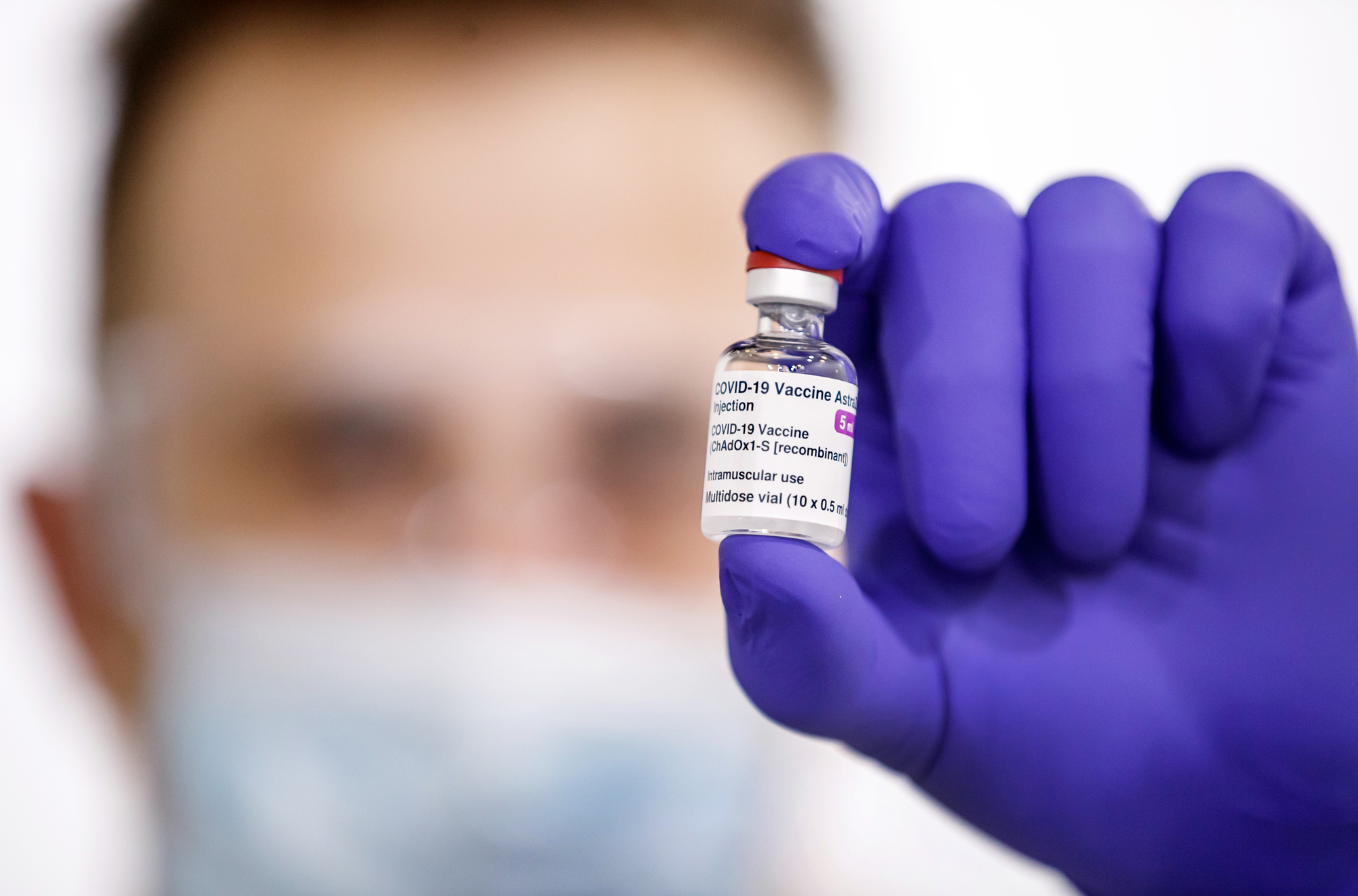
This includes 245,915 Pfizer/BioNTech doses, 1,893 Moderna and 476 Oxford/ AstraZeneca. And 1,610 doses were given to people outside the priority groups.
All over-70s, staff in residential care settings and frontline healthcare workers who already started their vaccines receive an mRNA vaccine from PfizerBioNTech or Moderna.
From Monday, 22,000 healthcare workers will get the Oxford/AstraZeneca vaccine, and this will be used for most under-70s.
The European Medicines Agency approved all three for all ages, but last week Irish authorities decided the evidence so far around protection for older people favours mRNA vaccines.
Vaccination for over-85s starts on Monday across 84 GP practices in 20 counties. Twelve thousand are expected to be vaccinated by week’s end from a group of 72,000.
This will increase to 42,000 weekly, and move next to people aged 80-84 and down the ages to cover 490,000 over-70s in a 12-week span by mid-May.
The good news for younger people now is the priority sequencing list is being re-assessed. But there is no confirmation yet of how this could be re-set or who will benefit first.
For most over-70s, it will be a family doctor. In some cases, doctors from smaller practices will ‘buddy-up’ with a bigger practice, or send patients to a vaccination clinic like the one being built at the Munster Technological University.
Almost everyone else will attend a GP, a pharmacist, or a mass vaccination centre.
Centres at Cork City Hall and elsewhere will be staffed by a mix of HSE vaccinators, healthcare workers and medical volunteers.
Arrangements will be made for people who cannot leave home. The HSE indicated this week it could have help from the Defence Forces or the National Ambulance Service for this.
About 6,000 people, including 270 retired GPs, have taken vaccinator training so far.
It emerged this week at least one GP has “conscientious objections” and will not give these vaccines.
A survey by GP Buddy in December found up to 5% of GPs would not get the vaccine based on evidence then available.
The HSE helpline 1850 24 1850 should in theory help anyone in this situation as doctors have been asked to alert them to this choice.
They will also refer anyone who does not have a GP to their closest centre.
GPs will phone all over-70s.
The HSE online portal for everyone else is still under development. It is hoped the delays encountered by GPs – some are still waiting – when booking their own shots will be ironed out before the public uses it.
The roll-out is more like a spider's web than a ladder.
The High-Level Taskforce on Covid-19 Vaccination drew up an implementation plan, led by Professor Brian MacCraith.
The HSE connects that plan to reality, led by a Covid-19 Immunisation Working Group under Chief Clinical Officer Dr Colm Henry.
The vaccine supply chain is managed by the HSE National Immunisation Office and the National Cold Chain Service.
The HSE is now working with the Irish College of General Practitioners and the Irish Medical Organisation around older patients’ vaccinations.
Up next is the Irish Pharmacy Union, whose members will give vaccinations, but are still waiting on their own shots.
Advice on age-groups comes from the National Immunisation Advisory Committee, chaired by Professor Karina Butler, based on European Medicines Agency approvals.
Vaccine safety is assessed by the Health Products Regulatory Authority, again working with the European Medicines Agency.
Training information for healthcare workers and information for the public comes mainly from the HSE’s National Immunisation Office.
Vaccine supply is a huge obstacle. Both Pfizer and AstraZeneca cut supplies, before boosting them again but not yet to the agreed-upon amounts.
This week, European Commission president Ursula von der Leyen said vaccine science is ahead of industrial capacity.
“One of the current bottlenecks is linked to just two synthetic molecules. If we had just 250 grammes more of these molecules, companies say they could produce one million more doses of vaccine,” she said.
All the same, it can be hard to take when we hear 301,279 doses were given in Northern Ireland under a separate UK deal.
And we did have our expectations raised and then dashed by political over-promising.
In mid-January, Health Minister Stephen Donnelly said 700,000 people would be vaccinated by the end of March.
But only days earlier during a press briefing, Prof Brian MacCraith had refused to speculate on dates or figures, saying the situation was too uncertain.

CONNECT WITH US TODAY



Be the first to know the latest news and updates