The forgotten frontline: Our public health specialists are struggling to meet demand
Not all heroes wear PPE. Tucked away and out of sight, the country’s 60 or so public health specialists are at breaking point, writes Neil Michael.
The forgotten frontline: Our public health specialists are struggling to meet demand

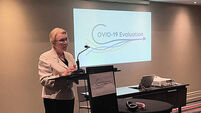
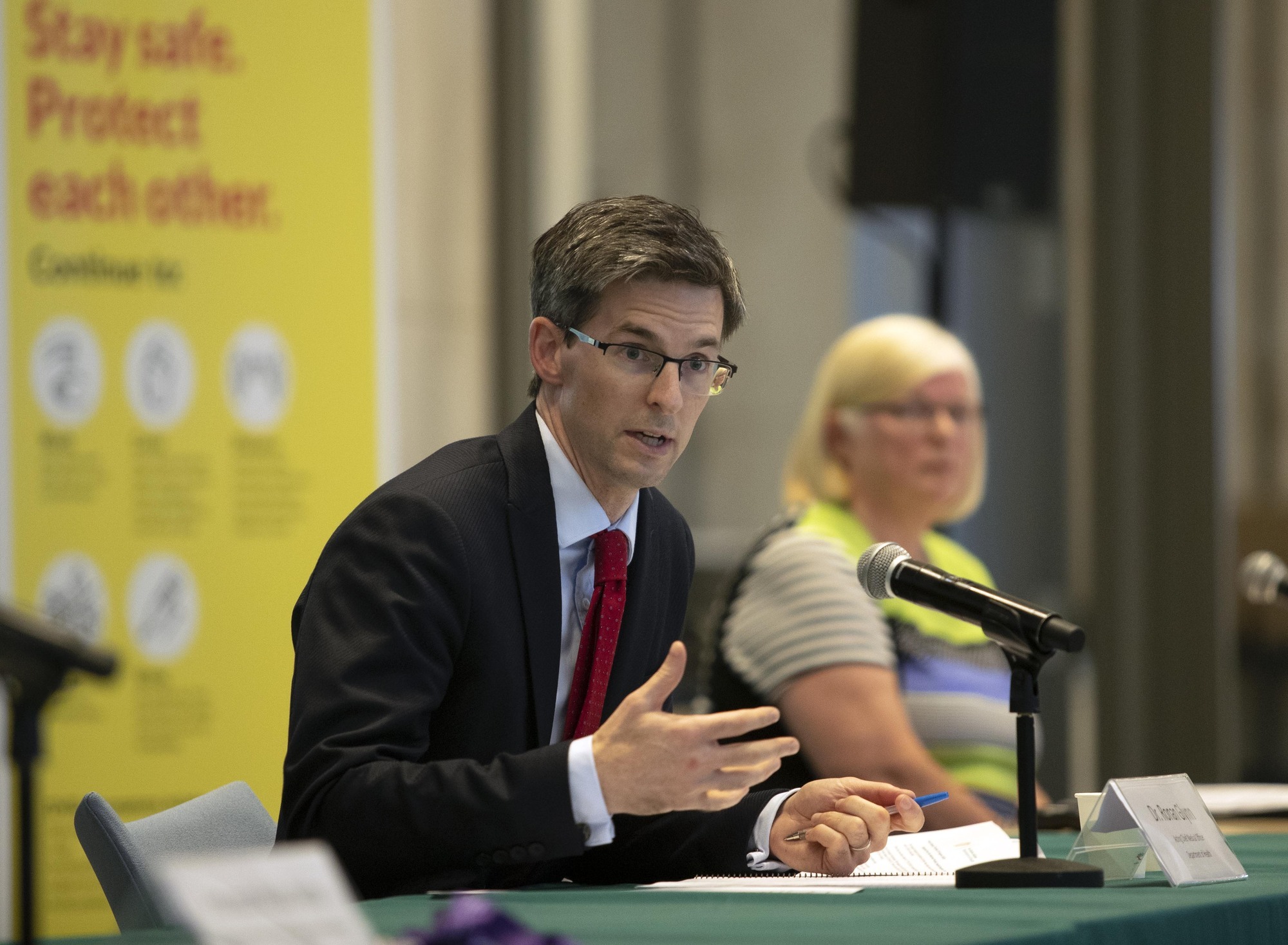
Dr Ronan Glynn, acting chief medical officer, with Dr Derval Igoe, specialist in public health medicine in the background at a Covid-19 update press conference at the Department of Health. Picture: Colin Keegan, Collins Dublin

If you hear the words “frontline” and “worker”, you’d be forgiven for imagining a nurse.

Alternatively, you might think of someone dressed head to toe in personal protective equipment.

But you are unlikely to imagine a public health specialist, or medical officers of health.

That’s because most of us don’t know what they look like, or what they even do — especially as they have been offered little or no national management role in the country’s pandemic response.

For example, despite contact tracing being a vital part of what public health specialists do, the national contact tracing system is run by a management consultant.

In addition, the Covid-19 Expert Advisory Group that advises the National Public Health Emergency Team (NPHET) is run by a consultant virologist, Dr Cillian de Gascun.

Odd as this may sound, NPHET has hardly any public health specialist representation on it.

Despite being a vital cornerstone in our health system, public health specialism is — as acting Chief Medical Officer Ronan Glynn said at a recent NPHET briefing — a largely “unsung and unthanked” one.

Indeed, its specialists have been the Cinderellas of the health service for years.

For decades, they have worked quietly behind the scenes, and as a result, few people actually know they exist, let alone what they actually do. 

They don’t even have their own press office.

So, what do they do? 

They investigate and control notifiable infectious diseases and outbreaks. They are the ones who make sure outbreaks don’t kill everyone.

Although mainly office-bound, part of their work is also to take a look for themselves at what is happening on the ground, at the source of an outbreak.

Want a visual?

Think Kate Winslet’s Dr Erin Mears in the apocryphal 2011 thriller Contagion.

Or, given that most of them are women, you could also visualise Anne Marie Duff’s character in the BBC drama The Salisbury Poisonings, or Rene Marie Russo’s character in the film Outbreak.

However over-dramatised the characters that these well-paid actors play may be, they are, nonetheless, not too dissimilar to the real-life roles played by our faceless public health specialists.

For now, that job means making sure that 49,000 people, or 1% of the Irish population, don’t die of Covid-19.

This is the headline number of deaths they feared at the start of the pandemic.

It is still the number that haunts their every working day as the country’s lead disease-control experts continue their work.

Unless you are directly involved in an outbreak, it is very unlikely you will ever have any dealings with them.

Indeed, the closest any of us get to what they are even thinking are the near-daily briefings by NPHET.

The stats that are collated? The dire warnings? The latest intelligence on what the virus is up to? 

There is a good chance a large proportion of what emerges at these briefings is from the country’s 60 or so public health specialists, tucked away, out of sight, in their eight regional departments.

But there is a big problem.

They all see themselves as overworked, underpaid, “utterly demoralised”, and struggling to meet demand.

Until the summer, each of the regional departments had up to 80 support staff, including nurses and secretaries.

Most of those have been reassigned back to their old jobs as infection rates increase.

Added to that, the specialists don’t even have a contract that matches how they work.

Indeed, the contract they have is, in effect, the same as the HSE Level 3 contract the secretaries who work for them have.

Yet the responsibilities and legislative powers they have as designated medical officers of health would keep anybody awake at night.

For the past 17 years, they have had to beg successive Governments to be recognised as consultants, and be paid accordingly.

Indeed, last week, the Irish Medical Organisation met with the Department of Health to thrash out a deal to resolve the issue over contracts for the specialists.

Despite the fact they have increased their productivity in line with an agreement that they would get consultants' contracts and increased pay, nothing has materialised, and nothing looks likely to either.

Yesterday provided an additional source of annoyance for the publish health specialists: the announcement the Government has set up a panel to best interpret public health advice.

Public health specialists see this as a way of “watering down” whatever advice they give.

With a system that is now at breaking point, it is hard not to see why the country’s public health specialists are so demoralised.

None of them want to talk about a strike, but you can be sure no other group of frontline workers would take being walked over for so long — especially at a time when they are needed so much.

More in this section

Revoiced

Newsletter

Sign up to the best reads of the week from irishexaminer.com selected just for you.

Cookie Policy Privacy Policy Brand Safety FAQ Help Contact Us Terms and Conditions

© Examiner Echo Group Limited