Áine Kenny: Mums describe 'lonely and isolating' experiences under Covid maternity restrictions
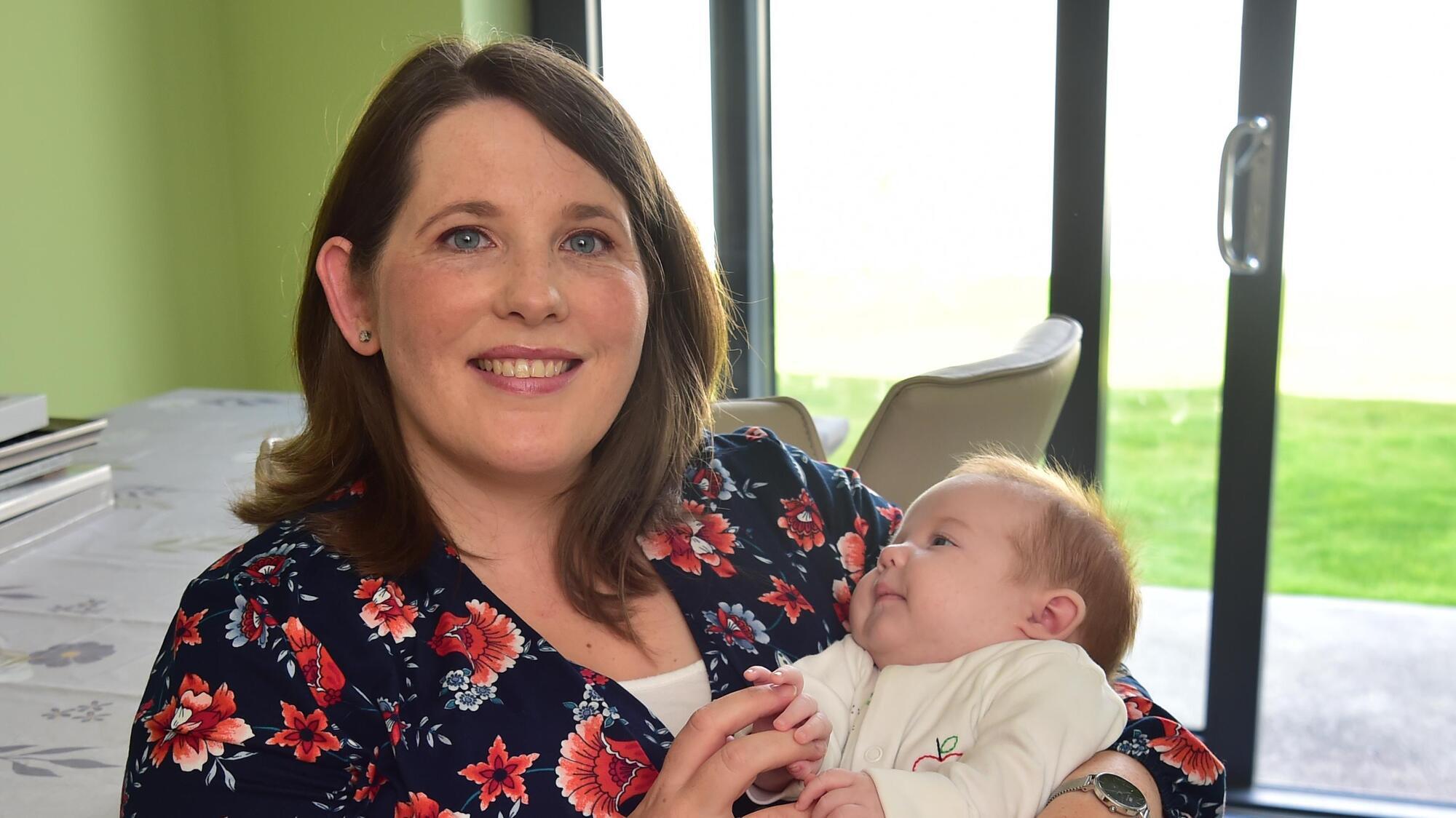
Linda Kelly, Glanmire, Cork who had a baby girl Amy-Kate seven weeks ago in CUMH and her partner couldn't attend any scans, he was only there for two hours during and after the birth. Picture: Dan Linehan
Due to maternity hospital visiting restrictions, women have been forced to spend hours alone in labour, with partners only allowed in during the birth.
Couples then only get an hour or two with their baby, with either limited visits or no visits at all after this, depending on the hospital.
Those who are expecting also don't have the support of a partner or loved one during scans and appointments.
Linda Kelly, who is from Glanmire in Cork, had her baby Amy-Kate seven weeks ago. She said the restrictions made the experience "very lonely and isolating".
She was lucky that her earlier scans and check-ups were done before the lockdown happened.
"My partner couldn't come to my 20-week scan. Then there's a bit of a break, and during the last ten weeks of pregnancy, you're in the hospital quite a lot.
"All of those appointments were on my own."
Ms Kelly says this was her second baby, so she knew what to expect. However, she had a very traumatic birth with her first baby two years ago.
"As I was getting closer to this birth, I was getting really anxious. But I was also really angry because other places were lifting restrictions."
For this birth, she had a C-section.
"I was dropped off that morning. I had to check in by myself, I was up in the ward on my own for about four hours.
"I was able to ring my husband to come back when I was being brought to the theatre. He was allowed in for the section and to the recovery room afterwards.
"After about two hours, they said they had to move me back up to the ward. They started moving my bed.
"They didn't even stop the bed so I could say goodbye to my husband, who was then sent home."
Previously, Cork University Maternity Hospital allowed partners to come in at 7am and leave at 11pm. Now, there are no visitors for inpatients.
"I can't see why there isn't a visiting hour for partners in the afternoon and evening, and they could be spread out.
"The partner is of the same household as a pregnant woman anyway."
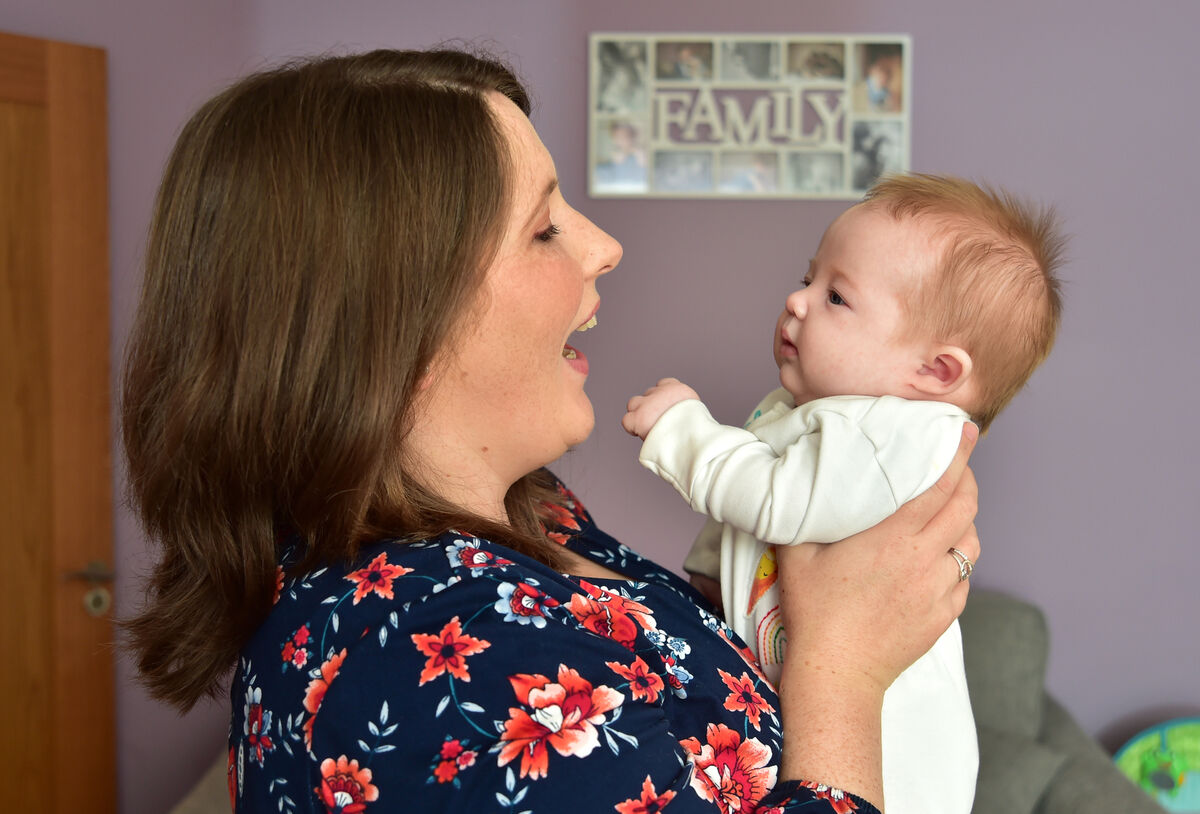
Ms Kelly was counting down the hours until she could get home.
"I remember the first day I was there, the woman across from me was bawling her eyes out behind her curtain.
"There are four really lonely women, at the most vulnerable time in their life. That's the time when you need somebody holding your hand."
Ms Kelly says the midwives and nurses were fantastic, but nothing can replace the birth partner.
She also couldn't understand why the restrictions were so tight when the women who were coming in were not even being tested for Covid.
"We got temperature checks and wore masks. I wasn't told to isolate before the birth."
She added that some Dublin maternity hospitals allowed nominated visitors before and after the birth, during certain hours, unlike CUMH which has a blanket ban.
In a statement, a spokesperson for Cork University Hospital said: "In the interest of patient and public safety, strict visitor restrictions are in place in Cork University Maternity Hospital.
"Women admitted for induction of labour or in labour can have one nominated companion. This companion can only join the patient when she is in labour or called for caesarean section."
For all other inpatients, including antenatal inpatients and postnatal inpatients, there are no visitors allowed.
"For patients in the Neonatal Intensive Care Unit, one parent at a time can visit their baby. The Neonatal Intensive Care Unit visiting times are unrestricted."
CUMH added that for outpatients, only the women attending the appointment can enter the hospital.
"We are also very sensitive to specific situations regarding pregnancy loss, stillbirth and unexpected complications and we adapt our visiting restrictions in these situations."
Gillian O'Connor, from Dublin, gave birth to her first baby, Jack, in the Coombe at the height of lockdown, on May 8.
"I was seven months pregnant when the lockdown happened. My pregnancy was considered high risk, so I had extra scans and appointments, which my partner could not attend."
She felt it difficult to advocate for herself and to process information that was relayed to her, which was often complicated or upsetting.
For the birth itself, she was induced and was in labour for 24 hours by herself in the hospital in the pre-labour ward.
"It was incredibly lonely. Your birthing partner is the support that you need with you.
"When I was by myself in the early stages of labour, there was a woman there who was so frightened, on the phone to her mother and partner. We really needed somebody with us."
Her husband was allowed to come in when she was the active labour ward.
"I burst into tears when I saw him, the relief of seeing him. We got about an hour and a half afterwards with the baby and then I was wheeled away.
"Then I was in for three nights on my own and we didn't get to see him, there were no visitors allowed at all because that was during the lockdown.
"I only saw him once at the door when I had to get money off him."
She felt that the environment in the hospitals was quite clinical and rushed, which she understands was due to Covid, but she says the impact on pregnant people was palpable.
"On the second day, the baby had to get a procedure done.
She says it seems like a very restrictive and old-fashioned practice for the partners to be effectively barred.
"The nurses and midwives are amazing, but partners offer something else that only someone who knows you and loves you can."
Ms O'Connor doesn't understand why the partner can't be there during the pre-labour, and that no person should have to go through it alone.
"I can't imagine what it's been like for people in tragic circumstances."
She added that she wasn't tested for Covid before going in to give birth.
The Coombe hospital said it currently has restricted visiting hours for inpatients.
"Partners are not currently allowed to attend scans or medical appointments.
"One designated partner of the woman may visit between 2pm and 4.30pm. This applies to all inpatient wards; such as antenatal, postnatal and gynaecology."
Partners are also allowed to attend the birth.
"Restrictions are constantly under review and may be eased/increased depending on the rates of transmission and national guidance."
The spokesperson added that expectant mothers are not currently routinely tested for Covid before going in for delivery.
Meanwhile, Colin Mahony, whose wife is due to give birth in eight weeks, says the restrictions have been very difficult.
The couple, who live in Kildare, paid privately to go for a scan so he was able to see the ultrasound. This is the couple's first child.
"We found out she was pregnant just a couple of weeks before the lockdown," he says.
During the first trimester, his wife took unpaid leave, as she worked in a pharmacy and was worried she would come into contact with the virus.
Mr Mahony says his wife gets anxious ahead of scans, especially because she will be on her own for them.
"My job during labour is easy, I just have to try and keep her calm and relaxed. I can't do that for her. I'll be allowed in when she gets to a certain stage of labour, but it's the seven or eight hours of labour before that. The staff will be brilliant, but she needs someone to sit beside her and hold her hand."
He and his wife have been restricting their movements, and his family haven't even seen her pregnant. "Yet she could go to a wedding with 50 people, but I can't sit beside her during the scans or during all of the labour, even if I wear a mask. It's so frustrating."

CONNECT WITH US TODAY



Be the first to know the latest news and updates