Dieting has no gain for children; just a lot of pain
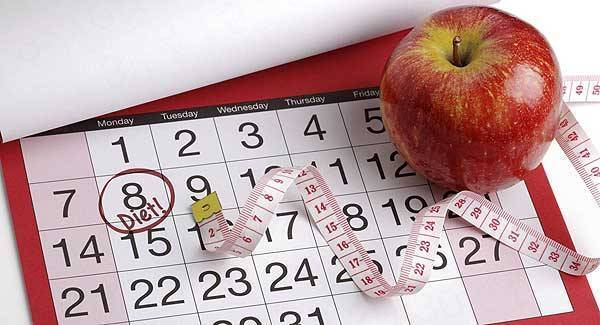
Weight loss is almost always temporary and followed by weight regain, and a cycle of loss and regain that is more harmful than being a stable, ‘heavier’ weight. We must teach our children to love their bodies, writes Michael Clifford.

Dieting has no gain for children; just a lot of pain

Weight loss is almost always temporary and followed by weight regain, and a cycle of loss and regain that is more harmful than being a stable, ‘heavier’ weight. We must teach our children to love their bodies.

There is ample empirical evidence that diets don’t work, not for adults and not for children. This week, WW, formerly known as Weight Watchers, launched a weight-loss app for children aged between 8 and 17.

One of their case studies is a 10-year-old boy who had lost X amount of pounds. Another is an 8-year-old girl (wearing a mini dress, handbag over her shoulder, hand on her hip), who had reduced her body mass index by X number of decimal points.

Blow up the balloons and bring out the clowns, for there are certain foods that this billion-dollar business will ‘allow’ children to eat, labelled by colour. If anyone should be teaching us how to have a healthy relationship with food, it is children.

Babies know when they are hungry. They will scream a house down for a belly full of milk, or for a bowl of mashed banana. They know when they are full. Cue food missiles flying across your kitchen’s air space, as your toddler wriggles upwards in a graceless attempt to exit their highchair.

And they’re not exiting the chair for seconds, or for a ‘treat’ from the sweet press; they’re just done and ready to get back playing. What interrupts this instinctive, second-nature relationship we all used to have with food is diet culture. We equate skinny with healthy.

We weigh ourselves, look at our shape passing shop windows, and forgo our body’s hormone-sent hunger cues, because we think we should all be a size X, or have a waist that is a certain number of centimetres.

The majority of diets fail. Scientific studies going back nearly 60 years prove this, including one by Albert Stunkard and Mavis McLaren-Hume, which showed that 95% of dieters “failed”.

Diets fail because they do not work sustainably over time. The body does not thank you for depriving it, nor for overriding its natural signals for sustenance.

Furthermore, the dieting mindset — be that eating by a colour-coded chart or by counting numbers — ultimately leads to the obsessional pursuit of perfectionism, yet another uptight state that your nervous system will be rebel against.

There is also the illusion that weight loss leads to happiness. The psychologists working out of Be Nourished, a health-at-every-size practice in Oregon, in the US, found that after nearly 20 years of helping people with their body image, weight loss leads to one thing: stress.

“Honestly, for most people, weight loss just tends to lead to more worry about weight regain,” said Hilary Kinavey and Dana Sturtevant.

Do we really want our 8-year-olds worrying about weight regain?

Wouldn’t it be a better idea to explore nutritious recipes with them at home, reinforce that innate trust in their bodies, and show them how to enjoy their body, be that through sport, dance, or art?

Aside from diets not working, there is one guarantee: The most consistent result of weight loss after two years is weight gain. That’s the conclusion of a 2007 piece of academic research, from the University of California, called Medicare’s Search for Effective Obesity Treatments: Diets are not the Answer.

You’d think, with all of the money in the bank accounts of these private businesses that sell us — and our 8-year-old children, weight loss — that they’d have come across such a seminal piece of data.

This weight regain after a diet is called weight cycling. And usually, people go again, leading to another attempt at weight loss and yet another experience of weight gain.

There is data around this phenomenon, too. Weight cycling is far more harmful to your health than weight stability, even if your stable weight is higher. That piece of research was published in the 2014 Journal of Obesity.

Lastly, before we start pushing weight loss on our children, consider this: Restricting one’s food, and having a counting system around it, is not associated with health, it’s associated with disordered eating.

So, if there is an obesity epidemic and we are worried about our children’s weight — sorry, health — what should we do?

Firstly, let’s ditch the bias that “thinner equals better”.

Right now, researchers and scientists are working on the subject of intuitive eating and a health-at-every size approach to well-being. Just think back to the baby screaming for banana one minute and absconding from their highchair the next.

In a new book, Just Eat It, one of these researchers, Laura Thomas, points to an American study of 11,000 people. It found very clear evidence that people can improve their health independent of weight loss.

How? You just engage in some ‘health promoting behaviours’, such as not smoking (which the majority of 8-year-olds don’t do), drinking alcohol in moderation (again not something you see many children doing), eating five or more pieces of fruit and vegetables a day, and moving your body regularly.

Essentially, all four healthy behaviours meant that the risk of disease was roughly the same for people who were overweight or obese as for people in a normal weight range.

Young children do not need to be versed in a narrative that has not served the generations of adults before them. Instead, there are an infinite number of ways we can teach our children healthy, useful behaviours, without focusing on their weight or calorie intake.

Go on a treasure hunt in your local forest. Pick up leaves and bark and trace them on paper when you get home. Grow some food or herbs in your garden or on your kitchen window sill. Eat together, without the interface of technology.

Allow your children to be in, respect, and appreciate their body, where they make choices that feel good, like going to bed early, taking a bath, or going for a walk by the sea.

But, most of all, let’s teach our children that they are worth so much more than a number on a scale, a place on a chart, or a score on an app.

More in this section

Revoiced

Newsletter

Had a busy week? Sign up for some of the best reads from the week gone by. Selected just for you.

Cookie Policy Privacy Policy Brand Safety FAQ Help Contact Us Terms and Conditions

© Examiner Echo Group Limited