A buffer against challenges to the Church’s ethical stances
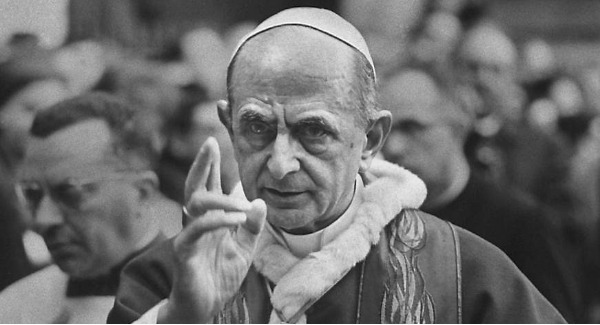
‘Humanae Vitae’ is the defended gateway that has held the ground against further ideological incursions into the ecclesial sheepfold, writes
When Paul VI issued his long-awaited encyclical on contraception, ‘Humanae Vitae’, on July 25, 1968, he knew he was lobbing something of a grenade into the Church’s discourse on marriage, moral life, and papal authority.
Even a cursory reading of the encyclical reveals both an anticipation of the backlash to follow and a gentle but fixed resolve to affirm the doctrinal status quo.
Fifty years on, as we look back and reflect on HV, the arguments do not centre on its teaching per se but on the lack of qualifications and relevant experience of its author and defenders. Mary McAleese contests the bona fides of any celibate who has “never changed a baby’s nappy” to pronounce on sexual morality.
The Church hierarchy would answer that it does not teach according to its own wisdom but according to its understanding of the teachings of its divine founder, also a celibate male who offered “hard teaching” on marriage (Matthew 19) and did not backtrack when challenged.
In the late 1960s, just like today, expectations and demands that it was time to update the Church’s long-standing teaching on human fertility were high. Conservative voices from the conclusion of Vatican II, were already
identifying a worrying slide towards relativism and socio-historical progressivism, and theological debate had become fractured and heated.
Writing in 1967, Catholic philosopher Dietrich von Hilldebrand identified challenges to the concept of immutable truth and the emergence of a new sense that whatever ideas and values were “in the air” at any given time should replace fixed notions of what was right and wrong.
He wrote how evolution in culture, science, and technology were leading many of the faithful, both learned churchmen and ‘lay dilettantes’, to challenge moral givens. Plus ca change. Mrs McAleese may be more than a ‘lay dilettante’ but her arguments are similarly based on what is “in the air” in terms of social values.
In 1968, fears of overpopulation, fanned by sociologists and scientists such as Stanford professor Paul Ehrlich, made birth control a matter of critical public as well as private concern. In 1930, the Lambeth Conference had relaxed the Church of England’s equally strict ban on artificial birth control allowing married couples use “other [artificial] methods, where there is a morally sound reason for avoiding complete abstinence”.
The conference concluded by recording “its strong condemnation of the use of any methods of conception control from motives of selfishness or mere convenience”.
Against these influences, the papal encyclical, ‘Casti Connubii’, by Pope Pius XI in 1932, reaffirmed the Church’s opposition to birth control and abortion.
It was a response to the emergence of eugenics, the new idea “in the air” whose proponents were as diverse as the Nazi Party in Germany, Planned Parenthood founder Margaret Sanger, Bertrand Russell, and George Bernard Shaw.
A more discoursive and wide-ranging document than ‘Humanae Vitae’, it also unequivocally asserts a divinely ordered human sexuality and the integrity and harmony of its unitive and procreative aspects.
Both encyclicals acknowledge the challenges and difficulties inherent in following the natural cycle of fertility as a means of birth control.
Both are adamant that the church does not hold the power to change what it clearly understands as divine ordinance.
Paul VI states in ‘Humanae Vitae’ that, despite “the clamorous outcry” against the voice of the Church, the Pope is “not the maker but the guardian of the entire moral law, both natural and evangelical”.
As with everything else in Christ’s teaching, the gate is narrow and the way hard and without the support of grace, “impossible for men”, as Jesus told his disciples when he demanded that the young man of great wealth sell all his possessions for the benefit of the poor (Matthew 19).
But ultimately, in the words of Paul VI, only a moral order that integrates human relationships “within the limits of a reality established by God” leads to “a truly human civilisation”. Paradoxically, it is when men acknowledge they are the “ministers not the masters of a design established by the creator” that they truly flourish and are most free.
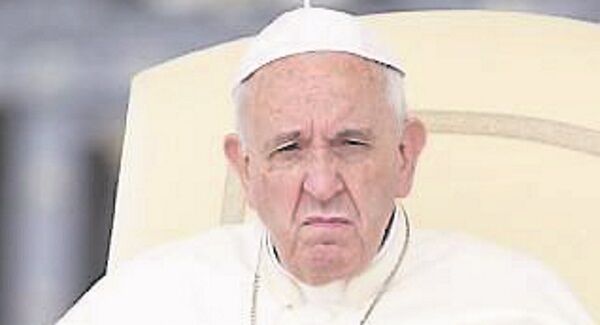
In ‘Humanae Vitae’, Paul VI argues that the creator’s design and purpose are discernible to “human reason” as well as faith. He, like Pius XI, points to marital infidelity, family breakdown, social degradation, and the pernicious effects of pornography on human culture as consequences of humanity’s failure to observe divine ordinance.
Both popes knew the arguments for freedom and autonomy were likely to ring louder for their respective ages. That is why, in the words of Paul VI in HV, the Church is an enduring “sign of contradiction, like her divine founder”.
From ‘Casti Connubii’ to ‘Humanae Vitae’ to ‘Amoris Laetitia’, the apostolic exhortation of Pope Francis, the arguments and the answers vary little.
In Amoris Laetitia, Pope Francis does not retrace the ground of his predecessors but he is very clear that the teaching of ‘Humanae Vitae’ must be “promoted”.
While the societal impact of artificial contraception can be empirically measured and judged, ‘Humanae Vitae’, so often presented either as a dead letter or red card for many Catholics, has acted as a powerful buffer against further challenges to the Church’s ethical stances.
In this light, ‘Humanae Vitae’ is the defended gateway that has held the ground against further ideological incursions into the ecclesial sheepfold.
CONNECT WITH US TODAY



Be the first to know the latest news and updates