Trying not to stay silent in the age of offence
You can say nothing anymore. Some think it’s political correctness gone mad, that people are too easily offended. It’s like we’re all talking on eggshells in case we cause someone offence.
An older gentleman recently lamented to me that you can say nothing to women these days with all this #MeToo stuff. I empathised with his experience of being silenced.
It’s hard, I suppose, when half the world’s population begins to find a sort of universal voice to express their experiences, when the other half of the population is used to things being a certain way. He nodded enthusiastically, feeling heard, understood, validated.
Before we moved on to talking about the World Cup, I asked if he looks behind him every time he walks down an alleyway or deserted street alone. To this, he did not nod.
Today, there are so many hot-button issues that provoke this sense of caginess. Am I talking to someone who believes in a woman’s right to choose or someone who firmly believes abortion is murder? Am I in the company of someone who thinks climate change is real or that the planet is just heating up of its own accord? Do a few of the participants in this WhatsApp group believe the amount of fabric in a woman’s skirt led the rapist on or that rape is only ever the fault of the rapist?
If we talk in black and white terms of right and left or liberal and conservative, liberals are now being accused of being intolerant to differing opinion and the conservatives are accused of promoting hate speech.
Free speech has a few definitions. There’s the familiar quote attributed to French philosopher Voltaire by historian Evelyn Beatrice Hall — “I disapprove of what you are saying but I will defend to the death your right to say it”.
Then there’s the American linguist Noam Chomsky’s interpretation of free speech: “[Joseph] Goebbels (the Nazi minister of propaganda) was in favour of free speech for views he liked. So was Stalin. If you’re really in favour of free speech, then you’re in favour of freedom of speech for precisely the views you despise. Otherwise you’re not in favour of free speech.”
Those concepts can be pretty hard to stomach if you’re a gay man hearing US vice president Mike Pence talk about conversion therapy or if you’re a highly educated scientist listening to US president Donald Trump say climate change isn’t real.
It’s been said that the antidote to bad speech is more and better speech, that the answer is not to silence what you find hard to stomach.
Let’s move away from politics and philosophy and look at how all this plays out in our own lives. Think of a confrontational conversation you’ve found yourself in. Let’s say you were the offended one.
You’ve been accused of silencing debate because you point blank don’t agree that a pregnant rape victim “should have been more careful”. You felt your insides inflame as you heard a relative question the rape victim’s alcohol consumption and you internally raged when that person said women should not have sex if they don’t want to get pregnant.
What should you do? Retreating into the silent refuge of victimhood is tempting. Saying nothing is tempting too.
How about, though, you ask yourself some of these questions: Was the person speaking maliciously? Or was the person’s speech just clumsy, well-meaning not-knowing?
Is your relative’s mind made up or is he curious to learn a new perspective and unlearn the unconscious bias we all possess.
Now, let’s imagine you’re the offender. You’ve a busy life, running your own business, getting the kids out to school and generally managing at life. You don’t have time to read up on every single issue. You throw out some clanger of a statement at a family function about a recent rape trial. You’re pounced on for “victim-blaming”. You don’t even know what that means. You’ve offended one relative and you yourself have taken offence at their reaction. You think they’ve overreacted. There they go again. See? You can say nothing.
Now, just like the offended had to reflect on their reaction, it’s your turn to reflect. Are you not used to having your opinions challenged and fact- checked? What about the To Kill a Mockingbird effect — where you climb inside the skin of someone else and walk around in it for a while?
Perhaps she, or someone close to her, makes up one of those one-in-four statistics on the rates of sexual assault. See, it’s not that people don’t have a sense of humour or that they take things too seriously. Sometimes they’ve experienced a trauma that hasn’t yet healed.
Let’s bring the offended and the offender together. Say the offender was well-meaning and is open to discussion and let’s say the offended is still upset, even sulking a bit.
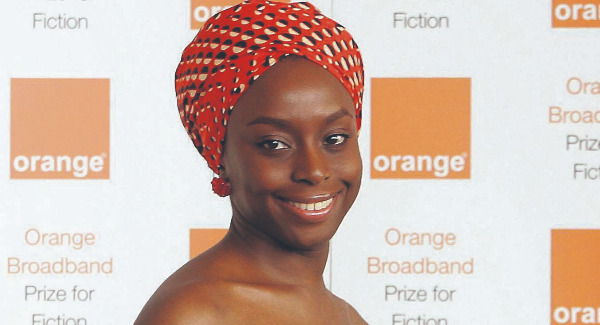
Nigerian feminist writer Chimamanda Ngozi Adichie has talked openly about the self-righteous left.
“I think people are frightened of saying what they think and I think that’s a bad thing for society. There’s a language you’re supposed to use. There’s an orthodoxy you’re supposed to conform to and if you don’t you become a bad, evil person and it doesn’t matter what you’ve done in the past or what you stand for,” she said.
The left can attack, even their own, when offended by speech they find deplorable. This attack can lead to silencing, just like accusations of “political correctness gone mad” from the right can lead to silencing.
At a time when freedom of speech is under constant threat, we all need to do our best to protect it.
To pounce on a thoughtless offender is to silence. To ridicule the offended is to silence.
Right now, at this particular time in history, no one can afford any more silence.
Don’t believe me? Scroll back 90 years to when 1920s Germany was considered the peak of Western civilisation, with its sick pay and social welfare, its scientists and artists. Step into 1930s Germany, and thanks to the erosion of free speech and extreme propaganda, this beacon of light had been rapidly transformed into a barbaric land of unimaginable horrors.
Silence is always a dangerous thing and so too is bad speech. But, both have the same remedy — education, listening, and more and more speech.
CONNECT WITH US TODAY



Be the first to know the latest news and updates