Another annus horribilis for garda whistleblower
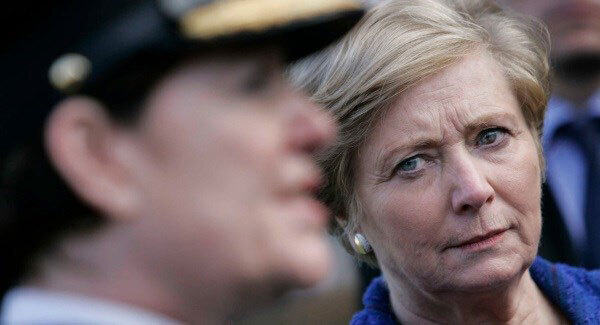
Maurice McCabe had reason to believe the worst was past by late 2016, until false reports of child sex abuse blighted 2017, says
Last year wasn’t supposed to be major in the story of Sergeant Maurice McCabe.
He had been through the ringer and had come out the other side, it had seemed.
However, an incident in September 2016 proved vital in his unfolding story.
McCabe and Superintendent David Taylor had both made protected disclosures after a meeting between the two of them.
At the meeting Taylor, who by then had been suspended from the force for over a year on an unrelated matter, told the sergeant that he had been part of a conspiracy to smear McCabe.
This, he said, had taken place when Taylor was head of the garda press office, a position he held between 2012 and 2014.
Taylor’s role was to brief journalists that McCabe had questions to answer in relation to child sexual abuse. This was entirely scurrilous, but Taylor said he was only doing his job.
He also claimed that he was acting on instructions from then commissioner, Martin Callinan. Mr Callinan denies any such activity.
Taylor also claimed that Nóirín O’Sullivan, who was deputy commisisoner at the time, was aware of the campaign. She denies any such knowledge.
Following on from the meeting between McCabe and Taylor, the former made a protected disclosure about this information. He informed Taylor about this and Taylor made his own disclosure.
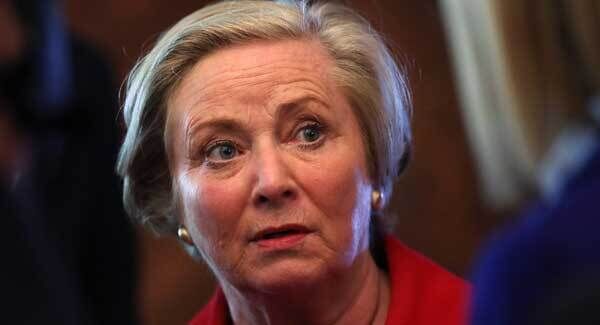
Retired judge Iarfhlaith O’Neill was appointed to examine the disclosures. He reported back to the then Minister for Justice, Frances Fitzgerald, on December 6. There was no further development until late January, when word seeped out that a decision was imminent.
Meanwhile, away from the glare of the media, McCabe and hiw wife, Lorraine, were coming to terms with another shocking development. Through their solicitor, they had applied for the file on McCabe held at Tusla, the child and family agency.
This came about following a letter received the previous year, which had suggested that McCabe was suspected of serious child abuse.
This was completely false and would eventually be discovered as the result of a series of shocking errors at the agency.
The problem originated when Ms D, the daughter of a colleague of McCabe’s, attended a counselling session in July 2013.
In 2006, she made an allegation against McCabe that he had touched her inappropriately some eight years previously, when she was six.
The allegation came some months after McCabe had reported her father for ill-discipline. Her father had also unsuccessfully applied for the job McCabe held, sergeant-in-charge at Bailiborough garda station.
The allegation was investigated and found not to have substance. The local state solicitor said if the alleged incident had even occurred, it amounted to “horseplay”.
The DPP’s ruling was equally emphatic. The ruling questioned the credibility of the allegation, adding that it was “vague” and then stated: “Even if there wasn’t a doubt over her credibility, the incident, as described, does not constitute a sexual assault or, indeed, an assault.
McCabe assumed that was the end of the matter, but, unbeknownst to him, it surfaced again in 2013. In July of that year, Ms D attended counselling. At the time, McCabe was engaged in highlighting malpractice in the penalty points system.
Ms D said that the emergence of his name had brought up for her the issue from the past. By July 2013, McCabe had not been publicly identified in the media, but his name would have been known to gardaí in Co Cavan.
Following the counselling session, the counsellor wrote up her notes and thereafter mixed up the file. McCabe’s name was mistakenly inserted into a completely unrelated file, one that involved an allegation of child rape.
The mistake was discovered eight months later, in May, 2014, but McCabe was never informed of its existence. Then, in January 2016, he received a letter from Tusla, saying he had to be interviewed to check whether he was a danger to children.
He followed it up and, all of 12 months later, on receiving his file, he could see what had occurred. Lorraine McCabe contacted the Minister for Children, Katherine Zappone, and demanded a meeting over how this could have been perpetrated against her husband by a state agency.
The couple met the minister on January 25. Zappone resolved to find out what exactly had happened.
On Tuesday, February 7, in a separate development, the Cabinet agreed that a commission of inquiry should be set up, on foot of Judge O’Neill’s recommendation. The Cabinet was not informed that another element of the story had come to the fore through Tusla, nor that the minister for children had met the McCabes.
Then, the following day, in the Dáil, Brendan Howlin dropped a bombshell. He told the House that he had, that morning, received information from a journalist that O’Sullivan had, in the past, forwarded information to journalists alleging that McCabe was guilty of “sexual crimes”.
This was the first time that McCabe’s name had been publicly associated with such matters. The commissioner issued a press release, denying, “in the strongest possible terms, the suggestion that she had engaged in the conduct alleged against a serving member of An Garda Siochana”.
Within 24 hours, the story of what McCabe had been subjected to in Tusla had begun to emerge. The story broke in the Irish Examiner and, later that evening, on RTÉ’s Prime Time.
There was an immediate public and political outcry. McCabe had been widely commended for his actions and now it looked as if he had been the subject of a major smear campaign.
At the heart of the matter was the question as to whether elements within Tusla had conspired with elements in An Garda Síochána to smear McCabe.
A few days later, the McCabes issued a statement through their solicitor, Sean Costello.
“We have endured eight years of great suffering, private nightmare, public defamation, and State vilification, arising solely from the determination of McCabe to ensure that the Garda Síochána adheres to decent and appropriate standards of policing in its dealings with the Irish people.
“Our personal lives, and our family life, and the lives of our five children, have been systematically attacked, in a number of ways, by agencies of the State,” they said.
The statement pointed out that the family did not have faith in another behind-closed-doors inquiry, after their experience at the O’Higgins commission.
Under the circumstances, the Government had little choice but to accede to the request.
Instead of a commission of inquiry, there would now be a public tribunal, chaired by Judge Peter Charleton, to investigate all the issues around whether there had been a campaign to attack McCabe’s character.
The tribunal began public hearings in June to deal, initially, with the generation of the false allegation against McCabe in Tusla.
What emerged over the course of a month’s evidence was a series of mistakes in the agency that pointed towards extremely slipshod practice, rather than conspiracy.
A litany of errors was uncovered. At one point in the hearings, the area manager for Tusla in Cavan/Monaghan was asked about the errors.
“There isn’t an error in his [McCabe’s] favour,” Patrick Marrinan, lawyer for the tribunal, put to the witness. “Nobody made a mistake by which he benefited, do you understand?
“And there are those who may say that this litany of grave errors can’t just simply be the coincidence after coincidence after coincidence that is being suggested, do you understand?”
Lowry replied that he understood.
“I think they are terrible errors, consistently, but they were absolutely coincidences,” he said. “Bad file management.”
The other matter to emerge from the tribunal hearings is that there was knowledge of the false allegation within the gardaí, all the way to up headquarters. Yet nobody thought to inform McCabe, a serving garda, that this had occurred. Judge Charleton has already stated that he regards this as a serious matter.
The tribunal’s report on Tulsa has not been issued, as of yet, and most likely won’t be, until all of the other modules are completed.
In September, the tribunal heard evidence in a separate, unrelated module concerning a different garda, Keith Harrison. He and his partner had alleged that there had been collusion between the gardaí and Tusla in an attempt to target him.
Judge Charleton issued his report in November, which dismissed the allegations in their entirety.
In reality, the Harrison stuff should never have been included in the tribunal and was only there because, initially, it appeared as if it might be similar in some way to what the McCabes had gone through. The tribunal certainly dismissed the notion of any such similarities.
Elsewhere, there was further fall-out. In September, O’Sullivan resigned, citing the pressures of being accountable to various bodies.
“It has become clear, over the last year, that the core of my job is now about responding to an unending cycle of requests, questions, instructions, and public hearings, involving various agencies, including the Public Accounts Committee, the Justice and Equality Committee, the Policing Authority, and various other inquiries, and dealing with inaccurate commentary surrounding all of these matters,” her resignation letter read.
O’Sullivan had been under pressure on a number of fronts, but her handling of the Maurice McCabe story was particularly questionable.
In December, Fitzgerald, resigned. She had become embroiled in a controversy over how much she knew about an attempt to smear Sergeant McCabe at the O’Higgins tribunal.
O’Sullivan is due to give evidence at the Charleton Tribunal tomorrow and Wednesday, while Fitzgerald is scheduled to appear before the tribunal on Tuesday, January 16.

CONNECT WITH US TODAY



Be the first to know the latest news and updates