Budget 2017: Confidence growing in Clonakilty
Business owners in Clonakilty say the town is recovering nicely but they want their town council back, writes Noel Baker

Budget 2017: Confidence growing in Clonakilty

The gongs keep coming for Clonakilty. Just last month the West Cork town was named as one of the 100 most sustainable towns in the world, but it is sustaining that atmosphere that dominates talk ahead of Budget 2017. Nobody takes anything for granted here.

The latest census provisionally puts Clonakilty’s population as having increased by up to 5% from the 2011 figure of just over 4,700, with a growth in population of up to 10% in the surrounding area. The draw of Inchydoney and other beaches kept tourism steady while the Wild Atlantic Way also helped to attract the crowds. Horrendous flooding in 2012 sparked intensified calls for proper flood relief works. They are now completed, alongside a stylishly redeveloped main drag. The next major development is a large new production facility for Clonakilty Black Pudding, complete with visitors centre.

Population has increased by 5% from the 2011 figure of just over 4,700.

Chief executive and co-founder of what is now known as the Clonakilty Blackpudding Company, Colette Twomey, says the project — to be completed in April — will mean a minimum of 50 jobs in the town. However, it is also likely to turn the focus on the lack of availability of properties to rent or buy in the area. A week before the budget there were just six three-bedroom properties available for rent in the Clonakilty area. Martin Kelleher, a local estate agent, believes the shortage of housing stock is becoming more acute. “I have had a couple of people who have cancelled job offers because they couldn’t find suitable accommodation,” he says. “It can be very frustrating.”

He welcomed the 5% grant rebate for first-time buyers of new property but said he was disappointed there were no supply-sided measures, adding: “The increase of 5% on mortgage interest relief for landlords is a limp measure without taking rental income out of the USC calculation — it won’t stem the flight of landlords who are exiting the market in their droves.”

According to Colette Twomey — one of the few people who know the secret spice recipe used in the creation of Clonakilty Black Pudding — there is plenty of demand for the reinstation of the town’s much-missed council.

“It was one of the very few that could manage their budgets,” she says. “I think it was the greatest mistake yet.”

A minimum of 50 jobs are being created at Clonakilty Blackpudding Company.

Yet there is an undeniable sense of growing confidence in the area, even if issues still remain. Sheila Mullins, director of the West Cork People and West Cork Friday Ad publications, says the word from their customer base is that people who had been owed money have started getting paid more promptly.

“Everybody is starting now to invest in their business, replace vans, that kind of thing,” she says.

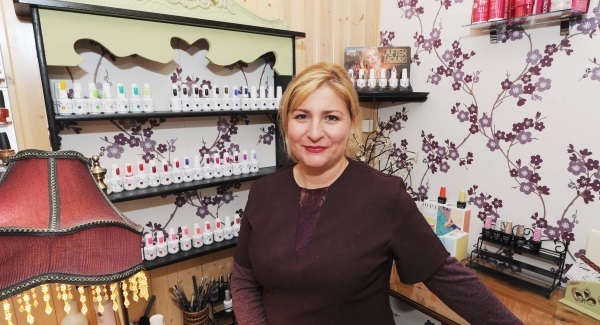
Deborah Cortimiglia, originally from Naples, spent four years in New York before switching to Clonakilty five years ago. Her La Fenice nail bar appears to be doing a swift trade and she has an international perspective when facing into the Budget. When asked about the current tax rate, she shoots back with a laugh: “It’s OK compared to Italy and New York.”

Move over, Manhattan...

Mark Purcell, Global Shares

The West Cork Technology Park has bloomed to such an extent that parking is now an issue. Global Shares, which has its headquarters there, know all about it.

Founded in 2005 and with just over 100 staff, it produces cloud-based software for share plan administration and financial reporting. It has offices in New York, London, Portugal and elsewhere and has recently secured a number of big name clients, including some FTSE 100 companies.

Mark Purcell, client solutions director at the company, believes staff are “incentivised” by having equity in a company that is going places — and so the government should do more to promote it. Michael Noonan announced his intention to develop a new, SME-focussed, share-based incentive scheme, to be introduced in Budget 2018, and Mark said it was “very disappointing” that it didn’t materialise this time around. “It was put on the long finger.”

Among the measures he wanted was reduced PRSI reductions on lower salaries and for fuel not to be targeted. “On the micro level, it’s very strong,” he said of the budget. “On the macro level, it is poor, apart from the maintaining of the tourism VAT rate. What else is saying ‘we are innovative, we are open for business’?”

He was happy with the first-time buyer incentives, not least to solidify the 25 to 40 age demographic in the local area. As for Mr Noonan’s signal that Brexit could be an opportunity for Ireland, he said: “It should be an opportunity — if that sentiment is acted on, fantastic, but it has to be acted on.”

Michael O’Neill, Fernhill House Hotel

Michael O’Neill, marketing manager of the Fernhill House Hotel in Clonakilty, has first-hand experience of one pressing national issue: the 30-year-old got married earlier this year and admits finding a suitable family home “so, so difficult”.

“I would love to buy a nice place but the choice out there is so limited,” he says. He welcomed the measures introduced by the government on helping first-time buyers and said many of the young couples who tie the knot at the hotel would probably feel the same way.

Fernhill has undergone some redevelopment in recent years, including a wedding marquee and new reception area. It employs 110 staff and so any increase in the minimum wage may have an effect on budgets. Michael says such measures are not too difficult to absorb if they are telegraphed well in advance — which is not always the case.

“I have a Dutch tour company coming tomorrow and they will want rates for 2017 and 2018,” he says, “and I will have to stand over them.”

Regarding the widely advertised reduction in the USC rate, he says “anything that puts more spending power in the customer’s pocket is great”. He also welcomed the retention of the 9% VAT rate for the hospitality sector, but said he was disappointed the excise duty on alcohol was not cut.

“Failte Ireland research shows the one aspect that people like most about Ireland is our pub culture,” he said, adding: “Pubs are closing at a rate of knots in the countryside.”

In advance of the budget, he stressed the importance of tax efficiency and of green taxes, and he said he was pleasantly surprised by measures aimed at assisting the fishing industry.

“Anything they can do to help food production is great for the hospitality sector and rural communities,” he said.

Eamonn Walsh, Walsh’s Londis

As the redevelopment of Clonakilty’s streets continued over the past 18 months, Walsh’s Londis cast people’s minds back to a previous town overhaul, placing a vintage picture from 1986 on the shopfront. The two lads in that sepia-tinged picture included current proprietor Eamonn Walsh.

There’s little doubt that while the finished project looks great, the works caused disruption and hit profits. For Eamonn, this — and the spread of larger supermarkets — means there should be an onus on government to ensure the viability of town centres and the businesses within them.

He wanted to see changes in PRSI for the self-employed person, but in the event, he says the extra €400 in tax credits did not go far enough for the “crazy” amount of work now expected of self-employed people to make their businesses work.

In addition, he says a 10c increase in the minimum wage might mean having to cut the number of hours offered to part-time staff — with him working them instead. He also warned about the sugar-sweetened drinks tax pencilled in for 2018: “That is going to be a huge burden, collecting it, managing it, and posting it off.”

He refers to the three different categories of VAT involved in operating the store — “a lot of work goes into implementing that,” he says, referring to capital outlay to ensure that all that VAT is collected. He also points out that a standard wine licence costs him the same amount for his 6ft of wine as it does for the business with a warehouse full of vino.

He welcomed the fact that there was no excise hike on alcohol, but then there’s the cigs — a 50c hike on an already “high value” item. “The customer comes in and thinks I am taking 50% of the profit, but I’m getting 7%,” he says. If the price goes up, he jokes, “they’re giving out to me”.

Richy Virahsawmy, Chef and restaurateur

Clonakilty is increasingly a haven for foodies, bursting with coffee shops and artisan produce, so it’s a little surprising when Richy Virahsawmy counts off the nine restaurants he can recall closing in the 15 years he has been operating in the town.

His own coffee shop and restaurant has thrived in the meantime, and he has little doubt that while Clonakilty has many natural advantages, it is not immune to the vagaries of market forces.

The London-trained chef, who is also on the local Chamber of Commerce, believes the tourist season has now contracted to around five weeks. This and other factors have added to pressures on food businesses and he believes the Government needs to introduce measures that will help.

Some of those prayers were answered with the retention of the 9% VAT rate for the sector. In advance of the budget, Richy said he believed it had to stay for another two years — breathing space for businesses outside the capital where the effects of the recovery have yet to be fully felt. Its retention was “fantastic”.

He would also have liked to see a reduction in excise duty on wine. “Even €1 a bottle,” he says. “We have the highest excise rate in Europe.” It wasn’t to be. “It would have been nice to get the excise relief, it might have helped to reduce the price of a bottle of wine in a restaurant.”

The rise in the minimum wage can be absorbed, he believes, particularly as the accompanying alteration in USC thresholds means the lowest earners still get to stay outside the USC net.

He also believes that there should be some discretion at local level on the imposition of rates and that the town needs more housing - something certain budget measures may impact upon in future. But overall, “it seems a very safe budget”.

Mary Gallwey, Pharmacist

Mary Gallwey is a mild-mannered pharmacist with a bundle of opinions: “I think in the countryside there is no change, I think people are still suffering from the recession.”

“Past Newlands Cross, there is a different world.”

Gallweys has been a fixture on Pearse St for 34 years but the building has housed a pharmacy for close on a century. Plenty has changed in that time, not least the streetscape outside the front door. Mary now works alongside her daughter, Hilary, and she says: “Working in pharmacy has been very stressful since 2008.”

One major issue was the introduction of the levy on medicines for medical card holders; it started as a charge of 50c and went up to €2.50 per item, to a threshold of €25 a month, where it has stayed in recent years. Mary was withering about it, particularly how it affects the most marginalised. “I am a tax collector,” she says.

She welcomed the announcement that the levy will be reduced from March 1 next to a €20 monthly threshold for the over-70s, but said “the devil is in the detail”, particularly for a family with an age variation — for example, a couple aged 70 and 67, who are both availing of the scheme.

“It’s a pity it isn’t across the board,” she added.

She wanted to see the unwinding of FEMPI legislation which resulted in cuts to payments to pharmacies and she welcomed reductions to the USC as well as the increase in the pension.

“There would be more disposable income — if there’s more money to go around, there’s more money for everyone. It’s win-win.”

She welcomed the price hike on cigarettes and queried how the sugar-sweetened drinks tax will be applied.

Overall, she said: “it’s a bit of a giveaway budget. It looks, on paper, a reasonably good budget.”

Kevin O’Regan, Shoe shop owner

Kevin O’Regan used to be Clonakilty’s No 8 when he was playing rugby, and he’s continued to put his metaphorical shoulder behind recent initiatives to attract visitors to the West Cork town.

He has two shoe shops — one in Clonakilty and one in Skibbereen — and admits that, generally, he tends to take a positive view of things and so believes that “things are improving”.

As someone with a store on the town’s main street, however, he is conscious of the gaps opening up in some parts of Clonakilty though vacant buildings.

“There should be initiatives regarding house building,” he continued, referring to the obvious need for more properties in the area. “There is a genuine demand.”

On the budget, he said it is a case of “something for everybody”, claiming it is a “positive budget, a highly political budget with so many interested parties staking claim on its positives”.

“Everyone seems to have got something — a very, very small slice of the cake, or muffin, in this case.”

He welcomed moves to create future stability but said he would have preferred more investment rather than giving back through slight changes to personal tax, such as the well-flagged reductions in USC. He also wanted to see additional investment in infrastructure and while some of that was evident, it wasn’t his full wishlist.

As for the increase in the minimum wage, he said while it isn’t a “game changer”, it adds to the difficult conditions that many small independent SMEs find themselves in.

x

More in this section

Revoiced

Newsletter

Had a busy week? Sign up for some of the best reads from the week gone by. Selected just for you.

Cookie Policy Privacy Policy Brand Safety FAQ Help Contact Us Terms and Conditions

© Examiner Echo Group Limited