Psychologists turning on Donald Trump
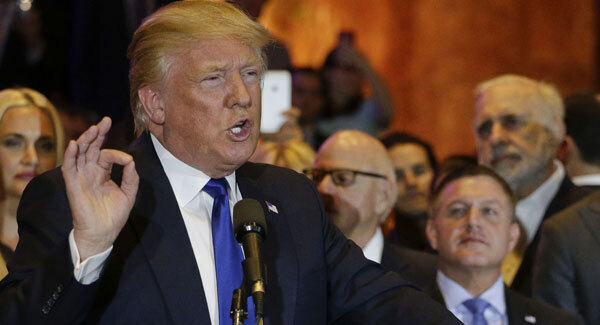
AMATEUR psychoanalysts have put Donald Trump on the couch, calling him a sociopath, unhinged, a narcissist. But one group of people isn’t talking as much: the professionals.
Ethics dictate that psychiatrists and psychologists avoid publicly analysing or diagnosing someone they have never examined, but there is a new, vocal dissension against this gag rule, because of what some of them think they hear and see in Trump. The result is a juggling act of propriety, politics, and ethics.
Armchair psychology exploded into social media and op-ed columns, after Trump called on gun-rights supporters to stop Democratic rival, Hillary Clinton. Trump’s political opponents have spoken out. President Barack Obama called the Republican presidential nominee “unfit” and a Democratic congresswoman started a petition to force Trump to undergo a mental health evaluation.
Members of the American Psychiatric Association are bound by a 43-year-old ethics regulation, the Goldwater rule. It stems from mistaken public concerns about the mental health of the 1964 Republican presidential nominee, Senator Barry Goldwater. Psychiatrists can be reprimanded or removed if they violate that rule.
But some are ignoring it, saying they feel obligated to speak out about Trump. Others see those analyses of the candidate as dangerous false conclusions. The Associated Press spoke to eleven psychiatrists and psychologists for this story and they were split about whether they should talk publicly about candidates’ mental health.
Donald Trump denies advocating violence against rival Hillary Clinton https://t.co/acSMWohYqc (GM) pic.twitter.com/vdZI9AC7uf
— Irish Examiner (@irishexaminer) August 11, 2016
Analyses and diagnoses without meeting a patient, and without medical records, “are so likely to be wrong, so likely to be harmful to that person, and so likely to discourage people from seeking psychiatric treatment that psychiatrists should not engage in that behaviour,” said Columbia University’s Dr Paul Appelbaum, a past president of the American Psychiatric Association.
This month, the association posted a warning on its website, reminding professionals to keep mum: “The unique atmosphere of this year’s election cycle may lead some to want to psychoanalyse the candidates, but to do so would not only be unethical, it would be irresponsible.”
But a few experts do discuss Trump publicly, dancing the fine line between diagnosis and merely describing what they see in his public appearances. The University of Minnesota’s Dr. Jerome Kroll is one of them. He co-wrote an academic journal commentary, calling for the end of the Goldwater rule.
“I am a citizen,” he said. “If I have something to say, what I say might be stupid. What I say may embarrass psychiatry, but it’s certainly not medically unethical. I think he (Trump) comes as close to the narcissistic description as one would find. I think that would disqualify him. I am breaking the Goldwater rule as we speak.”
The Trump campaign did not respond to requests for comment.
Trump and his supporters have levelled their own accusations at Clinton. “She is unhinged,” Trump said last week, “she’s truly unhinged, and she is unbalanced, totally unbalanced.” Polls show that voters lack trust in Clinton, and her marriage has for years been the subject of amateur analysis, centred around why she stays with a philandering husband. None of the psychologists or psychiatrists interviewed raised mental health issues about Clinton.
Donald Trump: Barack Obama is the founder of IS https://t.co/FfDJOMZTq6 pic.twitter.com/NBAsRhUrNp
— Irish Examiner (@irishexaminer) August 11, 2016
Katherine Nordal, the American Psychological Association executive director for professional practice, and interim ethics chief, considers it “inappropriate behaviour” for psychologists to diagnose people they haven’t examined.
“To be throwing around diagnoses willy-nilly,” Nordal said, “is just kind of a dangerous thing to do.”
A group of mental health professionals, in a petition signed by more than 2,000 therapists, has warned about the dangers of Trump’s ideology. They don’t suggest a diagnosis, instead concentrating on what he says and does. They say his rhetoric normalises what isn’t normal: “the tendency to blame others in our lives for our personal fears and insecurities.”
Experts say narcissistic personality disorder, which involves an inflated sense of self-worth, a deep need for admiration, and a lack of empathy for others, is a behavior rather than a mental illness that can be diagnosed, like schizophrenia.
“He talks about himself all the time,” said Northwestern University psychology professor, Dan McAdams, who wrote an Atlantic magazine article on Trump’s personality. “Even at his father’s funeral, he talked about himself. He can’t quit talking about himself.”
Small firms back Donald Trump’s tax plan https://t.co/But8rdpnkp (GM) pic.twitter.com/Rz1pzm111I
— Irish Examiner (@irishexaminer) August 10, 2016
For some professionals, speaking out is a matter of warning the public of impending danger. “We recognise certain patterns of behaviour to be potentially dangerous and if a mental health professional feels compelled to warn, they should be able to do it,” said Philadelphia psychiatrist, Dr Claire Pouncey, president of the Association for the Advancement of Philosophy and Psychiatry and co-author, with Kroll, of the anti-Goldwater rule commentary.
“I think he is dangerous and erratic, but it doesn’t take a psychiatrist to point that out,” she said, noting that she isn’t diagnosing Trump, just commenting on what he says and does.