#GE16 Analysis: How did Fine Gael get it so wrong?
Where did it all go wrong for Enda Kenny and Fine Gael?
“We may end up with the most seats, but we lost the election, and we have to get on with it now,” is how one party strategist put it to me last night.
When the exit poll landed late on Friday night, many within Fine Gael saw fit to dismiss it as rogue.
Believing they were still on course to get 30% of the vote and 60 seats, Fine Gael spinners made contact with their Labour counterparts and sought to implement a PR plan for the weekend.
“Let’s hit the ground running on the stable government line from first light,” was the pitch.
Hopeful that Labour could make 10%, a result which would deliver 14-16 seats, they hoped they would be in the driving seat to form a new government with the help of a few Independents.
That all got blown out of the water at 7am on Saturday, when the RTÉ exit poll was released, showing Fine Gael support down to 24.8%.
There was genuine shock and panic within the ranks of Fine Gael, whose disastrous election campaign had backfired on them.
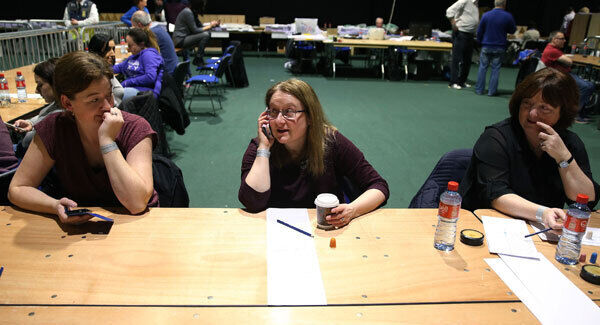
Such a last-minute swing caught Fine Gael en masse off guard, as handlers and party officials had felt free to let the hair down and enjoy an extended lunch in Dublin’s swanky and hip Grand Canal area last Thursday. There was certainly no air of panic or concern at that.
However, from the off, their campaign has been an unmitigated disaster.
For starters, they botched the timing of the election itself.
Having built up the expectation of a November election, they allowed the public and their own TDs and candidates to believe it was happening, only for it to be delayed until now.
That led to annoyance and frustration among many and it added a sense of fatigue to the campaign when it began in earnest three and a half weeks ago.
The party’s slogan, ‘Keeping the Recovery Going’, was ill-judged and remarkably out of touch with the mood of the country.
For a party that doesn’t sneeze without focus grouping it first, to get it so badly wrong was simply incredible.
Rather than coming across as prudent and sensible, they managed to come over as high-handed and arrogant.
They talked at the people, not to them.
Also, their pitch of prudence was significantly undermined by the needless and panicked €3bn giveaway budget last October.
When it came to the campaign proper, Enda Kenny’s limitations and weaknesses as a leader came to the fore and set the tone for the party’s stuttering campaign.
The clumsy manner in which he signalled his intention to seek a dissolution of the Dáil backfired.
He attempted to catch the opposition on the hop by walking out of the Dáil chamber without allowing any response from Fianna Fáil leader Micheál Martin, but succeeded only to show contempt for parliament.
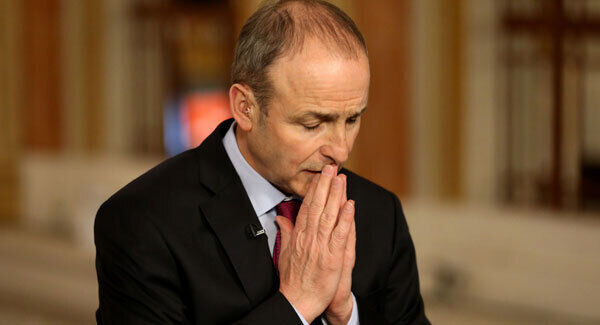
By all accounts, his going into the chamber at 9.30am caught many of his own team and his TDs on the hop, as they were not expecting him to do so until that evening.
Then came his gaffe about “people not understanding jargon” at the opening press conference of the campaign.
It had the effect of putting the party on the back foot in the opening days which fed into a week-long confusion over Michael Noonan’s ‘fiscal space’ of additional spending for the next five years.
Noonan’s proposal to abolish the universal social charge has also not gone down as well as expected, with the finance minister having to counter accusations of being reckless with the public finances. In an instant, the image of him being the wise old hand at the till has been undermined.
At the last election, Fine Gael and Labour took power with 113 seats.
Now we find ourselves in a position whereby the two parties by themselves do not have enough to retain power after the election. That is a startling turnaround.
Such a slump would normally be the basis of a heave, and Enda’s position is now under question.
Former Fine Gael director of elections Frank Flannery gave voice to the concerns within the party.
Flannery questioned where the “young leaders” of Fine Gael are in the election campaign, as he criticised the party for being “complacent” in trying to get its message across to voters.
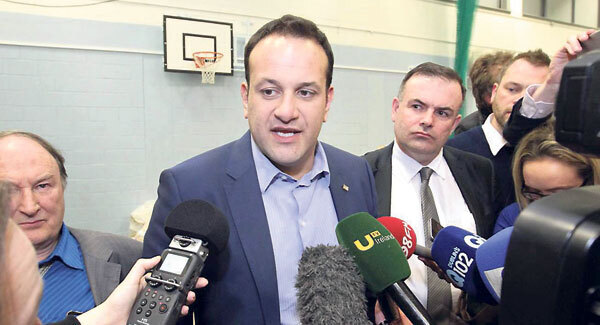
He questioned why young Fine Gael ministers such as Leo Varadkar and Simon Coveney were not playing a “dominant role” in the campaign as opposed to the “ghosts of old battles and old wars”.
“Where is Leo Varadkar, where is Simon Coveney, where is the young leadership of the party? Why aren’t they playing a dominant role in this debate, representing the new Ireland and the new generation that’s coming up?” Flannery asked.
Varadkar: "I think opposition parties ... have an obligation to see if they can come together to form a govt" #GE16https://t.co/DHtjxrPnNP
— RTÉ News (@rtenews) February 27, 2016
Such key figures simply went missing during the campaign and many TDs last night voiced their annoyance at their absence.
But Kenny’s “whingers” comment last weekend in Castlebar, his subsequent defence of the comments followed by an ultimate apology for it, further blighted Fine Gael’s quest to retain power.
He has been leader of the party since 2002 and Kenny can rightly be credited with much of the good points about Fine Gael.
But this result was his fault, his and his senior ministers and their advisers.
This was Fine Gael’s election to lose, and lose it they did.
Undone by hubris, Kenny’s dropping of the ball in the first week of the campaign meant they were always chasing the game.
Michael Noonan, too, also had a bad campaign and he must also share in the blame in losing the party’s best ever chance to be re-elected.
The March 10 deadline for when the 32nd Dáil is to convene is expected to come and go without a government being formed.
With a number of seats yet to be filled, a stand-off of sorts has emerged between Fine Gael and Fianna Fáil.
Alan Shatter thanks his family for their support. pic.twitter.com/Xpmd7WNygu
— RTÉ Dublin Rathdown (@RTEdubrathdown) February 27, 2016
Micheál Martin’s party made it clear that they feel it is up to Kenny and not them to first try and form a government.
They appear to be unwilling to support the idea of coalition but some appeared open to the idea of supporting a government from the opposition benches in a bid to prevent Sinn Fáin from taking the lead role.
However, one senior minister, speaking to me on Saturday night, said Fine Gael must look at going into opposition now, because the people have said clearly that they do not want them in government.
That view was regarded by several party strategists last night as an “open question”.
Attention from today turns to the backroom boys and girls, who will begin sounding out what arrangements are possible.
Amid suspicion and animosity, the hurdles facing them are considerable.
The race for opposition has never been so fierce.
CONNECT WITH US TODAY



Be the first to know the latest news and updates