Pursuit of power put above long-term needs
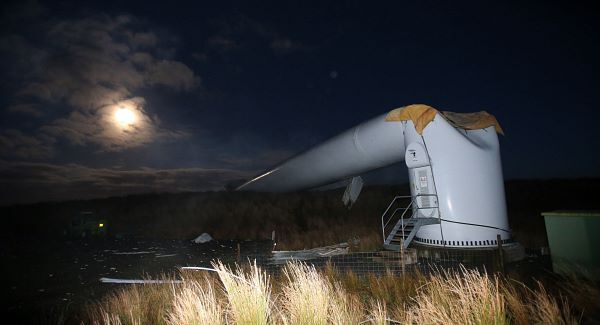
There was good news for Ireland last week when Apple announced that it would build its new data centre in Athenry, Co Galway.
The news was a vote of confidence in a renewable and digital future for our country. An investment decision to spend €850m is not taken lightly.
This was a real-life rebuttal to those doubters who argue that wind energy is not a competitive and secure power supply. It gave hope to those of us who think we can tackle climate change.
What a pity, then, that last week was also marked by a mistake by our Government that will hinder that development of Ireland as a centre for green and clean economic activity.
The European Commission published a new ‘Energy Union’ paper on Wednesday, which contained a variety of progressive measures to reduce European dependence on imported fossil fuels and build up our energy efficiency capabilities.
However, from an Irish perspective it contained one critical flaw which will make it more difficult for us to get more investment decisions like the one Apple has just made: It excludes Ireland from a new regional electricity market.
One of the key things we need to do to make this clean energy future work is balance power supplies over a wider area.
We can do that by building a regional electricity grid with underground and sub-sea cables which balance wind power in Ireland with hydro power in Norway and solar power from the south.
It allows you to avoid having expensive back-up fossil fuel generators that switch on when the wind is slow here.
Six years ago, 10 countries in northwest Europe signed a memorandum of understanding on the development of just such a North Seas Offshore Grid. Ireland was a leading signatory as it offered the prospect of bringing us massive long-term economic advantage.
The standardisation of technology from working together would bring down the price of renewable power and building the grid was the perfect ‘anti-austerity’ stimulus project.
The initiative has been worked on behind the scenes for the last five years and a commitment to progress it further was due to be included in the paper published last week. But, at the last minute, it was pulled from the text.
The German government has decided that it might be better to develop the new regional market with its own more immediate neighbours.
They did not want to deal with the UK, which seems wedded to building a nuclear electricity future, which Germany is committed to leaving behind.
Because no one knows whether the UK will even be in the EU in a few years time, the rest of the members were happy to go along with leaving them out.
The European Commission asked the Government would they not prefer if they kept with the North Seas approach but they got nothing back but silence.
With our Government not being willing to push our case and with the UK in election mode and reluctant to do anything in Europe, there was no reason for the Commission to keep us in the loop and they took the wording about a North Seas grid out.
Our exclusion leaves us with the long-term prospect of being stuck in an isolated electricity market with the UK, where electricity prices are going to rise because we will be forced to buy into an expensive nuclear future, rather than a low-cost renewable future.
The Government’s silence is perhaps explained by the complete mess they have made over the negotiation of a deal to trade renewable power with the UK.
That was meant to be a first step in the development of the wider interconnected market but is now being seen as a lesson in how not to proceed.
They got those negotiations wrong in three critical ways. Firstly, they should have made sure that new windfarms planned for the Midlands were owned by the community and not just private developers.
Contracts were signed with individual landowners in advance of any wider deal being done, in a way which has split neighbourhoods and even families in two.
Secondly they should have insisted that the underground electricty cables that would connect those windfarms were publicly owned and were linked fully into the Irish and not just the UK grid system. That would have allowed us to balance and lower the cost of the power of our own electricity supply.
Lastly, they should have made sure the trade with the UK was done within a wider European regional market, where renewable power sets the price but where large-scale public subsidies are no longer needed.
What the Government needs to do now is learn from those mistakes and try and start the whole process again.
This time beginning with a proper public consultation exercise, explaining all the different options before the people. Instead what we are seeing is Labour and Fine Gael attempting to boost their local electoral prospects at the expense of the long-term interests of the country.
Environment Minister Alan Kelly is leading that populist charge by refusing to put any ambitious low-carbon energy targets in his climate bill and by selling the false promise that burning biomass can meet our electricity needs.
He is serving the Fine Gael and Labour representatives who have been among those most opposed to setting Ireland on a path to a renewable energy future.
Energy Minister Alex White has a choice to make as he goes into the meeting of European energy ministers that takes place in Brussels on Thursday.
The Energy Union paper is the first item on the agenda. He has to decide whether he wants to insist that the wider regional approach is still maintained or whether we throw in the towel and tie our energy future to that of the UK.
Taoiseach Enda Kenny has a similar decision to make when he goes to the next heads of government meeting on March 20, where the same issue will be considered.
Forget all their blather about providing stability and jobs. Just watch what they do.