COMMENT: HSE needs new leaders with will to change
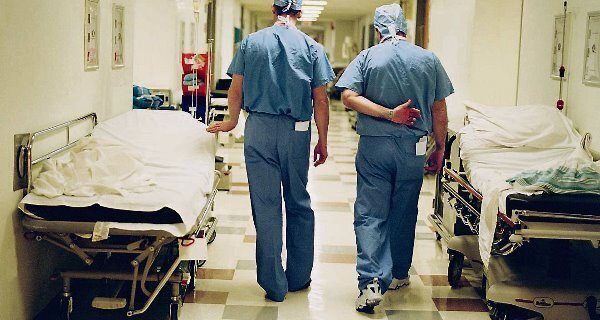
There’s nothing like a good ol’ trolley crisis to generate headlines, but only the extremely naive could take the hysteria seriously.

COMMENT: HSE needs new leaders with will to change

The problem of trolleys is as perennial as sunlight, so let’s not pretend otherwise.

Around about this time every year, the number of patients languishing on gurneys in accident and emergency departments skyrockets and media-savvy nursing unions seize the opportunity to highlight what is really an ongoing crisis.

It usually takes a ‘record high’ for the numbers to make the headlines, but in fact the potential to reach crisis level never leaves us.

Anyone with half an eye to the Irish Nurses and Midwives Organisation (INMO) knows this.

The INMO is so thorough at collating data that it can effectively predict the future.

As far back as September, it was warning of trolley creep, with figures for August up 19% on the previous year.

The INMO went so far as to say this creeping trend over the summer represented “a dire warning, for the health system, and for the Government, as we approach the traditionally busy period of autumn-winter”.

If the INMO knows what’s going to happen four months in advance and if even the dogs on the street know that, come the New Year, what with winter vomiting and colds and flus and a range of entirely predictable post-Christmas afflictions, that the local A&E is going to be inundated, then why the hell can’t the overpaid mandarins running the health service get the problem sorted?

God knows, they know what the problems are.

For fear they hadn’t done their own homework over the years, they had an Emergency Department Task Force tell them exactly what was wrong as far back as 2007.

This task force, which, after prompting, finally included in its membership some emergency medicine consultants, was put together in March 2006 and produced a report running to more than 200 pages in June 2007.

It contains lengthy and sensible recommendations begging the question — why are we now setting up another Emergency Department Task Force?

Is it because the public memory is short and politicians need to be seen to do something? Is the best they can offer a kneejerk reaction?

And what sort of message does it send to the members of the previous task force who spent long hours putting their considered body of work together?

As an aside, the chair of the previous task force was Angela FitzGerald, the woman who now heads up the HSE’s acute hospital services division following the sudden departure of Dr Tony O’Connell, who was meant to steer the work of the new task force and deal with the trolley problem.

Unsurprisingly, the previous task force identified bed capacity as the “core problem”.

It said unavailability of beds “results in those patients who require admission to hospital spending significant periods in the emergency department”.

If this seems like stating the obvious, it is.

But even stating the obvious in a report designed as a blueprint to end, once and for all, A&E overcrowding, was not enough to get the message through to those tasked with running our health service.

If the core problem is shortage of beds, why are 2,000 beds closed between our acute hospitals and in the community?

How can we ever end the problem of what the politically correct object to being called ‘bed blockers’ if these patients have no alternative?

If we do not have adequate numbers of step-down beds — both short-term and long-term — where are these 800 or so patients supposed to go?

The problem is exacerbated by a poorly resourced primary care sector, where elderly patients with chronic disease end up being hospitalised because of inadequate supports in the community.

Then there is the cap on funding the numbers waiting for nursing home beds, to the extent that effectively one patient has to die in a nursing home before someone else can be funded.

Boots on the ground is another complication.

There are currently in the region of 70 emergency medicine consultants even though the HSE’s own Emergency Medicine Programme has advised that 180 posts are required to provide a 16-hour consultant presence in larger hub A&Es.

If we were to adopt the successful North American model of 24/7 consultant in emergency medicine staffing, it would require 256 posts to be developed.

No Irish A&E has more than five whole-time equivalent consultants in emergency medicine and most large units have three to four.

There has been no rise in consultants in emergency medicine in Ireland since 2011.

This shortage of consultants not only means having to spread themselves very thin, from a patient’s perspective, it also means reduced access to senior clinical decision-makers, the doctors most qualified to assess if a patient needs to be admitted or discharged.

Without anyone to make this decision, patients remain on trolleys and A&E remains stuffed to the gills.

Beds then, and appropriately qualified doctors, and adequate nursing staff, are key to solving the crisis, aided by investment in primary care and adequate step-down beds.

The HSE has been told what it needs to do. It doesn’t need another task force.

It needs decent leadership and the will to enforce change.

It will have to do it with or without the health minister, because while health ministers come and go, the health service is for life.

Problem of trolleys is as perennial as sunlight

More in this section

Revoiced

Newsletter

Had a busy week? Sign up for some of the best reads from the week gone by. Selected just for you.

Cookie Policy Privacy Policy Brand Safety FAQ Help Contact Us Terms and Conditions

© Examiner Echo Group Limited