The futility of Gardaí investigating their own
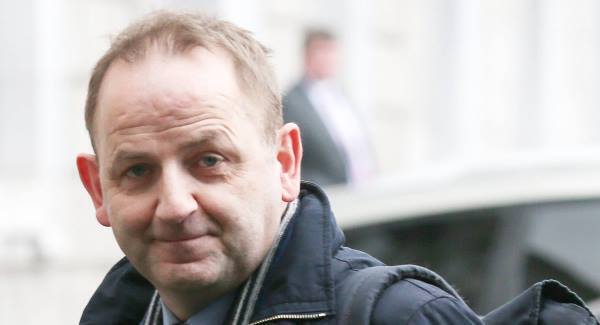
This office was set up in the wake of the Morris tribunal to accept and process complaints from gardaí about malpractice or corruption within the force.
On June 14, 2011, Justice Minister Alan Shatter appointed solicitor Oliver Connolly to the post. Connolly had once given a contribution of €1,000 to one of Shatter’s previous election campaigns.
During Wednesday’s debate, Wallace held up sheets of paper which he said was the transcript. He said of the contents: “It is frightening.” He went on to quote what he said were the comments of the confidential recipient: “I’ll tell you something, Maurice, and this is just personal advice to you; If Shatter thinks you’re screwing him, you’re finished.”
Wallace quoted another line: “If Shatter thinks, here’s this guy again, trying another route, trying to put on pressure, he’ll go after you.”
Wallace then added his own words: “He’ll go after you? Our Minister for Justice? What is going on?”
The context of the meeting between McCabe, the whistleblower, and Connolly, the confidential recipient, which took place on February 9, 2012, tells much about how complaints of malpractice have been dealt with in the force.
A month previously, McCabe had approached Connolly. It was the first dealing that McCabe had had with Connolly since the latter’s appointment. McCabe had made previous complaints about malpractice, and particularly gross incompetence, to Connolly’s predecessor.
His complaint in January 2012, however, was of a different order. The focus of his complaint was none other than the Garda Commissioner himself, Martin Callinan. A senior officer, who had been central to McCabe’s previous complaints, was in line for promotion. McCabe believed that this appointment should not go ahead, and for the commissioner to promote this man would be a dereliction of duty.
McCabe laid out 12 grounds for his reservations. All referred to investigations or cases which had occurred under the command of the senior officer.
One of those cases was that involving taxi-driver Mary Lynch, who had been viciously assaulted. Her assailant was allowed out on bail twice thereafter, due to a series of cock-ups, and went on to murder Silvia Roche Kelly in Limerick in December 2007. The handling of that investigation was under review both internally and from the Garda Ombudsman Commission at the time.
Another case involved the loss of a computer in Garda custody. The computer had been seized from a priest who was subsequently convicted of child abuse charges.
Major questions surrounded the handling of the case, particularly as no investigation had been undertaken into the mislaying or loss of the computer which was suspected of containing child pornography images. That was also the focus of an internal investigation in January 2012.
The other cases contained in McCabe’s complaint ranged from minor assault to serious sexual assault, all of which the sergeant had claimed were handled incompetently.
As far as McCabe was concerned, promoting a senior officer whose handling of at least two cases was still under investigation left major questions for the commissioner to answer.
Appointments to the rank of superintendent and above are made by the Government, but the commissioner forwards a list of recommendations to the executive. The senior officer in question was on such a list in January 2012.
The process of investigating complaints from gardaí is designed as follows: The officer goes to the confidential recipient and relates his complaint. The confidential recipient then hands this over to Department of Justice, which forwards it to the commissioner for investigation. After the matter is investigated, the commissioner conveys the result back through the department.
The system assumes that the commissioner will rigorously investigate the complaint.
Crucially, there is no mechanism to deal with a complaint about the commissioner himself. In this, he is effectively above the law.
McCabe brought his concerns to Connolly in January 2012. Connolly forwarded them to the department, which passed them onto Martin Callinan. Effectively, the commissioner was being asked to investigate a complaint against himself.
The response from the commissioner was relatively swift. Not surprisingly, Callinan came to the conclusion that the commissioner had nothing to answer for.
Connolly conveyed the result to McCabe on February 9, in the meeting referred to by Wallace last Wednesday. In it, Connolly related that the commissioner said 11 of the 12 items had already been “thoroughly investigated” internally.
The 12th — in relation to the computer — had, Callinan asserted, involved a case that had been swiftly investigated and resulted in a conviction and five-year prison term for the offender. He made no mention of the disappearance of the computer, and apparent lack of interest in locating it.
The end result was that Commissioner Callinan gave Commissioner Callinan the all clear to promote the senior officer whom McCabe had complained about. By February 9, this officer had already got his promotion and was moving on to greater things.
The episode illustrates once more the futility of guards investigating guards, but also highlights the lack of a mechanism to deal with a complaint against the commissioner.
Fianna Fáil justice spokesman Niall Collins has pointed to this shortcoming and has pledged to bring forward proposals to address it.
On Wednesday, Shatter told the Dáil that the confidential recipient mechanism has been shown not to work and he would be bringing forward proposals where complaints from gardaí could be dealt with by the garda ombudsman. He made no reference as to whether this might include dealing with complaints against the commissioner.
Throughout the recent controversy on penalty points, Shatter repeatedly expressed scepticism or concern about the approach of the two garda whistleblowers. On October 1, he erroneously told the Dáil that the two men did not co-operate with the internal garda inquiry.
In the same debate on Wednesday, Wallace made the point that legislation alone was useless without enforcement or political will. “If the Minister for Justice is going to spend two years diminishing and dismissing complaints made by whistleblowers, what good is a new bill?”
CONNECT WITH US TODAY



Be the first to know the latest news and updates