Trio stand up to Big Brother
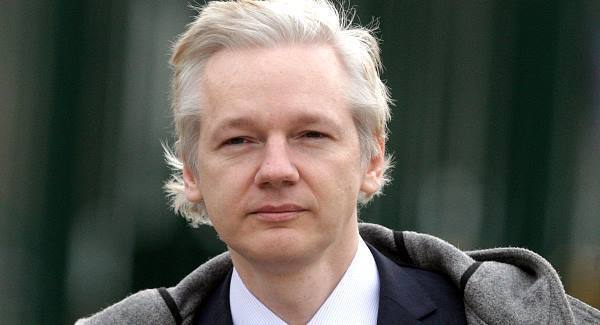
What fascinated me was the amount of time afforded to the former NSA operative: His message was akin in presentation and duration to the Pope’s Christmas message or a minor presidential address. How society has changed.
Meanwhile, Wikileaks founder Julian Assange, in a presentation on BBC Radio 4’s Today programme edited by PJ Harvey, pronounced that “knowledge is power”. Assange, from his sanctuary in the Ecuadoran embassy in London, where he has been granted asylum, said: “Documents disclosed by NSA whistleblower Edward Snowden show that governments dare to aspire, through their intelligence agencies, to a god-like knowledge of each and every one of us.”
The third member of the triumvirate, Chelsea Manning (born Bradley), is wallowing in a US military prison for releasing classified war documents to Wikileaks. It is unlikely that she will be afforded the opportunity to deliver a new year’s address to the world. Nevertheless, her contribution to the disclosure of the massive scale of US surveillance of friend and foe alike demonstrated just how close to the bone George Orwell was in 1984. The Cold War is no more, yet the NSA apparently spared few in its quest for information: Angela Merkel’s personal communications were tapped; François Hollande complained about not expecting such practice from allies when he too discovered the extent of US interest in him; and Benjamin Netanyahu recently disclosed that he was dissatisfied with an ally which spied on him.
If knowledge is power, Snowden, Assange, and Manning have undermined that power by sharing top secret documents with the world. It has always been the way that knowledge percolates to the top, to the wealthy, and the powerful, never downwards to the poor and disenfranchised. In this case, the power, even if only in a symbolic fashion, has been given to the people. This heroic trio have chosen to stand up to Big Brother, forfeited their freedom, and are incarcerated (call it asylum, if you will) for having fought for the rights of man in modern democracies: The right to free speech, the right to knowledge, the right to free movement, the right to choose.
From the high idealism of the whistleblowers, and still on the information superhighway, it is but a touch of keyboard to the depths of an internet scourge, pornography. British prime minister David Cameron, himself not untouched by surveillance, on Jul 22 pledged that households in Britain will have pornography blocked by their internet provider unless they choose to receive it.
Choice is the key word. Snowden, Assange, and Manning chose to forfeit their freedom in order to expose bureaucratic wrongdoing. However, too many internet users find themselves in places they never initially chose to go.
For example, I was recently reading online of St Thomas’s interpretation of humus (the earth beneath us) as the root of the word humilitas or humility, and for pure entertainment began to Google the grammatical evolution of the root. From the submissiveness of humility, and its personification in the form of the likes of Mother Theresa and Fr Damien of Molokai, the next keystroke identified the verb, humiliate, and the site on display showed a Chinese male on his knees before a girlfriend (I presume) who was abusing him physically and verbally before a gathering audience. A little distressed by the scene, I followed my linguistic highway to humiliation. The variety of sites depicting a huge array of pornographic humiliation images and texts left very little to the imagination. In fact, it required no imagination, and its very existence offended and distressed in equal measure.
To have explored any of the sites on offer demanded an element of choice on the part of the potential viewer: Choose to enter or choose to reject. What began as an academic exercise with words, resulted in an invitation to access porn and the need to make a choice as to whether or not I wanted to view the sites. As an adult, I should be in a position to understand the difference between good and evil, entertainment and exploitation. However, a child does not yet possess the full power of discernment and can be seen legitimately as a target of the forces that promote pornography.
One of the problems of such exposure is that the child will believe that the behaviour of the actors is the norm in human relationships. This normalisation of abusive, degraded sex, simulated or not, is what drove David Jason at the weekend to react to Miley Cyrus’s onstage act: “She had done it to break the mould, I can understand why, but we have given her the oxygen of publicity and encouraged it, so young girls will think it is the right way to attract men. We’ve lost our standards.”
Likewise, I recently saw a young Irishwoman announce on page 1 of a tabloid that it was her aspiration to become a porn star. Such a decision could only have been arrived at if the girl/woman were exposed to porn regularly and from a young age. In such circumstances, sex is a commodity to be bought and sold. Our children deserve to be protected from such “normality”.
It is timely that Cameron should begin to take a stance to protect the vulnerable, and it is a relief that Pat Rabbitte should follow suit with the formation of an Internet Content Governance Advisory Group which “will consider the emerging issues in the area of online content and its general impact on the lives of children and young people”.
The group will also be asked to comment on the joint Oireachtas committee report Addressing the Growth of Social Media and tackling Cyberbullying. The move is welcome but the outcome of individual states dealing with a phenomenon which of its nature is cross-border-driven is open to question and the option of over-regulation is also dangerous.
Child safety is one of the main priorities of the digital agenda for Europe, but the commission is firmly against censorship, instead supportive of an industry-led coalition of companies (Google, Facebook, Microsoft et al) “to provide wider options for parental control and to strengthen age-appropriate privacy settings”.
Protection of our freedoms is, as we have seen, worth being jailed for, but in the European Parliament some MEPs are wary that child protection can be used as an excuse for censorship.
Information access is a basic human right, but when what one receives is misinformation posing as normality, appealing the baser instincts of the human spirit, it is time for the drawbridge to be lifted... by whom is the question.
To echo Snowden, “I didn’t want to change society. I wanted to give society a chance to determine if it should change itself.” We have at last been given that chance.

CONNECT WITH US TODAY



Be the first to know the latest news and updates