America losing its way in war on terrorism
Three disclosures in the past week have shown the United States is losing its way in the struggle against terrorism.

America losing its way in war on terrorism

Sweeping government efforts to stop attacks are backfiring abroad and infringing on basic rights at home.

CIA drone strikes are killing scores of civilians in Pakistan and Yemen. The National Security Agency is eavesdropping on tens of millions of phone calls worldwide — including those of 35 foreign leaders — in the name of US security.

And the Department of Homeland Security is using algorithms to “prescreen” travellers before they board domestic flights, reviewing government and private databases that include Americans’ tax identification numbers, car registrations and property records.

Will we create a Minority Report-style Department of Precrime next? Obama administration officials have a duty to protect citizens from terrorism, but out-of-control NSA surveillance, an ever-expanding culture of secrecy and still-classified rules for how and when foreigners and even Americans can be killed by drone strikes are excessive, unnecessary and destructive.

Twelve years after Sept 11, 2001, the United States’ obsession with al Qaeda is doing more damage to the nation than the terrorist group.

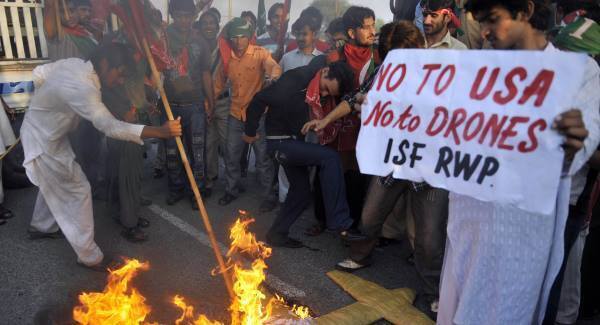
Two new reports issued this week by Amnesty International and Human Rights Watch detailed dozens of civilian deaths caused by drone strikes in Pakistan and Yemen. Classified documents obtained by the Washington Post suggest that CIA officials who carry out the strikes make little effort to track civilian deaths.

“There is a lot more pressure building” on President Barack Obama, Sarah Holewinski, head of the Center for Civilians in Conflict, a group pushing for greater transparency in drone strikes.

“He’s going to have to look at these legal questions.”

Documents leaked by whistle-blower Edward J Snowden emerged this week, revealing NSA phone monitoring of German Chancellor Angela Merkel, 35 unidentified heads of state, and 70m calls in France. The extent of the surveillance is sparking widespread indignation and endangering joint counter-terrorism operations among Germany, France and the US.

“The perception here is of a United States where security has trumped liberty,” New York Times columnist Roger Cohen wrote from Berlin, “intelligence agencies run amok (vacuuming up data of friend and foe alike), and the once-admired ‘checks and balances’ built into American governance and studied by European schoolchildren have become, at best, secret reviews of secret activities where opposing arguments get no hearing.”

There is a serious terrorist threat to the United States. The administration is under enormous pressure to prevent attacks, but there are ways to safeguard the US without sparking such a serious backlash abroad and at home.

Holewinski called on the Obama administration to implement its promise to move command of drone operations from the CIA to the American military. Military control is one step toward a key goal: Greater transparency in countries where drone strikes are enormously unpopular. Keeping the drone strikes as a covert CIA-run programme makes accountability and determining the true number of civilian deaths impossible, she said.

If strikes are commanded by the military and disclosed publicly, reports of civilian casualties could be investigated under military law and compensation paid to victims — as now happens in Afghanistan.

Holewinski also urged the administration to disclose targeting rules that it has refused to make public. How are civilians defined? And how are civilian casualties assessed? What is the legal definition of an individual who can be targeted? She credited the administration for a decrease in drone strikes since Obama promised one in May, but, she insisted, the targeting process needs to be far more transparent.

In the US, meanwhile, press reports emerged last Monday that the Transportation Security Administration is expanding its prescreening of airline passengers to include government and private databases that contain employment information, property records and physical characteristics.

Khaliah Barnes, a lawyer with the Electronic Privacy Information Center, which opposes this prescreening, said many Americans do not grasp the current scale of domestic government data mining.

“The average person doesn’t understand how much intelligence-driven matching is going on and how this could be accessed for other purposes,” she said. “There’s no meaningful oversight, transparency or accountability.”

One critic called the new TSA programme “a ‘pre-crime’ assessment every time you fly”.

A bipartisan proposal to rein in government surveillance unveiled last month by senators is a good start. The measure would end the bulk collection of Americans’ communications records; limit Washington’s ability to obtain information from Google and other online providers; and make the secret court that oversees US surveillance operations far more transparent.

After months of promising change, Obama should back the senators’ proposal. He should also enact Holewinski’s recommendation for making drone strikes more transparent. Terrorists know the US monitors phone calls and emails worldwide. They masquerade as civilians in areas where drones operate. Making drone strikes, NSA surveillance and TSA screening more transparent will build trust at home and solidify counter-terrorism cooperation abroad.

If there is one ideal that Obama needs to embrace, it’s transparency. It is a strength, not a weakness.

More in this section

Revoiced

Newsletter

Had a busy week? Sign up for some of the best reads from the week gone by. Selected just for you.

Cookie Policy Privacy Policy Brand Safety FAQ Help Contact Us Terms and Conditions

© Examiner Echo Group Limited