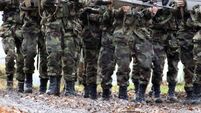
Fair Game

Regina Sexton joins the Longueville Shoot to experience a day’s hunting

SINCE the beginning of September and, running until the end of January, it has been open season for game shooting and wildfowling in Ireland. The beginning of November opened the season for woodcock, partridge (red-legged) and pheasant. Birds with odd names and strikingly beautiful plumage are now fair game for the gunman’s shot.

Pheasant we know — but what about woodcock, wigeon snipe, Jacksnipe, teal, goldeneye? What do they look like, where would we find them and are we open and conditioned to eating them or even familiar with how they taste? These birds speak of many things and many habitats — some are native, some are migratory and some, like the pheasant, have been deliberate introductions.


In the shooting season they speak of other things — sport, conservation, economic concerns, management of the countryside and as a by-product, they bring a seasonal addition to the diet. Essentially, however, game shooting and wildfowling are marginal concerns. They are a world apart from the mainstream. And as with many strange places, access or a willingness to enter can be a complicated venture. As a result, game birds and wildfowl will hardly impinge on everyday eating for most of us.

Shooting, for example, though popular and widespread, it is often viewed variously as objectionable, exclusive, and a throwback to an older social order where class structure was rigidly defined. Game and its consumption are problematic and raise issues of ethics, welfare, conservation or food squeamishness. This is understandable, but we all hunt for food in many ways. Perhaps it’s the overt nature of game that stops us from viewing it as a valuable food product. Pheasants in feather, rabbits in fur, deer in hair or hide are too much for the sensibilities of the modern consumer from a visual and taste perspective.

The differences that mark it apart come through in the methods and even the language of game cookery — hang, pluck, skin, truss and bard are not words or techniques we associate with making the average dinner. What does hit home is that game and wildfowl, and how they come to the table, force us to consider our modern day relationship with food and its production. As consumers, we meet fowl and poultry at the end of the production line and so the slaughter and the processing have been censored from view and are often little understood. Sometimes it is simply better and easier not to know. Personally, I have no problem when presented with a pair or brace of birds and I’m fortunate to know how to prepare and dress them for the table. But if I’m honest I’d rather not know how they met their end. Sentimentalist and selective I may be, but I view it more so from the perspective of sentient creatures and thus deserving of respect and dignity if they fall to the ultimate sacrifice of death for the table.

In mid-November, I went on one of the Longueville House shoots to understand the process from start to close. At Longueville, a proportion of the estate is leased and managed by a non-commercial shooting syndicate for the rearing and care of pheasants. In August, around 2,000 seven to eight-week-old poults are sourced from breeders. From this time until the end of January the birds are in the care of the gamekeeper, who is responsible for their feeding and safekeeping from predators, largely fox, mink and birds like magpies or grey crows. In the initial weeks, the young birds stay close to the rearing pens and are fed on pellets, but are also free to roam the surroundings areas for additional food. Pheasants are diverse feeders and as they age and become more confident in their surrounds they’ll roam the estate feeding on anything from shoots, to seeds, nuts and invertebrates. They’ll tend to roost in the pens in bad weather or avail of wheat from the feed hoppers. Given that pheasants are equally at home in woods, reed beds or marshy areas, the terrain around Longueville makes ideal habitat for the birds.

If not taken by predators in the weeks leading up the shoot, many of the birds will migrate to lands surrounding the estate and live in the wild as reserve escapees. In fact, the population of pheasants is secure in Ireland; they are widespread and common with wild populations continually boosted by the release of captive-bred birds for shooting.

This background of care and maintenance is to facilitate good shooting in the season. As the nature of shooting varies with habitat and bird, the nature of the shoot will also vary depending on the club and the expectations of the gunmen. At Longueville the shoots are driven — a practice that in structure and formalities is based on the driven shoots of the large country house estates.

Typically, a shoot will begin early morning, with a break for lunch and will continue until the light begins to fade in the afternoon.

For any one drive, those taking part divide into three main and designated parties — beaters, guns and pickers-up.

Usually, there’s a shoot captain to explain where the beaters are heading and how the guns are to arrange themselves in terms of shooting positions — pegs.

The first drive began and I went with the five guns and Paddy, one of the picker-ups and his three outstanding Labradors. I have to say the dogs played a blinder on the day. If the birds are not killed outright in flight, the dogs are crucial in getting quickly to the fallen wounded or winged pheasants so that they are retrieved and dispatched with urgency.

The first drive brought down nothing, the second little — three pheasants and a woodcock. The third and subsequent (there were five drives on the day) were more typical. For the third I stayed with one of the guns.

We positioned in the orchard and waited. At a distance and out of sight, the beaters were flushing the birds. Their job is to drive the birds in the direction of the guns. The dogs will flush and rise while the beaters beat the ground with sticks to keep the birds in flight. As the birds come closer to the range of the guns, the beaters will shout their arrival and the guns will do their work. Everything happens very quickly at this point — there’s shouting, gunshot, reloading, more gunshot, the smell of spent cartridge, the sound of spent shot showering to ground, birds falling to the ground and the frenzy of the dogs sent to retrieve.

At the end of the day’s shooting, around 60 pheasant, one woodcock and one pigeon were taken. This I learnt was a moderate take, or ‘bag’, with many of the more formal driven shoots, especially those in Britain, bagging up to several hundred birds per shoot.

Different again in structure and planning is the practice of rough or walk-up shooting. I spoke to Danny O’Shea of the East Cork Game Protection and Conservation Club who explained this looser system. It is, I suppose, very much a gunman with his dogs taking the luck of the shot on any particular day as permitted by the club’s designated shooting days. Gunmen in groups no bigger than three with their dogs walk over mixed terrain grounds. With the permission of landowners, they will walk the land and follow the dogs — usually highly-bred, Springers, Pointers or Retrievers. As opportune, the dogs will raise birds and the guns will shoot reactively to the action and flight of the game. Others, bringing no guns, will simply walk the land to work the dogs. Typically, these gunmen will bring home a mixed bag of wildfowl like teal, mallard, widgeon and with a limit of two pheasants per gun per day.

The most active clubs restock their preserves with young birds most years thus adding to the ecosystem of the preserved lands they walk.

More in this section

Revoiced

Newsletter

Had a busy week? Sign up for some of the best reads from the week gone by. Selected just for you.

Cookie Policy Privacy Policy Brand Safety FAQ Help Contact Us Terms and Conditions

© Examiner Echo Group Limited