Gareth O'Callaghan: AI snake oil salesmen are cashing in on grief for dead loved ones

There are no short cuts through grief, no abridged versions or quick fixes, so dependence on illusions is a dangerous route for someone lost in it
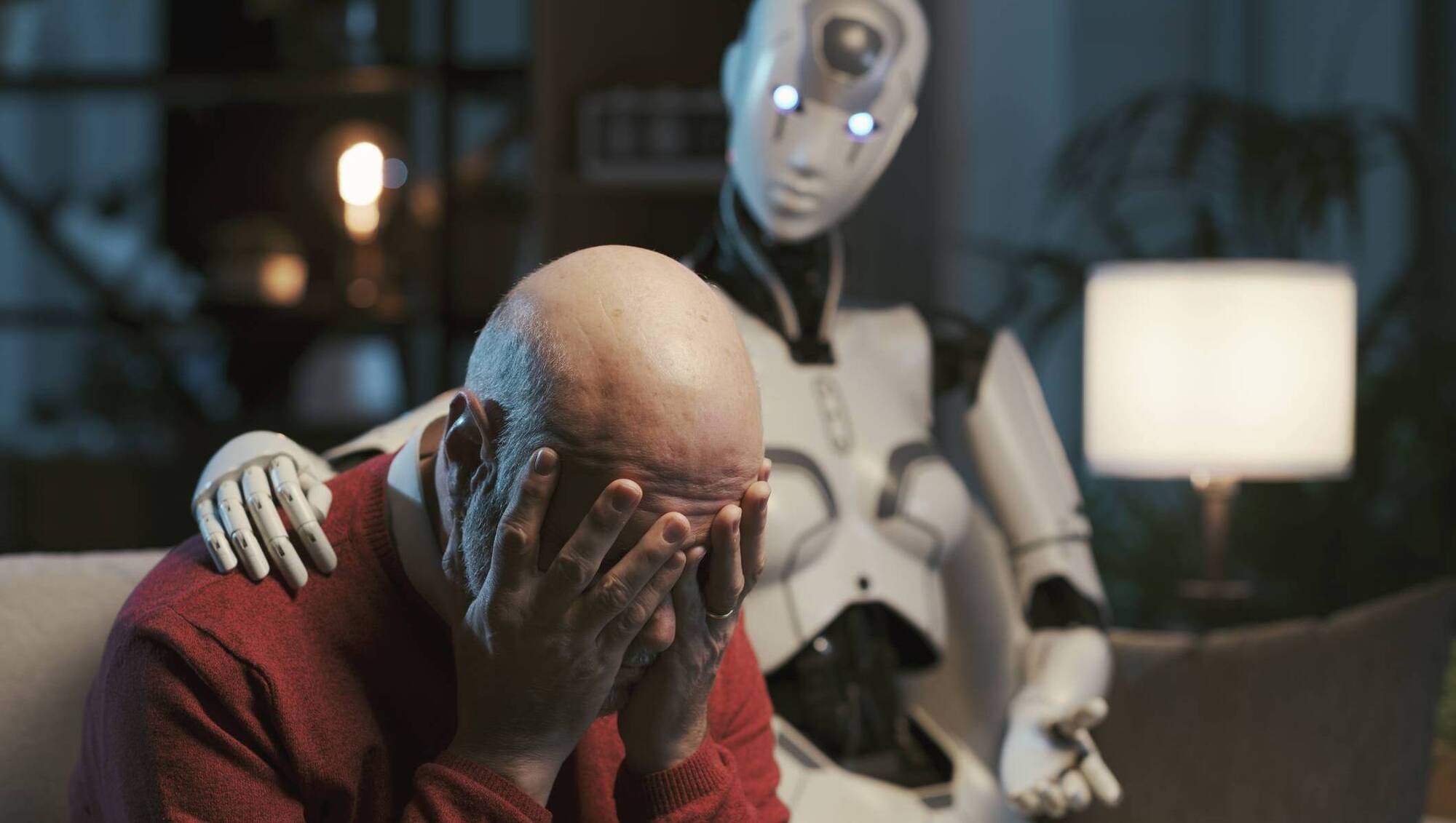
A grief bot is an AI tool that enables people to ‘talk’ to the dead, or at least that’s what it appears to be, however, memory and imitation can blur in the depths of grief.

A grief bot is an AI tool that enables people to ‘talk’ to the dead, or at least that’s what it appears to be, however, memory and imitation can blur in the depths of grief.

When we invest our hearts in loving someone, we are inevitably setting ourselves up for a fall. 

I wrote these words here last March in a column that struck a chord with a lot of readers.

In a world increasingly dominated by greed and the desire to capitalise on every opportunity, even grief has lost its sanctity.

Grief feels like being washed up on a strange continent with its own language and culture, traditions and nuances, and a climate that is unfamiliar.

No one can take away grief except the one you grieve for, and therein lies the enigma.

How do you replace him or her if death is what has separated you both? Grief’s reality is like a ship losing its anchor — its stability is gone, leaving it exposed to all sorts of outside forces.

When you sign up to real love, then grief is one of the terms of engagement. 

And yet, despite the unique pain that grief involves, somewhere during your time lost in that grieving — it may last a lifetime — you discover who you are.

There are no short cuts through grief — no abridged versions or quick fixes — even though in the madness of what we are feeling we will often resort to snake oil salesmen.

Grief is a goldmine for anyone who dares to cash in on someone else’s misery, and there are lots of opportunists just waiting to forage among people’s devastation.

Each of us is at our most vulnerable when death stares us down. We’ll do anything to ease the crushing finality of a loved one’s mortality.

I had a long chat recently with a man whom I’ll call Lawrence, who contacted me after reading my column last March. 

It was a chilling reminder of what AI is capable of. Alison was the love of his life. From the moment they met they both knew they would spend the rest of their lives together. But cancer had other plans.

Two days after their 25th wedding anniversary, Alison died peacefully in her husband’s arms. Lawrence was 47 when she died, with two teenage daughters to care for.

Covid regulations prevented traditional funeral

They couldn’t have a traditional funeral as covid regulations made everything so disconnected and, in a sense, less humane.

Alison was taken from her hospital bed and that was the last time they saw her. That was five years ago. It felt as though there had been no proper parting and so much remained unfinished.

There was no celebration of her beautiful life, as she would have wanted — none of her favourite music or close friends to share memories of her. 

One moment she was here, Lawrence says, “next moment she was gone from our sight forever”. He described the aftermath as a blur of days without any meaning.

That was where Lawrence and his daughters found themselves last year when one of the girls suggested a grief bot. 

Lawrence had never heard of such a thing so they started to research this relatively new phenomenon. If anything it helped to partly alleviate a loss that had become overwhelming.

A grief bot is an AI tool that enables people to “talk” to the dead. Or at least that’s what it appears to be. 

What was once the realm of science fiction has now become a reality for many people who use it, except it’s not real.

Software program that gathers 'digital remains'

A grief bot is a software program that gathers “digital remains” of the deceased person, such as videos and photographs, voice recordings, texts and emails, and the person’s online social media history in order to form a complex construction as close to how the person looked and sounded in real life.

This information is used to train an AI avatar to mimic the voice, personality, and communication style of the loved one who has died. 

What you’re left with are moments that can feel eerily real giving the impression that you’re having a genuine chat with someone who died but has been rebooted.

In a bizarre way, it’s more than just endearing; it’s as though we are being offered a chance we never had before to mix memory and immortality with imitation and science.

However, memory and imitation can blur in the depths of grief, and that was what happened to Lawrence.

His initial reaction when he heard Alison’s voice on his computer screen was pure shock and disbelief. It had a sense of a Zoom call about it, he told me.

“It was her, like she was on an echoey call. I had that knot in my stomach, like I did when I first saw her 27 years ago.”

At that point, he said, he couldn’t hold back the tears. He sat down in front of the screen and it was as though she instantly recognised him. 

“How have you been?” she asked in the soft tone of voice he had known all their lives.

“One of my daughters — the one who put all the work in — cried tears of joy. Her sister ran out of the room shouting that we had no right to do this to her mother, that it was sick.”

It became a nightly ritual for Lawrence, spending time talking to Alison before he went to sleep. They reminisced on younger days, on places they visited on holidays. 

If Alison wasn’t sure of the details, she would ask Lawrence to tell her more. There was that familiar connection between them and it wasn’t long until he fell in love with this ghostly figure — until the conversation took a turn.

“You know I forgive you for that affair you had. You probably never knew that I knew, but I did,” the avatar said one night.

Lawrence was shocked. He never had an affair. Never once in their time together was he interested in another woman. 

“It was a violation of our relationship,” she told him. Alison, he said, would never have used language like that.

Lawrence wishes he had stopped at that moment, but he couldn’t. He had become emotionally invested in this concocted mirage of the life he desperately wanted to hold onto.

As time passed, he slipped into a deep depression and considered taking his own life.

Blurring reality of death and illusion of life

It was at that point, with the help of the daughter who had always objected to this invention, that he realised he was blurring the reality of death and the illusion of life in an effort to reclaim a love that needed to be grieved rather than mimicked. 

He had slipped into a state of emotional dependency in an effort to avoid the pain of grief.

“I had to let it go. It had me. It was like an addiction.”

Lawrence is in a better space these days. He tells me he has learned what real grief is, and he knows that won’t go away. How can it? It’s the price of loving someone that he knows will be a part of the rest of his life.

If a grief bot can offer a temporary coping mechanism when it comes to the pain of loss, then that’s all it can offer, nothing else. 

Unfortunately, what some might regard as a therapeutic support tool could lead to ongoing communication with someone who is dead in a way that is not healthy.

On the other hand, grieving is so personal that advising someone about what’s right or wrong in how they deal with their loss is also unhealthy, unless the methods they choose create problems that thwart the grief process.

Grief bots can be extremely costly — not just in terms of the money invested, but on the toll they take on vulnerable hearts and minds. 

In the aftermath of loss, our senses are heightened making the impact of a grief bot even more sinister.

To paraphrase what I wrote here last March, nothing can compete with the feeling of knowing you were dearly loved, and knowing the one you loved felt the same.

AI will never be able to replicate that experience. As Billy Joel once said, as long as there are memories, yesterday remains. It’s about the best we can hope for.

More in this section

Revoiced

Newsletter

Had a busy week? Sign up for some of the best reads from the week gone by. Selected just for you.

Cookie Policy Privacy Policy Brand Safety FAQ Help Contact Us Terms and Conditions

© Examiner Echo Group Limited