Sarah Harte: Jim O'Callaghan should look closer to home when looking to solve legal delays

Multiple factors are delaying cases in Irish courts, all of which are under the control of the Department of Justice
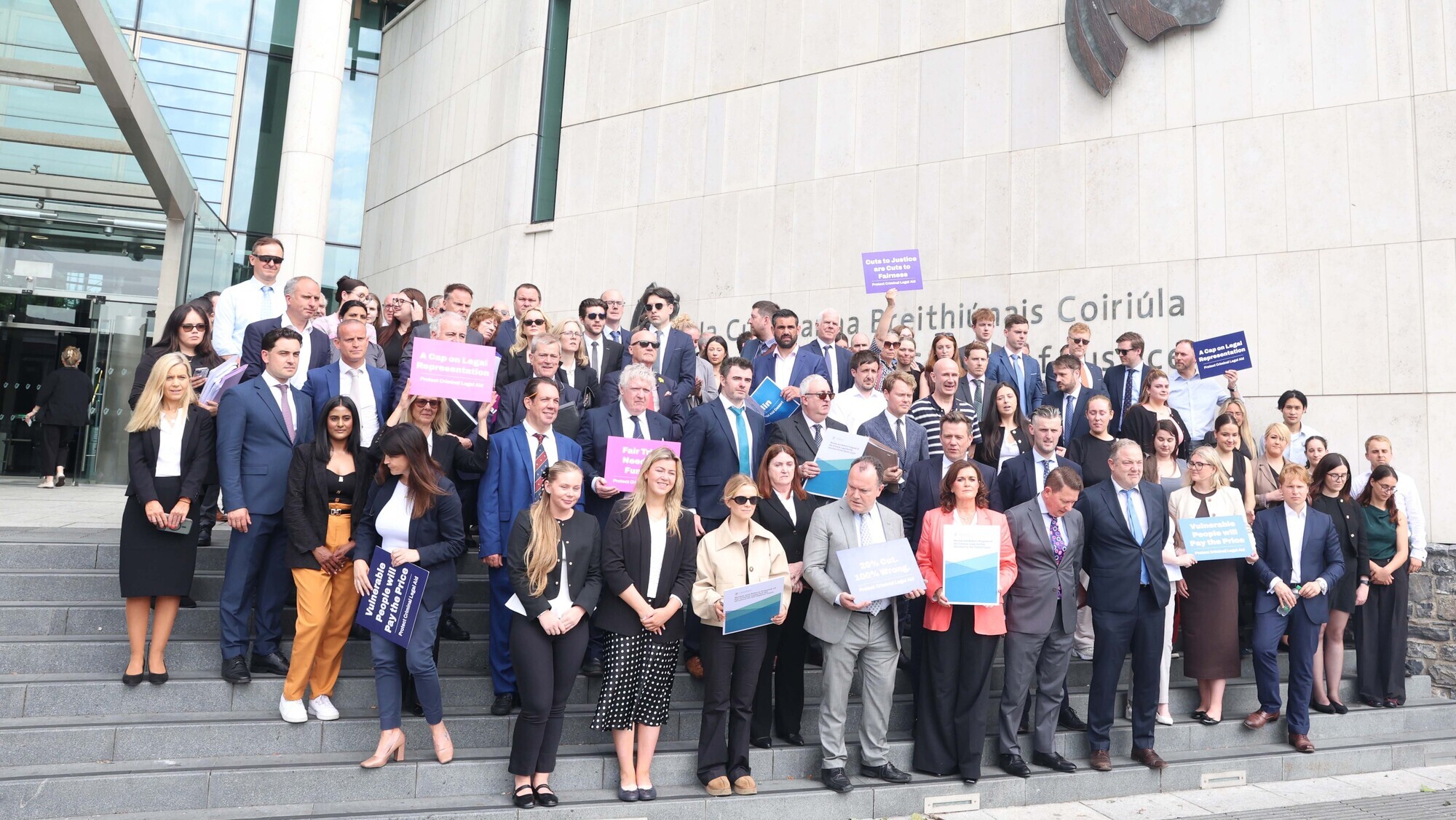
Solicitors protest outside the Courts of Justice in June, over the changes to solicitors’ fees for legal aid work. File picture: Collins Courts

Solicitors protest outside the Courts of Justice in June, over the changes to solicitors’ fees for legal aid work. File picture: Collins Courts

Minister for justice Jim O’Callaghan is right to be concerned about delays in the Irish legal system. Our legal system rewards delay and tolerates inefficiency.

It’s just that he should be looking closer to home to solve those delays.

Criminal defence solicitors cannot be blamed for failures created by the State, the legal system’s capacity problem, or legal culture.

It’s like blaming the tap for a flooded kitchen while ignoring the burst pipe behind the wall.

The minister wants to move criminal legal aid to a flat-fee model, one accused, one case, one fee, to avoid incentivising adjournments leading to delays and inefficiencies. There has been an 83% increase in criminal legal aid certificates issued in the district court over the last decade.

Criminal legal aid defence lawyers, general practitioners, and a state solicitor I spoke to accept that there is always the odd rotten apple. But they reject the argument that criminal defence solicitors contribute significantly to legal delays through adjournments sought for their personal gain at €59 a pop, saying it ignores the reality of how cases move through the courts.

Defence solicitors are paid relatively modestly, and they provide a publicly important function.

Since the introduction of the new scheme, around one-fifth of criminal defence solicitors are said to have left the legal aid panel.

Vulnerable, chaotic clients often do not turn up in court because they are in other jails or courts. And why should solicitors turn up in court for no fee when it’s likely their client won’t turn up?

Furthermore, the massive backlogs in the psychiatric and probation services mean that delayed reports contribute to adjournments.

Multiple other factors delaying cases also lie outside the control of defence solicitors, including a shortage of judges, the number of court sittings, court listing systems, archaic court procedures, and shoddy case management mechanisms.

The irony is that almost every structural cause of these delays sits under the umbrella of the Department of Justice, the very department Mr O’Callaghan leads. It is the machinery of the State that is creaking, and the department bears primary responsibility for sorting it out.

Wider issue

In some ways, this issue feels like a red herring. The wider issue is the fact that the Irish legal system has major cracks on both the criminal and civil sides, with lengthy delays for myriad reasons.

These delays mean that, for victims, defendants, families, and businesses, we are psychologically and financially punished.

We believe in innocent until proven guilty, but there’s no way to rebuild your life while a criminal allegation hangs over your head for years. Not everyone who is accused of a criminal act is found guilty.

On the other side of the coin, victims and their families are also trapped in a holding pattern, like planes circling the airport, never able to land, waiting for answers, closure, and justice.

Lengthy criminal proceedings have a devastating human impact, not just psychologically.

As Lord Diplock, of the controversial Diplock Courts, famously observed: ‘Justice delayed is justice denied.’ Delays in criminal cases can amount to a breach of natural justice, constitutional fair procedures, and the right to a fair trial. Justice must be fair, but it must also be timely.

A fair trial may become impossible when it’s delayed too long. Why? Because witnesses forget important details due to fading memories, witnesses die or become ill, documents get lost, and CCTV footage gets deleted.

Certainly, there are legitimate reasons for some adjournments. Natural justice is not served by speed alone. We can rest easy on this score. Because in the Republic of Ireland, speedy judgments that risk fairness are not a problem. Au contraire.

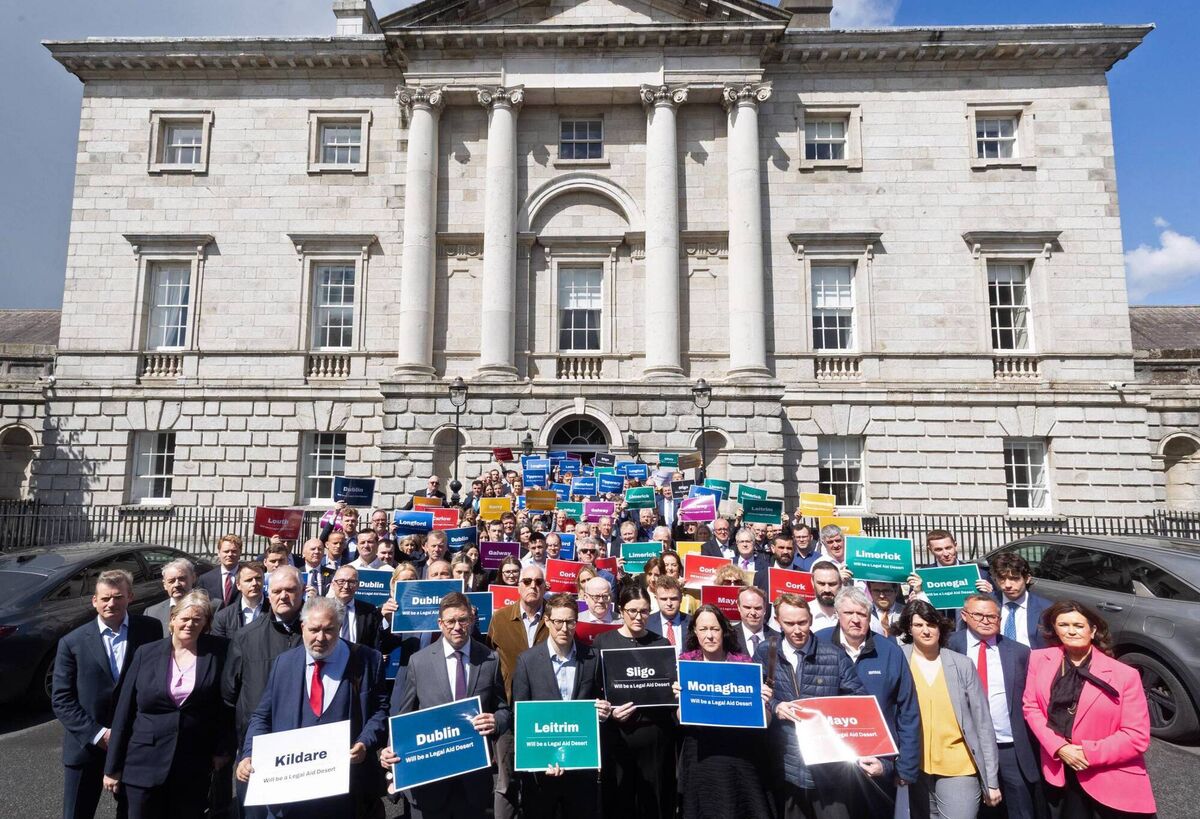
Over 150 solicitors gathered at the Law Society of Ireland on June 9 to discuss changed before they cmae into effect. File picture: Jason Clarke

On the civil side, too, there are major issues with how justice is dispensed, with chronic delays.

Of those who are unlucky enough to be involved in legal cases, many are left waiting for remedies for extraordinary lengths of time, living with prolonged uncertainty.

I see it in my own divorce; I see it in the divorces of friends. People weaponise court proceedings. There are almost no consequences for non-compliance. 

Failure to provide financial disclosure on time is permitted. Repeated adjournments are handed out like candy with no real questions asked. Failure to comply with court directions is treated far too casually. Sometimes people fail to turn up. The court routinely fails to address this.

Medical negligence litigation is another example of ordinary people left suffering due to delays. Plaintiffs dealing with pain, disability, and emotional trauma are left hanging for what is estimated to be up to 6 years. I’ve taken this 6-year figure from a study by Dr Mary-Elizabeth Tumelty of UCC law school, who has written extensively on how the system is built around delay.

The Avril O’Brien case, partially decided this year in an interim judgement, stands out. Ms O’Brien was injured at birth in 1978 in the Coombe Hospital, resulting in cerebral palsy.

While acknowledging that birth injury cases are among the most medically complex cases in litigation, taking almost fifty years to reach a point where meaningful financial security was awarded when Avril O’Brien reached adulthood points to a problem. As reported in these pages, her father Paddy O’Brien said: “Over the years we had to fight for everything.” Certainly, this case is an outlier in terms of time, but our current legal system too often fails to deliver fairness within a reasonable timeframe for all sides.

As previously noted, at present in Ireland, the pace of litigation is largely determined by the legal teams handling the case. The inherent challenges with the absence of timelines have long been recognised.

Case management

There is efficient judicial case management in the High Court’s commercial list, but mainly in this country, the pace of litigation is largely determined by the parties to the dispute.

Courts do not actively control timetables as they do in many other countries. For example, in England and Wales, Australia, and the US, judges actively manage cases and impose consequences for non-compliance.

Judicial case management, established timelines, and adherence to those timelines need urgent reform. But that will mean changing legal culture.

This is where you potentially smash into a major roadblock. The biggest obstacles to reform of the Irish legal system are not a lack of understanding of its glaring faults.

You’re up against deeply ingrained traditions and little appetite for change. Any attempts to date to reform the legal system have floundered.

Entrenched lucrative professional interests in civil law, where the largest financial rewards lie, must be protected, and the longstanding nexus between the political and legal classes means there are powerful lobbyists to block change.

It is a major stain on the Irish State.

Lengthy criminal proceedings have a devastating human impact, not just psychologically

More in this section

Revoiced

Newsletter

Had a busy week? Sign up for some of the best reads from the week gone by. Selected just for you.

Cookie Policy Privacy Policy Brand Safety FAQ Help Contact Us Terms and Conditions

© Examiner Echo Group Limited