Elaine Loughlin: Can Jennifer Carroll MacNeill deliver Sláintecare despite resistance from healthcare leaders?
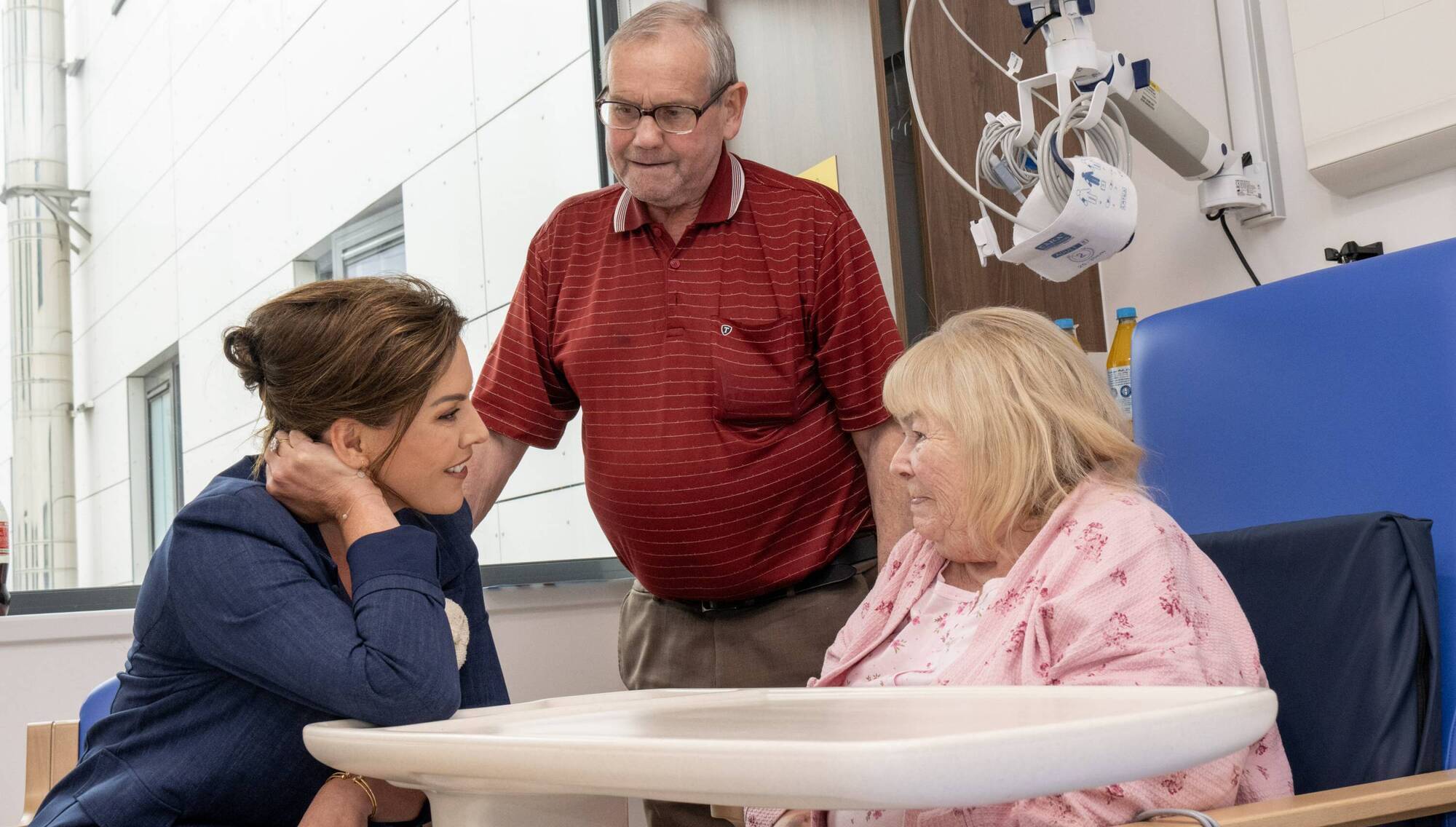
Minister for health Jennifer Carroll MacNeill (left) meeting with patient Betty O'Sullivan (right) from Glanworth and her husband Pat (centre). Picture: Brian Lougheed

Jennifer Carroll MacNeill is gaining a reputation as an enforcer in health, but by winning the battle she is losing many in the room. That may not necessarily be a negative thing.
Since entering one of the most testing government departments, the Fine Gael minister has shown a steely determination and a fearless attitude when it comes to standing up to those at the top.
The health minister has so far made public enemies with the board of Dublin’s Mater Hospital; and most recently, consultants engaging in private practice and the master of the Rotunda Maternity Hospital.
She also became embroiled in a protracted row with pharmacists over HRT dispensing fees, an argument that was ultimately resolved when both sides compromised.
Far from engaging in what has become an increasing common practice of Government handwringing and commenting from the sidelines, MacNeill is pressing ahead with implementing overhauls which she hopes will lead to a better healthcare system. Putting a few noses out of joint is part of that process.
"You may be the health minister, but you are not God," was the now infamous insult uttered by David Begg during an explosive row with MacNeill, which ultimately led to him stepping down as chair of the board of the Mater Hospital.
Read More
The minister had taken issue with productivity levels at the hospital, and during a meeting produced spreadsheets to prove that the number of new consultants recruited was not resulting in the expected increase in patients treated.
This is a particular issue that MacNeill has been preoccupied by on a national level.
In her crusade to bring about efficiencies and reduce waiting times for patients, she has focused in on bank holidays, publishing Emergency Department performance reports after each one.
She is also actively pushing for changes in rostering that would bring senior decision-makers and consultants on-site during weekends and evenings.
As with most structural changes, these type of overhauls have been met with an element of resistance and the moves have certainly raised the hackles among certain groups.
MacNeill now seems determined to implement the cross-party Sláintecare plan, a long-term vision for the healthcare system that will replace the historical two-tier public/private model with a single-tier, universal service.
If she can pull it off, her political capital both among the public and within the party will increase.
On Tuesday of this week, a grinning MacNeill and her team were seen in the Dáil canteen having squared up to the head of the Rotunda on the issue of private maternity care and won.
The minister had taken to the airwaves the previous week to warn that funding could be cut if Professor Seán Daly continued to allow public-only consultants do private work at the maternity hospital.
Insisting on dealing with the matter as swiftly as possible, she issued Ireland’s largest maternity hospital with a Monday at 5pm deadline to provide the Government with an audit of private work conducted by consultants on public-only contracts.
By Monday evening, the master of the hospital had capitulated and agreed to retract the private care based on its fear of losing State funding.
The result was noted as a "massive success" for MacNeill by one senior Fianna Fáil figure, who acknowledged, if a little grudgingly, that it had been a good week for the Fine Gael minister.
Many have noted that straight-talking MacNeill has approached HSE heads, union bosses and hospital leads very differently to her predecessors and is willing to make herself unpalatable to them if it means progressing her aims.
One health source who has witnessed MacNeill in action said: "There is no bullshit with her."
"She wants details," the source said, adding that she is not interested in anecdotes, and if issues within the system are to be brought to her table they must be backed up with clear evidence.
Refusing to accept that something needs to be addressed without the hard data or detail, may emanate from her training and background in the legal profession.
She qualified as a solicitor in 2006 and got a job as Fine Gael’s legal adviser two years later.
When the party entered government in 2011, MacNeill became a special adviser to then minister for children Frances Fitzgerald, before taking up adviser roles with Alan Shatter during his time in justice and later Eoghan Murphy in the housing portfolio.
Even as a relatively novice politician, MacNeill was not afraid to ruffle feathers. In 2023, she goaded Fianna Fáil when she put her name along with that of Martin Heydon and Peter Burke, to a newspaper op-ed which called for a €1,000 tax cut for workers.
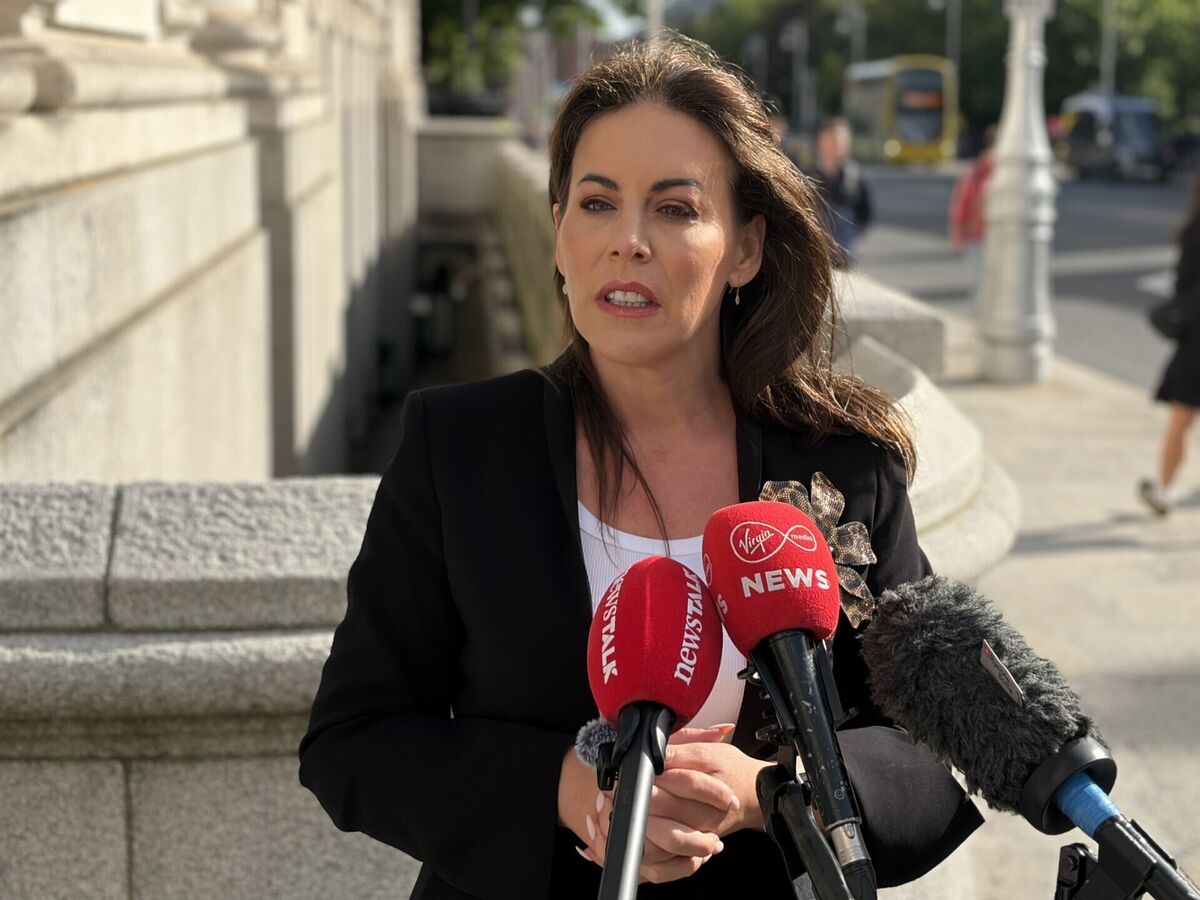
The proposal, was slammed as "nuts" by senior Fianna Fáil figures, who were angered that the three Fine Gael junior ministers had tried to undermine then finance minister Michael McGrath.
At the time Micheál Martin told a private meeting of his parliamentary party that McGrath should be given the space and respect to develop budgetary measures and he would ensure that this happened.
MacNeill has taken this defiant and often provocative attitude with her into health.
"She is a different kind of politician to any I would have experienced before," said one union source.
"She doesn't just nod along."
MacNeill has the confidence to admit when she isn't fully across an issue, but insists on receiving briefings from the most relevant individuals to bring her up to speed.
The fact that she turned up 45 minutes early for what became a showdown meeting with Begg, to allow her walk the corridors of the Mater Hospital, irritated the board, but is simply how she operates.
She wants to hear from nurses on wards as much as the heads of the HSE.
One non-Fine Gael Cabinet source, who described her as "very constructive", used an example of where she travelled to a regional hospital after issues were raised, to directly hear from staff on the ground.
The source added: "She would have aspirations, there is no doubt about it."
Unlike others, who automatically feign exasperation before trotting out the "there is no vacancy at the top" line when asked about their leadership intentions, MacNeill has never been shy about her aspirations.
As far back as 2024, when she was minister of state for European affairs she told that she would "love the opportunity" to become the first female taoiseach.
“We’ve never had a woman minister for finance. We’ve never had a woman minister for foreign affairs. We’ve never had a woman taoiseach.
"That’s three senior positions where we haven’t had women. Are women not relevant to those conversations?” she asked.
Health can make or break a political career and it has been an incubator for future taoisigh. Simon Harris, Leo Varadkar, Micheál Martin, and Charlie Haughey all served in health before being elevated to lead Government.
MacNeill has already shown that she is not afraid to offend and annoy in order to achieve progress.
But if she is to succeed in implementing the transformational changes outlined in Sláintecare she must be absolutely certain that the battles she engages in are the correct ones.
- Elaine Loughlin is political editor of the
CONNECT WITH US TODAY



Be the first to know the latest news and updates