Fergus Finlay: No socket, no pillow, not an extra blanket to be found — my night in A&E
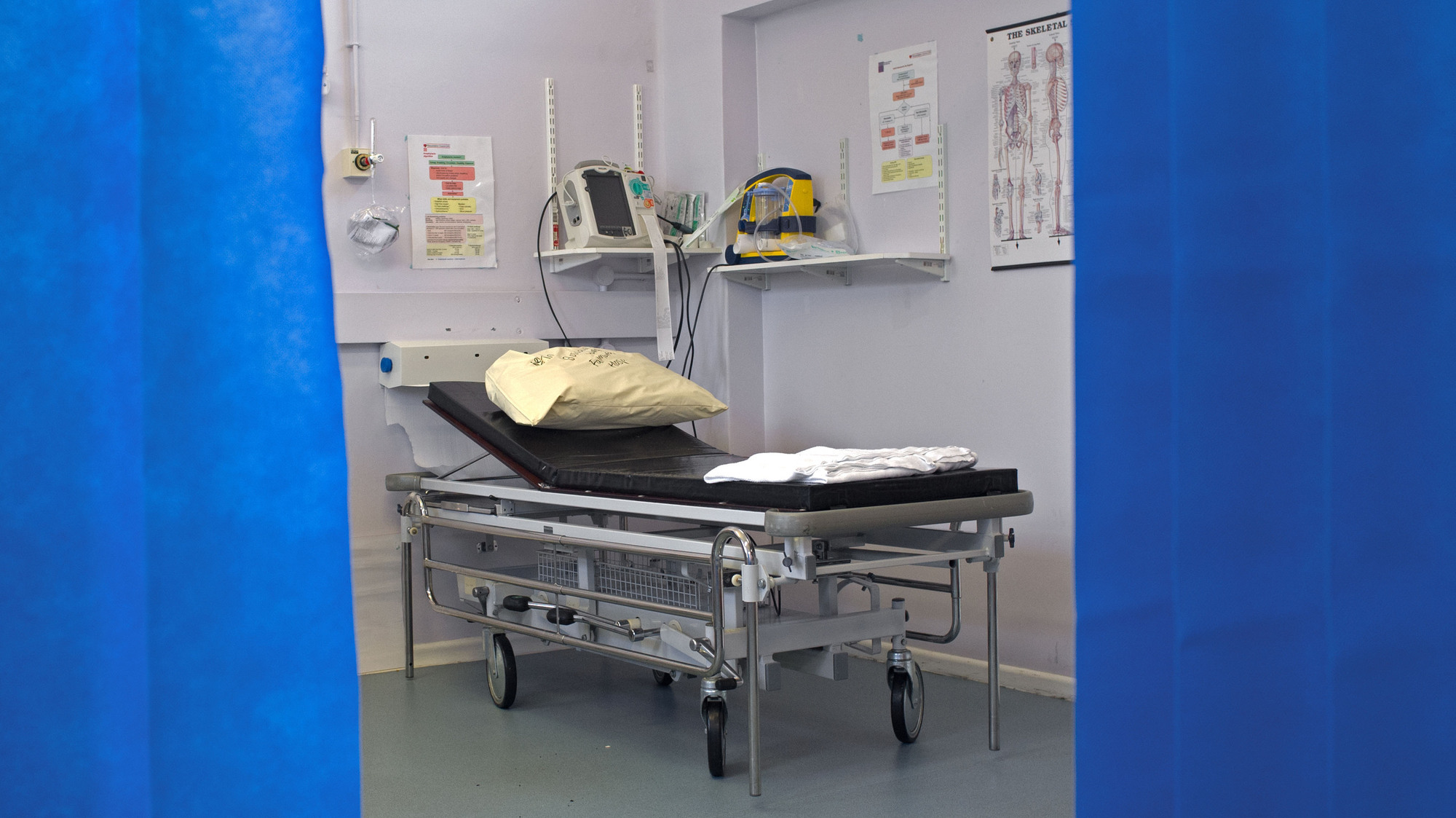
Two of us were shown a space at the back of A&E. It contained a wooden armchair and three (what seemed to be) leather recliners. On inspection, all of the recliners were broken. File photo
With all its faults, our health service — including our hospital service — is often as good as any in the world, and better than most. Sadly, it doesn’t have that reputation among a lot of the people it serves, and that undermines it day after day and makes it easier to criticise.
And here’s the thing. If you leave terrible mistakes to one side — and that’s not easy because there have been a lot of them, as in every health system in the world — the experience of most people, most of the time, is that it can be hard to get into hospital.
Once in, treatment and outcomes are usually great. But thousands of patients leave Irish hospitals dissatisfied and with poor memories.
Too often it’s the little things, not the big things, that cause that poor view. Little things are always the consequence of indifferent management on the ground.
Our hospitals are riddled with that — things that would be almost funny if they didn’t cause such discomfort, and sometimes hardship.
Here’s an example from a recent direct experience. I won’t name the hospital, though you probably wouldn’t find it hard to figure out. I was discharged from that hospital after two intensive bouts of surgery — a few days in hospital each time.
I was good to go, except there was a post-operative wound to be managed (at home) for a week or so. I had a note telling me who to ring if I had any concerns (the phone number was the ward I had left).
Unfortunately over the following weekend (the public holiday weekend) the wound became infected. No pain, but I started getting spiky temperatures and shivers. I rang the ward number, they listened carefully, and told me I needed to see a doctor. On a bank holiday weekend.
I have modest health insurance, and one of its benefits is a clinic not too far from where I live that offers access to a doctor, even on Sunday. I was examined eventually and told I needed to go to hospital immediately — A&E. They gave me a letter outlining their concerns, including the threat of sepsis.
Read More
That’s how I ended up in A&E in a major teaching hospital — the same one where I had been treated earlier — late on a bank holiday Sunday. That’s where the fun began.
Because of the threat of sepsis I was triaged pretty quickly. Then I waited a couple of hours to see one, then another, doctor.
I discovered later that these were the only two doctors on emergency duty in a hospital whose catchment area was essentially the half a million people who live on the south side of Dublin. They were courteous, thorough and totally decent.
They were courteous, thorough and totally decent. Everyone I met throughout was brilliant, in fact. Every skin colour and accent under the sun, and their professionalism, their warmth, and their empathy was astonishing.
The doctors decided I had to go on intravenous antibiotics immediately, and a cannula was inserted into the back of my hand. And then I was told I had to stay the night. But no beds were available.
Two of us — another man called Paul was in a similar boat — were shown a space at the back of A&E. It contained a wooden armchair and three (what seemed to be) leather recliners.

On inspection, all of the recliners were broken. It wasn’t possible to sit upright in them, you couldn’t lie down in them, and you certainly couldn’t recline.
But hey, needs must. I asked for a pillow to rest my head. Sorry, I was told, we’re out of pillows. How long are ye out of pillows, says I. Months, was the answer. So I asked for a second blanket, so I could roll one up as a pillow. Sorry, we’ve only got one per person.
So I lay down, awkwardly, in the only hospital in the first world that has no blankets or pillows. I wanted to ring home to say I was alright, but then realised my phone was almost dead. And then discovered that in the pretty large space where we had been told to sleep, there wasn’t a single electric socket. No possibility of charging a phone.
It then transpired that in this large secluded area, where patients had been sent to sleep, there was no way of turning off the light.
But I must have slept, because I woke up to noise at 5am. I discovered my hand was covered in blood, because the cable feeding antibiotics into the cannula had twisted around the arm of the so-called recliner and pulled it out.
But they’d found beds for us. And we were taken, one by one, in an ancient wheel chair, to the furthest possible extremity of the hospital, where there were a number of decent beds in ensuite rooms, in something called a Sleep Laboratory.
I was so exhausted I was asleep before I hit the pillow. I woke around eight. There was a man at the end of my bed asking if I would like some breakfast. I asked for what I reckon every single Irish patient would ask for. Tea and toast. No more, no less.
He went away and came back a few minutes later with a tray. A mug of tea, grand. And two slices of white bread on a plate. When he saw my face fall, he was deeply apologetic and explained that there was no toaster at this end of the hospital.
I discovered afterwards that those beds are in fact not used all that often and had been available all night. But it had taken them until five in the morning to move a couple of nurses and orderlies from other areas of the hospital that had become quiet, to staff some surplus beds they always knew were going to be needed.
Look, here’s the thing.
Get the big stuff right, and day after day make a mess of the little stuff.
Throughout that long night, I saw no evidence at all that anyone was in charge. If there had been, the stupid little cock-ups could have been avoided. And the reputation of the system protected.