Sarah Harte: The pill was illegal for single women when Jennifer Carroll MacNeill was born — how far we've come
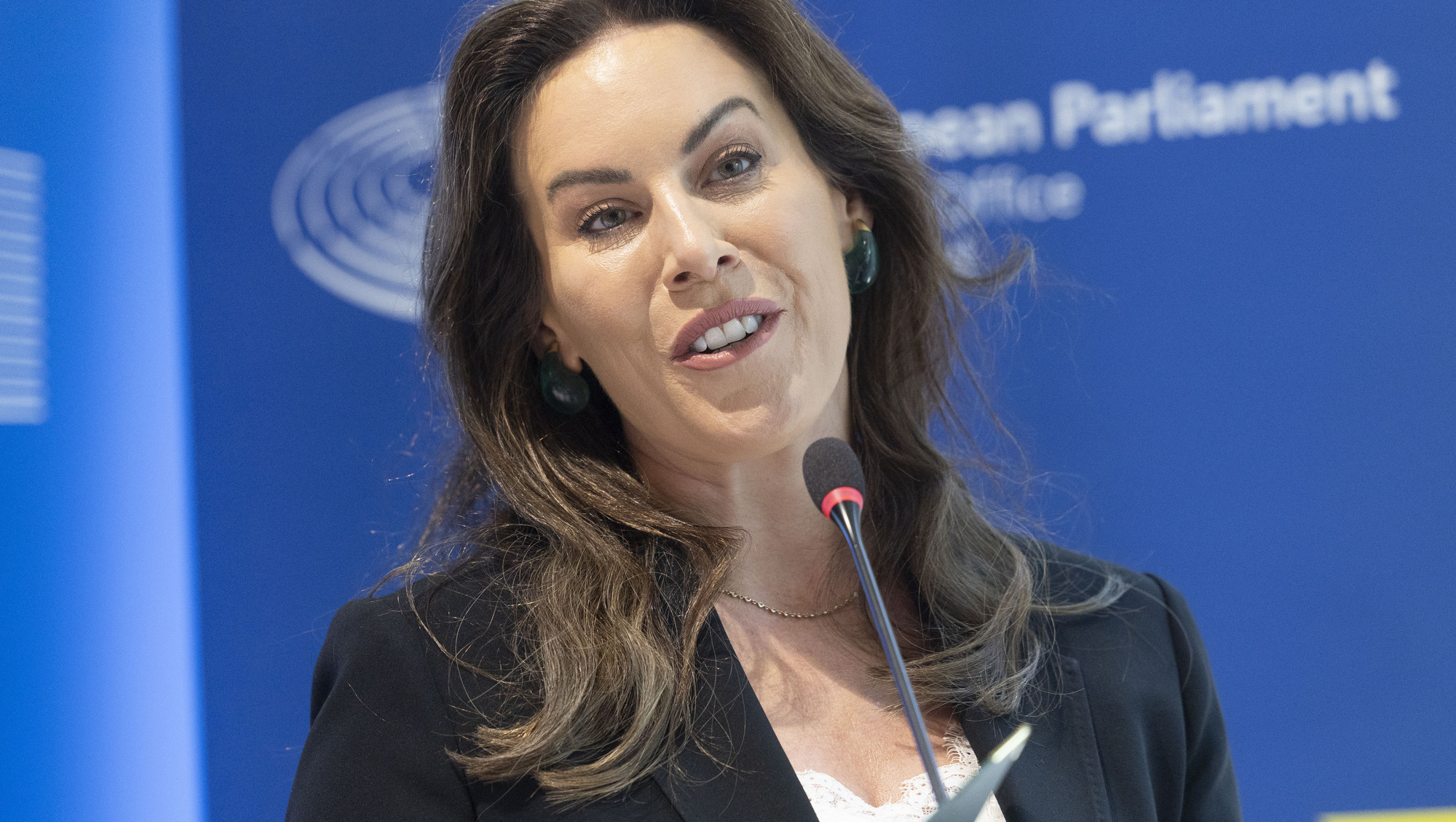
Health minister Jennifer Carroll MacNeill has described the legislation that allows women to have their prescriptions for the pill renewed by their pharmacist as 'a fantastic thing for expanding women's health'. Picture: Sam Boal/Collins

Sex was never the problem. Our refusal to grow up about it was.
Few policy changes capture Ireland’s profound change in how we think about sex more than the liberalisation of access to contraception. It’s emblematic of a seismic cultural transformation.
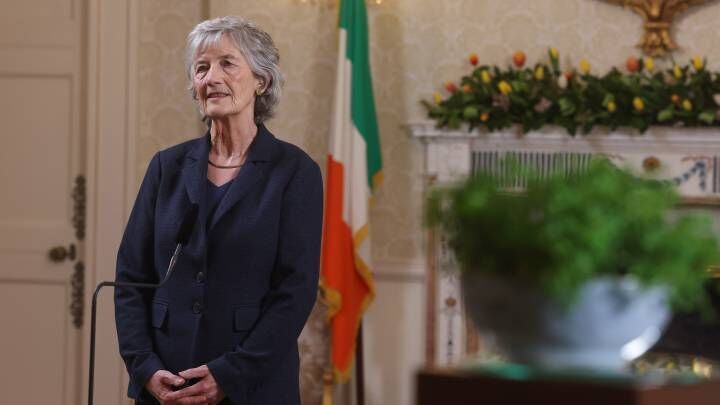
Last week, An t-Uachtaráin Catherine Connolly signed into law legislation that will allow women, after an initial GP consultation, to have their prescription for the pill renewed monthly by their pharmacist for the following four-and-a-half years. The new scheme is expected to be operational by the end of the year.
Minister for health Jennifer Carroll MacNeill has described the development as "a fantastic thing for expanding women’s health". To grasp the scale of change, consider this: when President Connolly was born in 1957, importing or selling contraceptives was a criminal offence.
Just a year before Carroll MacNeill was born, the Health (Family Planning) Act 1979, which allowed only married couples access to contraception with a doctor’s prescription, was hugely controversial. In some quarters it was considered an attack on public morality.
Read More
In the same week we learn about the common-sense new arrangements for accessing contraception, it’s impossible not to reflect on the significance of that change while also reading about the stories that continue to emerge about the Tuam and Bessborough mother and baby homes.
These stories are old stories with new twists. No matter how familiar they are to us, they still have the power to stop us in our tracks. As James Joyce wrote in , "History, Stephen said, is a nightmare from which I am trying to awake." The contraception story and the stories about the mother and baby homes are different sides of the same coin. They demonstrate how a State can implement policies that can destroy people or support them.
As we know, our State once regulated women’s bodies and private lives. Part of that policy was to police and punish premarital sex in the most violent vicious ways.
Women were, of course, sent to these institutions mainly because they became pregnant outside of marriage. These policies reflected a wider culture that punished women for sexuality, but also for poverty and anything that even hinted at non-conformity.
The State, through its policies, supported a system in which unmarried motherhood was treated as a social problem to be controlled.
What was it all for?
As reported here on Saturday, Corkman Pat Mulcahy and his friend came upon an open grave on the grounds of Bessborough with three or four dead babies, which he thought were dolls. This was in the late 1940s when he was aged 9 or 10. Mr Mulcahy has given testimony to the Mother and Baby Homes Commission.
Also reported during the week was how the remains of 22 more infants were found at the Tuam Mother and Baby Home, bringing the total number of babies found to date to 99.
It’s painful to contemplate the dead infants, the brutality of children being taken without their mothers’ consent and put up for adoption, and the ruined lives of women who didn’t deserve it because men largely got away with sex outside of marriage.
The culture changed far too slowly.
At college in the early 90s, it wasn’t straightforward to get a prescription for the pill. The attitude was, well, why would you need it?
You ducked into the Family Planning Clinic on Tuckey Street in Cork. Assuming you knew it was there.
It’s hard to imagine now, but private decisions were still influenced by public judgment. Maybe you have to be a bit older to appreciate what it was like scrambling around for contraception.
This new law, presided over by two women, helps make reproductive healthcare a normal part of everyday life. When contraception moves into ordinary healthcare settings, it sends a powerful signal. The Irish State says this is not a source of shame or secrecy, just a routine part of women’s health.
Policy changes like this one show a hard-won maturity.
Some norms change quickly while others persist. That’s the suggestion in an American research working paper, ‘Understanding Cultural Change’ by Raquel Fernández, published by the National Bureau of Economic Research.
One theme explored in the paper is how policies change behaviours, practices and even underlying attitudes. Governments shape environments, and environments shape choices.

It’s a two-way street. Cultural change creates political possibility, and legal recognition normalises a new social reality.
Culture, Fernández concludes, is both a cause and a consequence of social change. Culture is not fixed; it helps create social change, but it also evolves in response to that change.
So, our culture and policies have changed to the point that we no longer police morality in Ireland. If you look at a normal family, you see how the leap in attitudes has been extraordinary.
If your grandmother came home pregnant and unmarried, she might be locked up in a State-sponsored mother and baby home. Or she might have left the country, had the baby in England, given it up for adoption, and then returned after a ‘holiday’.
That woman’s granddaughter or great-granddaughter can access free contraception from the State at a pharmacy. She doesn’t have to have a large family or any children if she chooses not to.
So, family and marriage become not "drudgery of the factory floor, of production, but of vocation in the truest sense", a quote from the beautiful new novel, , by Stephanie Sy Quia.
The granddaughter can also wear ‘short shorts’ on balmy summer days if she wishes. That may seem trivial and unconnected, but I’m not sure it is. Our grandmothers did not have that freedom. For them, wearing trousers was a stretch.
During the hot weather, seeing gaggles of girls swinging down the street in their shorts enjoying themselves unselfconsciously, all shapes and sizes, the distance between those two realities feels enormous.
You might reasonably worry about the kind of male attention those shorts attract, and parents do. We do not, after all, live in some Eden.
But when we eye them and possibly tut at them, we can also reflect that the Ireland that hid women away no longer exists. The awful corrosive shame has lost its power, allowing women to live openly and express themselves sexually.
The distance between the locked doors of the mother and baby homes and the increased access to contraception today is the measure of how profoundly this country has changed. Amen to that.

CONNECT WITH US TODAY



Be the first to know the latest news and updates