Patrick Holloway: Family holidays post-covid are a new joy
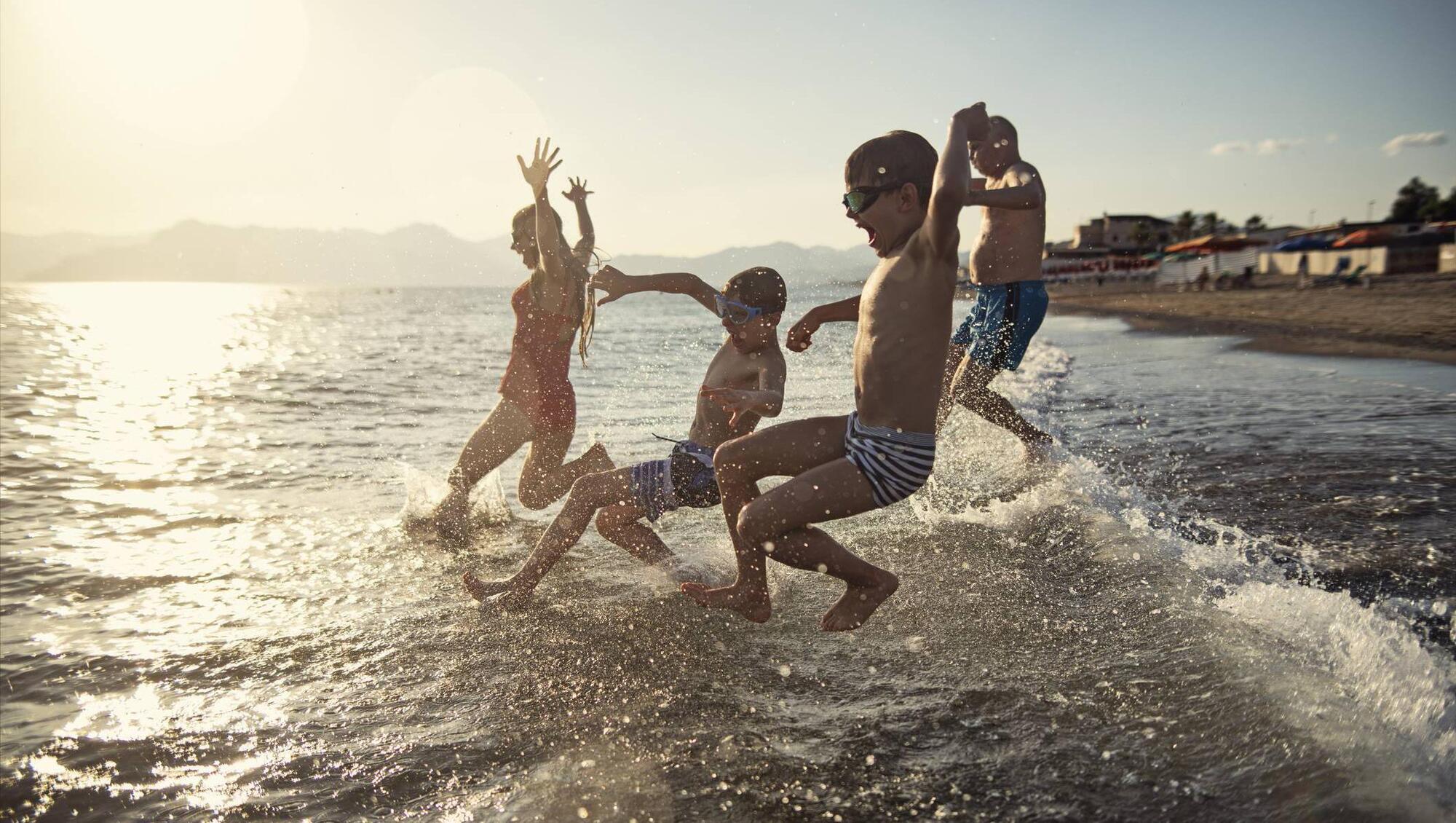
There is something deeply comforting about the idea of all of us together again: the children running feral in packs while the adults decide on what to drink next, the same old friendships briefly restored outside the routines of school runs and deadlines.
There is an assured excitement that saunters into our house around the middle of June. My daughters, Aurora, eight, and Luna Faye, six, feel it first and then carry it bigger with them the closer we get to the end of the school year, and this excitement juxtaposes with an encroaching dread that me and my wife feel.
Let’s be honest, the summer months are long and trying to work and parent all day every day, can be exhausting.
But I can feel the girls’ buzz building long before the last day of school, and I feed off it too. They already associate the end of school with a holiday — not in concrete terms necessarily, but in flashes and fragments. "Remember," they say, "that slide where I bumped my head going into the swimming pool?" "Remember," they say, "the Nutella and marshmallow crepe?" "No, no, remember the time we stayed up really late and played Uno?"
They ask which cousin-like friends they’ll be sharing time with this year. Who they’ll get to sit next to on the flight.
This summer, we’re heading to Corfu for the second time with a large gang of friends and all of our children, the third time we’ve attempted this particular brand of organised chaos.
There will be the usual stress, kids melting down at baggage claim, somebody rooting for the passports, somebody else insisting they packed the passports, and WhatsApp messages multiplying by the hour. And yet, despite all the logistics and expense and mild pre-departure panic, the anticipation feels almost jubilant.
Days and days of being unburdened. That may be one of the quieter truths about family holidays that nobody admits often enough: they are not only for children. Increasingly, they feel like survival tools for parents as well. I find myself often using the holiday as a landmark, six weeks to go, five, four.
Read More
The modern family holiday now also carries an emotional weight it perhaps did not have before covid. Back then, a week in the sun could still be framed as uncomplicated escapism.
Now, it often feels more essential than indulgent — a deliberate pause from a world that has become at times unrecognisable. A world in which each day brings more shocking stories of hate, far-right savagery, and potential global threats. We appreciate it more, this freedom that was once taken from us.
Even years after the pandemic itself, many of us still carry a lingering awareness of fragility. Of things being on the precipice of some unknown outbreak.
Every few months, another unfamiliar illness briefly dominates headlines, and although most never become genuine global threats, they contribute to a permanent low-level awareness that the world is less stable than we once assumed.
We are on edge, tense, almost waiting for something to come and upturn everything. It was once impossible but has now happened, so is always possible, always a conversation topic. Add that gowl Trump, wars, inflation, political volatility and the exhausting speed of modern life, and unexpectedly ordinary pleasures begin to feel newly important.
Which is perhaps why this upcoming trip to Corfu already feels emotionally significant before we’ve even boarded the plane. There is something deeply comforting about the idea of all of us together again: the children running feral in packs while the adults decide on what to drink next, the same old friendships briefly restored outside the routines of school runs and deadlines.
In ordinary life, friendships in adulthood often survive in fragments through voice notes, rushed coffees, and the promises to properly catch up soon. Group holidays compress all that distance. You re-encounter the layers of friendships, the giddiness and excitement that these friendships give, and the future becomes kinder and more welcoming.
As for the children, these trips take on an almost mythological quality. I still remember tiny, irrational details from holidays when I was young. The smell of sun cream in supermarket aisles, strawberries and freshly-squeezed orange juice for breakfast, falling asleep in strange bedrooms while adults laughed downstairs. Chips eaten in swimsuits, blobs of ketchup on greasy skin.
I remember the mad rush of going into shops, picking up objects and being told to put them back down. And all those postcards I wanted, telling my parents who I would send them to, and ultimately losing them, or finding them after the holiday at the bottom of a bag. The truth is that childhood memories are built from atmosphere more than events.
I suspect Aurora and Luna Faye will remember this Corfu trip in the same way — not as a curated itinerary but as a collection of feelings. The freedom of being let run up and down the beach. The swelling of fear bashing through waves on the banana boar. The thrill of seeing their friends every morning from breakfast until midnight. Everything becomes malleable, childhood is expanded temporarily beyond routine.
Perhaps that is why parents now put so much pressure on holidays. We are not simply booking travel anymore; we are trying to give memories of freedom in a world where we often don’t feel free.
We want these experiences to matter because modern family life can feel so fragmented and accelerated. Childhood itself seems more scheduled than it once was. Or maybe it is because I am a dad now.
But even summer now arrives with camps, activities and colour-coded calendars and the parents’ WhatsApp groups that chime all day. It’s all a minefield of strategic planning, of who drops whom where, of how many hours free a day these well-thought out choices give us. A holiday interrupts all that.
People want to go to different restaurants or leave for the day trip at different times. Personalities are viewed through microscopes and there is so much free time to discuss one another. There always seems to be an argument about a map, or whose turn it is to bring the kids down early to bed, while all the while pretending nothing is happening.
And often, the parents return home needing another break. And still, every year, we cannot wait to go again.
Because somewhere beneath the stress and expense is the deeper instinct driving all of it: the desire to give our children memories attached to joy rather than anxiety. To let them experience a version of the world that feels communal, expansive and carefree, even temporarily. Maybe adults need that reminder too.
In uncertain times, the annual summer holiday has become more than a break from routine. It is a small act of optimism. A decision to keep gathering, keep travelling, keep sitting around long outdoor tables while children chase each other through the dark.
A refusal to surrender ordinary happiness simply because the wider world feels unpredictable. And perhaps that is why the anticipation now feels so intense. We are not just looking forward to sunshine, we are finding way to feel briefly unburdened again.
- Patrick Holloway is a writer and author of the critically acclaimed novel,
CONNECT WITH US TODAY



Be the first to know the latest news and updates