Jennifer Horgan: The Irishman saving the Amazon and why we need our native trees
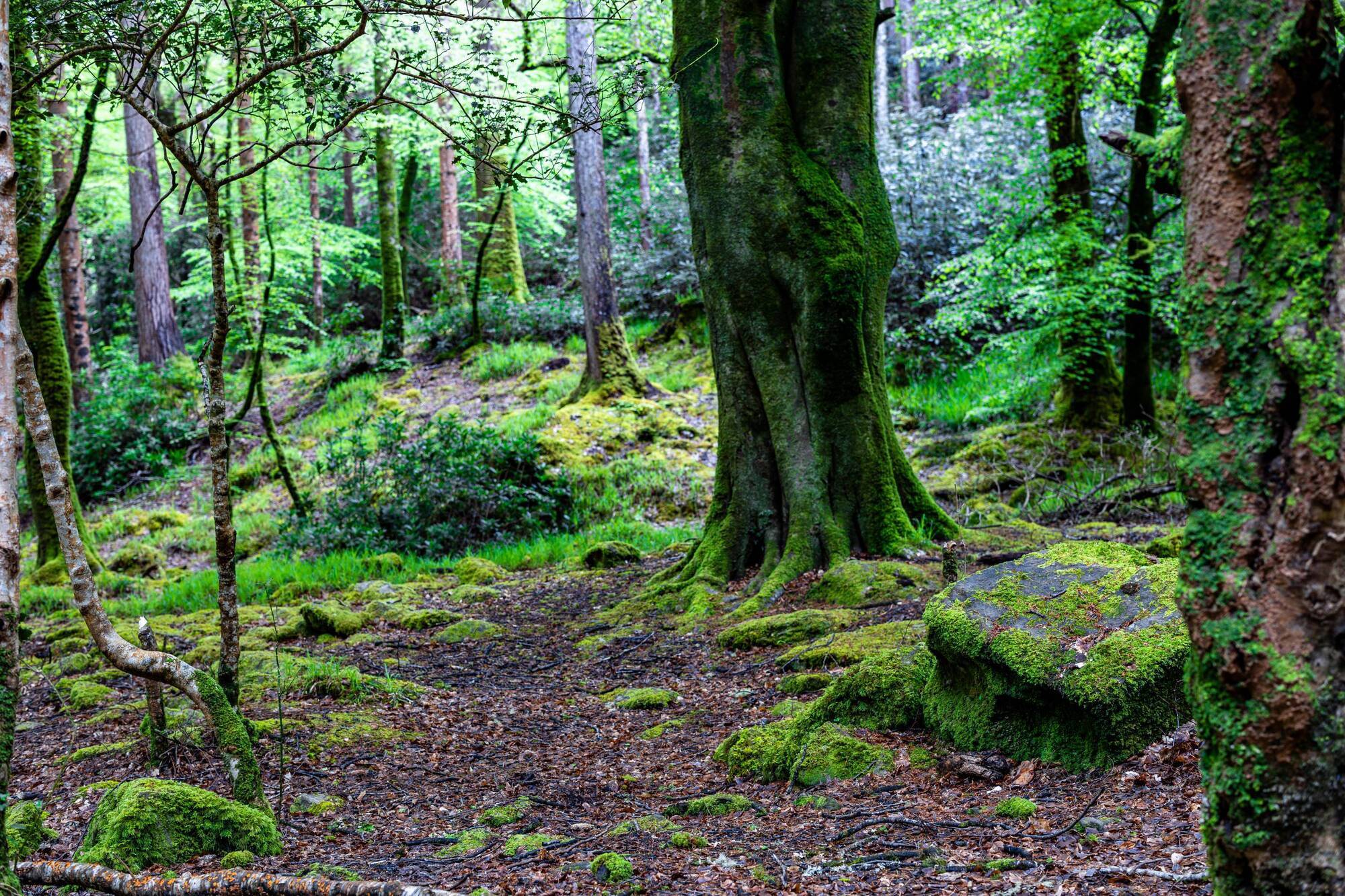
Martin von Hildebrand is following in the footsteps of his hero Roger Casement. His work shows the importance of protecting our native woodlands 
Jennifer Horgan: The Irishman saving the Amazon and why we need our native trees

It’s hard to imagine that Ireland was once 80% forest. By 1600, less than 20% was covered, a process accelerated by the 17th-century plantations. By the end of the 19th century, Ireland’s cover was about 1%.

Last Saturday, poet Róisín Leggett Bohan’s voice went just as she was due to read at Cork’s International Poetry Festival. Bad luck, I thought initially.

I soon thought of something else. I thought about trees: trees and forests. More specifically, I thought about mycelium, the vast network of fungal threads that share nutrients between trees underground, especially in times of hardship.


Róisin had asked two renowned poets to help her read her work, to be her voice. When her poet sisters read, it felt like the most joyous of transfusions, a spiritual life support.

For our ancestors, trees symbolised this interconnectedness of being. I experienced that old wisdom in a very real way in the Cork Arts Theatre, and I’ve been thinking about forests since, wondering how they’re doing, how well we’re doing at caring for them, especially those under threat.

This National Biodiversity Week, I also had the considerable honour of listening to ethonologist and anthropologist Dr Martin Von Hildebrand. He was visiting Ireland to speak at the opening of the 2026 Roger Casement Summer School in Dublin, alongside President Catherine Connolly. 

The son of a German father and an Irish mother, Von Hildebrand’s work led to more than 26 million hectares of the Colombian Amazon territory being protected and officially handed back to indigenous inhabitants. For 50 years he has been a fierce advocate for endangered people and their trees.

During our exchange, Von Hildebrand shares he still feels very close to Ireland, particularly to the Irish spirit, its championing of the underdog, the vulnerable. He refers to Roger Casement as a fellow Irishman who visited precisely the same land he secured for indigenous people, back in 1910. 

It was Casement’s “powerful report” that exposed the brutality of the Peruvian Amazon Company (PAC), a rubber firm consolidated in London. Von Hildenbrand sees his work as a continuation of Casement’s work.

Native woodlands are critically important for our native biodiversity, yet cover just 1% of our land area.

He sees great similarities between Irish and indigenous people of the Amazon. Certainly, it is true we care deeply for nature here. There are thousands of stories I could share to prove as much, but all are summed up in a conversation I had with Elaine Garde this week, founder of Future Orchard in Glanmire, Cork.

“Nobody does this work for themselves,” she says,“ they plant trees for future generations.” Future Orchard secures land not for indigenous people but for the trees themselves. Allotments can be redeveloped, Garde explains, and so there’s no guarantee that planted trees will survive. Her model, made possible by individual shareholders, is a community approach that secures longevity.

Children are getting involved too. The organisation Biodiversity in Schools has an annual school participation of 1,400 communities. Each winter, free tree packs are delivered to create mini-woodland and native hedgerows by schools. And there are individuals — my own mother-in-law planted five willows this weekend.

How is our State faring on forests

But how is our State faring when it comes to forests? That’s where the conversation gets a little more complicated — and heated.

The State had a pretty tough start to be fair. It’s hard to imagine that Ireland was once 80% forest. By 1600, less than 20% was covered, a process accelerated by the 17th-century plantations. By the end of the 19th century, Ireland’s cover was about 1%.

It recently implemented an ambitious Forestry Programme 2023–2027, to increase forest cover to 18% by 2027. But how? Coillte, a State-owned commercial forestry company, says it’s getting the balance between nature and commercial enterprise right. Others disagree.

A Sitka spruce forest: Fintan Kelly, senior land use officer at the Irish Environmental Network suggests Ireland has a forestry model that has prioritised low-quality timber production over ecosystem and community health.

Fintan Kelly, senior land use officer at the Irish Environmental Network argues native woodlands are critically important for our native biodiversity, yet cover just 1% of our land area.

“These remaining native woodlands are small, highly fragmented patches, with only a tiny fraction being biodiversity-rich remnant woodlands,” he says. “They are under many pressures but invasive plant species and overgrazing by deer are particularly prominent.” 

Sitka spruce an invasive species

The invasive species to which he refers include the Sitka spruce. Sitka grows quickly and is ideal for construction. Kelly suggests Ireland has a forestry model that has prioritised low-quality timber production over ecosystem and community health. “Ireland needs more forests, but not more of the wrong kind of forestry,” he says.

Kelly is particularly concerned about the impact of these monocultures on particular species like the hen harrier. “Since 1998–2000, breeding pairs nationally have fallen by 59%, and since 2007, hen harrier populations in the six special protection areas — upland areas specifically protected for these birds—have declined by 54%.” 

Oisín O Néill, nature advocacy officer of Irish Wildlife Trust argues the same. He says “Coillte, as the largest landowner and forestry body in the country, has the capacity to become a leader in ecological restoration and sustainable forestry. But that will require structural change.” 

Ireland needs forestry, but it needs a forestry model that doesn't pollute rivers, that helps restore biodiversity and creates resilient ecosystems for future generations, while still supporting rural livelihoods and timber production in a genuinely sustainable way.

He says it’s not just about Sitka spruce, that “around 70% of Irish forests are non-native conifers”. 

Coillte, for its part, says productive forestry plays a vital role in Ireland’s climate response and rural economy, providing about €2.3bn annually to the economy and enabling 12,000 rural jobs. 

It plans “to produce over 10 million cubic metres of certified Irish wood to support the delivery of Ireland’s Climate Action Plan, which seeks to cut the embodied carbon emissions for materials produced and used in Ireland by at least 30 %”. 

Coillte stands by its commitment to promoting the use and benefits of wood products to help increase the level of timber frame homes from 20% to 80% by 2050, and ultimately to help decarbonise the process of construction as much as possible.

“Coillte is committed to transforming areas of its forests, so that 50% of the Coillte estate is managed primarily for nature while also ensuring the productive areas of the estate are carefully managed for the long-term supply of sustainably grown, certified Irish wood, supporting the delivery of sustainable homes and rural jobs.” 

Who are we to believe? It’s hard to know.

It’s Von Hildebrand’s voice that stays with me, a man who spent his childhood climbing trees. “Trees are life,” he says. “Nature is a big community of which we are part. We are nature. Nature is a community of subjects we must respect and live with. Nature is not a collection of objects, as we see it in the west, that we can exploit.” 

He says he is no expert on Irish trees, but understands monocultures are dangerous, and diversity is key.

Here’s hoping our State is working in the same tradition of men like Roger Casement and Martin Von Hildebrand — against any kind of exploitation.

Here’s hoping our Government is working for and with nature, supporting species and habitats in need of the most protection.

Here’s hoping our Government is supporting that miraculous network evoked in my mind by those wonderful poets.

More in this section

Revoiced

Newsletter

Had a busy week? Sign up for some of the best reads from the week gone by. Selected just for you.

Cookie Policy Privacy Policy Brand Safety FAQ Help Contact Us Terms and Conditions

© Examiner Echo Group Limited