Jennifer Horgan: Being called stingy is the worst possible insult for an Irish person
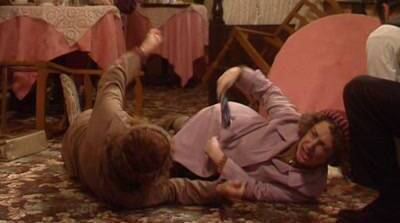
Mrs Doyle and Mrs Dineen in 'Father Ted' fighting over who is paying for tea. 'I’ve been home for eight years. Back to fighting at the till to pay for your tea with friends.' Photo: Channel 4

I could tolerate most things being said about me. Ignorant. Dull. Unattractive. I’d take it. Not happily of course, but I’d take it. There’s only one slight I know I couldn’t take, and that’s being called tight.
This is an Irish thing, not a me thing. "She wouldn’t be the best for getting a round in," is one of the highest insults in the land. Overhearing that, plenty of us would struggle to leave the house. At least that’s my impression.
A fear of being called stingy is at the core of our identity. It’s in our DNA and I’ve evidence to prove it. I came across a gorgeous book this week, very recently published by Cork University Press.
It’s a collection of Dánfhocail, poetic epigrams, collected from Irish language manuscripts of the modern period onwards (1600 – ). Originally compiled by scholar T.F. O’Rahilly in 1921, this new edition provides English translations for the first time, and it’s quite the treasure trove.
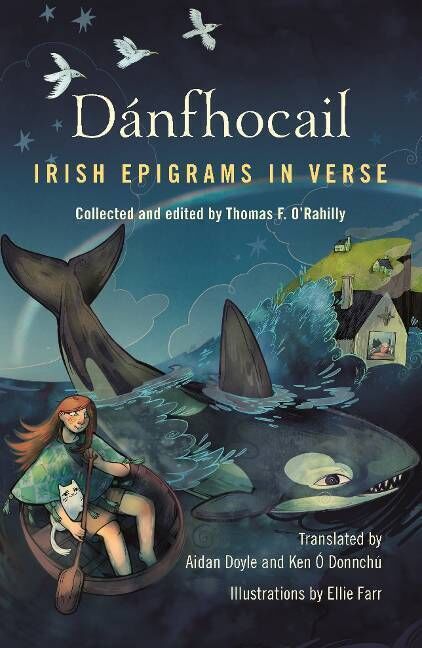
The cultural requirement to be generous is front and centre. One section is called ‘An Fhéile agus an Spriúnlaitheacht’, translated as ‘Generosity and Miserliness’. Another is dedicated to ‘An Bhochtaineacht agus an Saibhreas’, otherwise known as ‘Poverty and Wealth’,
Unlike other sections that offer a broad range of advice — the section on women is particularly spicy — the messaging in these two sections is consistent. There is an inherent shame in being miserly. Spend what you get compassionately. Don’t enjoy your wealth alone. I particularly enjoy Greed, treachery, fierce fratricide/Generosity nullifies.
Some advice veers towards the threatening. Take for instance: "Those who save their wealth/Won’t live to spend it". And another: "An empty hand is best/ If you want to avoid hell".
This is the advice we were being given as far back as 1600. It’s no wonder we battle over paying the bill as if our lives depend on it. Honestly, I’ve started setting the terms of payment before I eat with anyone now, such is the fear of someone trying to pay before me, or of forgetting who paid the last time.
As much as I dislike scantiness, overly generous people also make me uneasy. I can’t help but keep a kind of balance sheet. Don’t get me wrong, generosity in a general sense is wonderful and Irish people are known for it.
The global fundraising platform GoFundMe recently released its global rankings for the most generous countries, and for the seventh consecutive year, Irish donors were the most generous. According to the figures, they contributed more than €50m in 2025.
It’s important to note, however, before we lose the run of ourselves entirely, that GoFundMe only runs in 20 countries. According to both The World Population Review and the World Giving Index we don’t make the top 10. The very top spots are dominated by African countries. But we fare well, still in the top 20, and certainly better than the UK.
Because it’s absolutely the case that this crippling fear of appearing scanty sets us apart from our closest neighbours. I’ll never forget my discomfort when I was invited to my first wedding in England. The bride to be was a colleague I’d been teaching with for about five years in London. Six of us were going from school and the decision was made that we would all throw £30 in a card.
Six people. £180. Honestly, I felt queasy. Shaken to the core. How in good conscience could I turn up at a glamourous wedding in a stately home, having shoved less the price of a new top into a crumby card? I was mortified for the lot of us. Naturally, I went along with it, pretending it was perfectly normal. Internally I put a big fat point on the balance sheet for Ireland.
From London, I moved further away and into a British ex-pat community. I couldn’t believe it when my new friends would sell each other baby clothes, prams, and toys. Not give, not pass on, or pass down, not exchange, no. They would sell them to each other. I’m talking €2 for a child’s babygro here.
I’ve been home for eight years. Back to fighting at the till. Back to popping €20 to €50 into communion and confirmation cards. Back to the absolute dread of ever turning up at someone’s door with my hands hanging — even people I see regularly. You know — friends.
Maybe wedding and selling etiquette has changed since but I’ve no doubt we navigate money differently here. Friends living in London tell me it’s always been normal to itemise dinner bills there.
That’s only happening recently here, in large part influenced by a move towards non-alcoholic nights out. Only in the last decade might someone dare pipe up against splitting the bill, even when their friends have downed six bottles of wine while they sipped water.
Now that I’m fully re-rooted and advancing through my forties, I’m beginning to look at this distinctly Irish trait (and most other things to be fair) through more cynical eyes.
In our increasingly competitive, consumerist society, it is possible that our longstanding generosity is being warped into an oppressive kind of peer pressure? After all, what was reasonable in 1650 might not be so reasonable in 2026.
It’s communion season — a perfect time to discuss this national giving trend. I’m wondering if anybody in Ireland gives holy medals or statues to children to mark the sacrament anymore. They certainly did in the eighties. I still remember the kind woman who gave me a holy statue.
If someone did it today, would said medal or statue get flung back at them? I would genuinely love to know if people give cards without cash to celebrate the day. Maybe there are still children out there who wouldn’t shake the envelope for cash.
Seriously, is it better to give no card or an empty card? I don’t know, but a lot of giving today feels unhealthy, excessive. That usual good feeling you get from giving seems to be receding.
For some people, these expectations are truly oppressive. Plenty of people simply can’t afford to keep up with the generosity overdrive.
One in five children in Ireland live in families below the poverty line, when housing costs are accounted for, according to a report released by the Economic and Social Research Institute (ESRI), last year.
Middle-class families are borrowing to keep up. Lending to households increased by €4.3 billion last year to the end of June, according to data from the Central Bank, the biggest annual increase since 2009.
The epigram from that lovely book tells us to "Spend what you get compassionately". That compassion must extend to ourselves. People can be generous in many ways — with time, love, attention.
Giving should never feel like a fee we have to pay, and we must be wary of raising the stakes ever higher. The best relationships have no price tag.
- is published by Cork University Press.
CONNECT WITH US TODAY



Be the first to know the latest news and updates