Fergus Finlay: Our public services are far from perfect, but we are lucky to have them
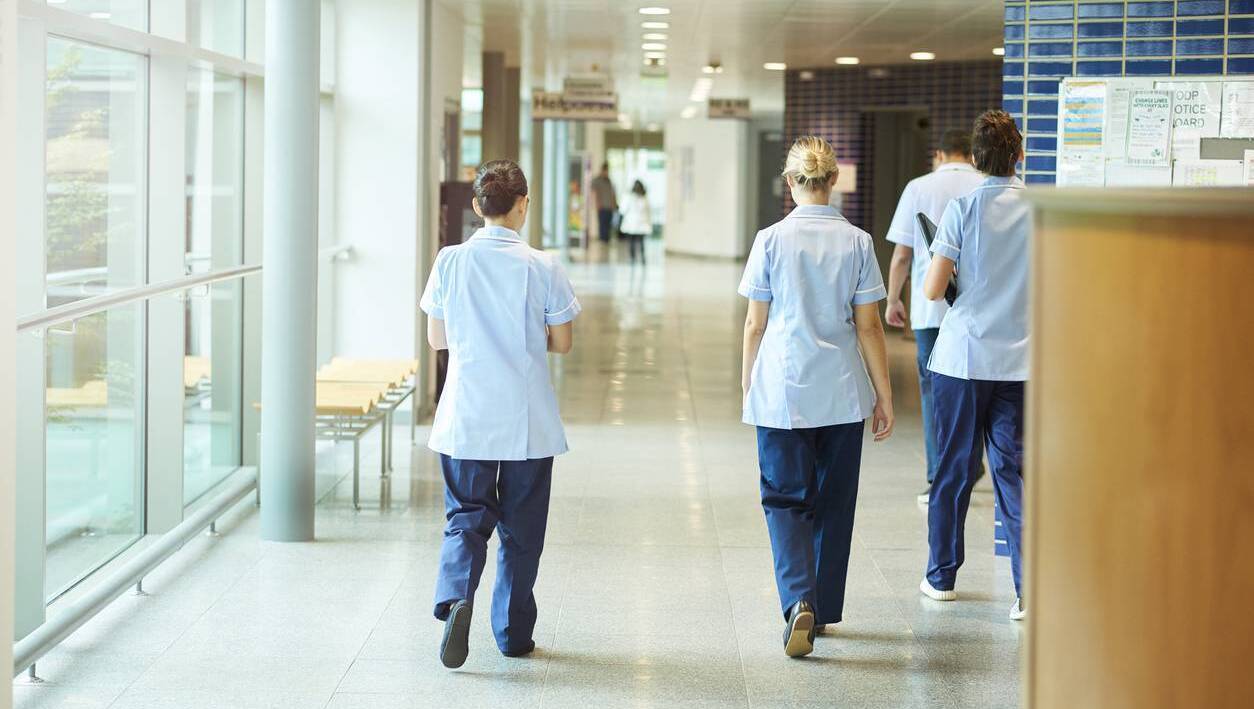
The Irish health service is extraordinary. You meet calm, efficient people who clearly know what they’re about. File picture

Maybe it’s the time of year. The weather is definitely turning for the better. Slowly, for sure, but it’s getting there. We’ve spent the weekend with great people who have been friends for a lifetime, and it reminds you yet again that old friends are best.
I’m typing this in a room with a picture window that captures a perfect view of the River Nore. It’s a river that can be threatening enough in the winter when flood waters bring it uncomfortably close to our friends’ cottage. But today it’s like glass.
The tide, I’m guessing, is at the moment of turn, when the river is neither racing down to New Ross nor galloping up to Inistioge. The calm, and the beauty of it all, are infectious.
Those of you who read my column regularly will know that I can occasionally be the tiniest bit cranky. I give out a lot about stuff. And heaven knows plenty is going on in the world to be cranky about.
But now and again it seems to me that there’s just as much to praise as there is to criticise, just as much to be thankful for as there is to make you cross.
I was diagnosed with a serious condition last November and treated for it in March. It can take a long time to get into the Irish health system, especially when you’re in a hurry or think you are, or when you’re afraid.
But when you’re in, the Irish health service is extraordinary. You meet calm, efficient people who clearly know what they’re about. You get encouragement about recovery, and access to really good treatment, advice, and support.
I’ve had great follow-up from a community service, and total reassurance from lab reports and other aspects of shared knowledge.
I used to say that it wasn’t really accurate to call our system a health system. More of an illness system in my view. But that’s wrong too.
The health service we have — at the level of hospitals anyway — is about treating illness for sure, but it’s also pretty good at enabling recovery.
I never had a day sick in my entire life until I reached my late 60s, but since then bits have fallen off on a regular basis.
And I’ve learned from that experience that you don’t (certainly shouldn’t) leave hospital alone. There’s a lot of follow-up available, and when you’re open to listening to good advice, you learn to appreciate the wisdom and support the health service offers.
Don’t get me wrong (here’s the cranky bit). Accessing the health service is still too difficult for thousands of people. And the hospital side of things is less than half of what the health service was designed to do.
Only about 40% of its budget is spent in hospitals — the rest is supposed to deliver a wide range of community services for children, for older people, for people with a disability, for people facing challenges in their mental health.
In all those areas, access is one problem, but sustaining high-quality, respectful, and empathetic services often seems to be beyond the system.
There is a fundamental flaw in any design that creates an enormous and highly remote bureaucracy to deal effectively with human problems. That flaw makes reform and openness next to impossible to achieve.
And that can be true of smaller bureaucracies, too. Remote, unresponsive, inflexible. That’s probably the reason we all hate local authorities too. Until you get to know them.
I’ve been dealing with Dublin City Council for years on behalf of a community that has been battered by disadvantage.
And that battering has been made worse, often to the point where it seems impossible to solve, by endless processes that get in the way of decision-making.
But when you get to know the people at the other end, you come to realise that they are just as frustrated by the hurdles they have to jump through to implement the solutions we’re all agreed on.
And every now and again, something happens that restores your faith.
The other day I noticed a hole in the middle of the road right beside where I live. At first glance, it was tiny — about eight inches in diameter — but when I looked into the hole I could see a good six feet down.
There was nothing between the road surface and the bottom of the hole except a single layer of tarmac which was already cracking. Even to my untrained eye it was clear that it would collapse under the weight of traffic. It was only a matter of time before it became a much larger and very dangerous sink hole.
I went back into the house and logged onto the website of our own local authority. To my surprise (why was I surprised?), the website immediately (virtually in one click) steered me to where I could report a concern, and I did, emphasising what I saw as the danger. I got through to them within three minutes of finding the hole in the road.
Within a couple of hours, bollards and warning signs had been erected. Although I didn’t see him, I understand an engineer had arrived and decided what was necessary. Security stayed there all night.
The following morning, the road was closed to traffic, and a team had arrived and dug an enormous hole about eight feet by eight feet and fully six feet deep. A huge lorryload of hardcore was poured into the hole, it was levelled out manually, and then a tarmac lorry arrived to finish the job. All within one day, a potentially dangerous situation had been made safe.
My local authority is Dun Laoghaire County Council, which ships its fair share of criticism from the citizens it serves, including me. And no doubt I won’t be behind the door the next time they make a mess of something.
As a matter of curiosity, when I was writing this I logged onto the websites of half a dozen random local authorities around the country. They’re all equally clear, informative and helpful. In terms of accessing the services we all need, that’s a very good start to a better public service.
We take our public services a bit for granted in Ireland. And they’re not always as good as they might be. But to be honest, our quality of life as a whole would be a lot poorer without them — from hospitals to libraries, from the fire service to the people who make our roads passable and safe.
And when it comes to emergencies, they can be trusted. And that’s a decent mark of a civilised society.
I promise I’ll go back to being cranky again next week. Trump is bound to do something else to drive us all off the deep end. But it doesn’t do any harm, I guess, to acknowledge every now and again that we’re lucky to have the commitment and quality of our own public services and the thousands of people who make them work.

CONNECT WITH US TODAY



Be the first to know the latest news and updates