Terry Prone: Don’t overestimate how interesting you are to those above you in chain
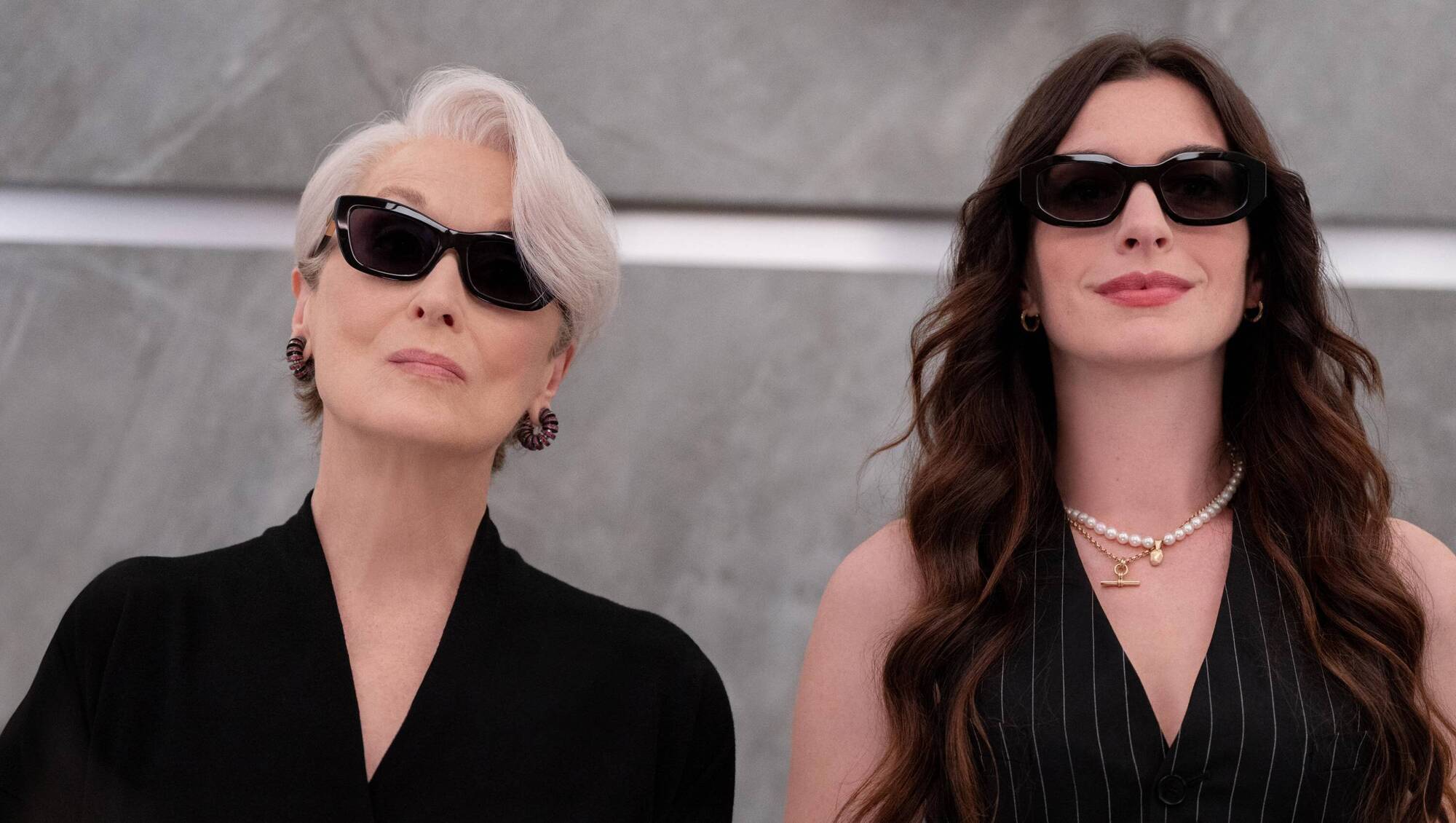
Its predecessor gave valuable tips on office life, and hopefully 'The Devil Wears Prada 2' doesn’t miss the laugh-out-loud opportunities presented by the strengths of four exceptionally brilliant key actors.
Neither of us bought the last cloth tote bag hanging in Penneys in Swords. But another woman and I did bond over it.
“By all means, move at a glacial pace. You know how that thrills me,” was the slogan on the front.
The two of us saw it at the same time and laughed, instantly hearing Meryl Streep’s clinically calm condemnation from The Devil Wears Prada.
“Have you ever seen a line from a movie script on a tote bag before?” the other shopper asked.
That would be a no. It was an astute question. Imagine crafting a movie line that, two decades after first utterance, is not just instantly recognisable, but simultaneously evocative of arguably the definitive female boss in film.
Streep had previously played Margaret Thatcher and Katharine Graham, two characters representing studies in female power. Good scripts, the two of them, but the fact is that nobody remembers an individual line from either, while millions recall lines emerging from the fictional Miranda Priestly’s curled lip in the first outing of Prada.
The Priestly character was established as formidable within the first minutes of the movie, even before the second-in-command, Nigel, played by Stanley Tucci, uttered the warning of her arrival and temper, which became another of the frequently recalled tropes from the film: “Gird your loins!”
The loins-girding was because Priestly was that rare female in business who is completely lacking in the need to be liked.
This failure to display emotional neediness surfaced quickly in the story when the character played by Streep encountered an intern, Andrea ‘Andy’ Sachs, played by Anne Hathaway, working for Priestly’s Runway magazine (a thinly veiled version of American Vogue) as an intern.
Priestly regards the younger women interns and staff as interchangeable, calling each of them “Emily”. Seeing them as a generic group of servitors saves Priestly a lot of time, because Priestly is a manager, the way the Duke of Wellington was a prime minister.
“My colleagues in this cabinet wish to be allowed to discuss my orders before they obey them,” he commented wonderingly, much preferring the soldiers he had commanded at the Battle of Waterloo, who carried out his orders unquestioningly.
It’s the same with Miranda. She’s an output-focused manager who wants stuff done. Her coffee must arrive at a particular time, and if it doesn’t, it’s not a good idea to offer her the saga of how hard you tried to get it there.
She has no time at all for people who, having failed to deliver on a task, think the boss should hold still while they explain what they went through while headed for failure.
“Details of your incompetence do not interest me,” she crisply tells them.
You could figure Michael O’Leary saying precisely the same thing, but he’s a fella. Because he’s male, his bluntness is seen as a positive, whereas, because she’s female, the Priestly character’s silky bluntness is not.
Partly based on Anna Wintour, the real editor of American Vogue for years, Miranda Priestly is regarded as the quintessential Boss from Hell.
That’s unfair, not just because it’s an anti-women judgement — although it is — but because it misses an important point that any secondary school student planning to intern during a gap year should not miss: You should not overestimate how interesting you are to those above you in the hierarchy.
Indeed, you should become interesting to a department head in a middling to large company only if they notice that you always deliver 110% of a task in half the time they expected. If they ask you to complete a task, and you don’t know how to do it, then have the cop-on to ask someone else in the department for guidance. Don’t stand in front of the boss asking basic queries. They may be too pleasant to tell you what Priestly tells Andy — “Please bore someone else with your questions”— but two safe bets are that: a) that’s what they’re thinking, and b) that they’re less than impressed with you.
Having an opinion is another mistake Andy in the movie makes. As she opens her mouth to offer such an opinion, in one scene, Streep looks at her over her stylish glasses and says: “No, no, that wasn’t a question.” Which is as crushing as her sarcastic reaction to another young colleague’s proffered idea: “Florals? For spring? Groundbreaking.”
Another mood-killer is her repeated quiet dismissal phrase, “that’s all”.
But none of them is anything like as awful as the lecture she gives when Andy stupidly sniggers at a big discussion going on about two belts that — to her — look exactly the same as each other.
Although she could, Priestly doesn’t smack down Andy for lack of attention, despite the belts not being remotely the same as each other and it would suit the younger woman a lot better to watch carefully rather than implicitly mock those who do observe with care.
Instead, the editor suggests that the “lumpy blue sweater” Andy is wearing that day may have been carelessly selected because the younger woman is “trying to tell the world that you take yourself too seriously to care about what you put on your back”. The boss continues by indicating that “it’s sort of comical how you think that you’ve made a choice that exempts you from the fashion industry when, in fact, you’re wearing the sweater that was selected for you by the people in this room”.
The speech — now known as The Cerulean Sweater Monologue — is ostensibly about fashion, but it is really about arrogance.
Arrogance on the part of a kid fresh out of college who considers herself morally and intellectually above the industry in which she has chosen to intern.
It is that arrogance that sinks many newly degreed jobseekers, who believe that their qualification and opinions are what will endear them to a potential employer, about whom they do not bother to learn diddly-squat in advance of a recruitment interview.
As The Devil Wears Prada 2 opens in a cinema near you today, we have to hope that it is as good, if not better, than the first edition, rather than a higher-end version of Hacks, the TV series where younger staff teach woke usage to their older female comedian boss.
We also have to hope that it doesn’t miss the laugh-out-loud opportunities presented by the strengths of four exceptionally brilliant key actors.
Emily Blunt, last time around, managed to make having a bad cold simultaneously disgusting and riotously funny.
Tucci, who, in the interim, has become an international best-selling author of books about Italian cuisine, created a memorable character last time around who underplayed the rescue-and-guidance role he played, ensuring that nobody died from Miranda’s rigour. With luck, that can be updated.
That’s all…

Cancel anytime
CONNECT WITH US TODAY
Be the first to know the latest news and updates