Colin Sheridan: We’ve turned everything into a market — even human suffering
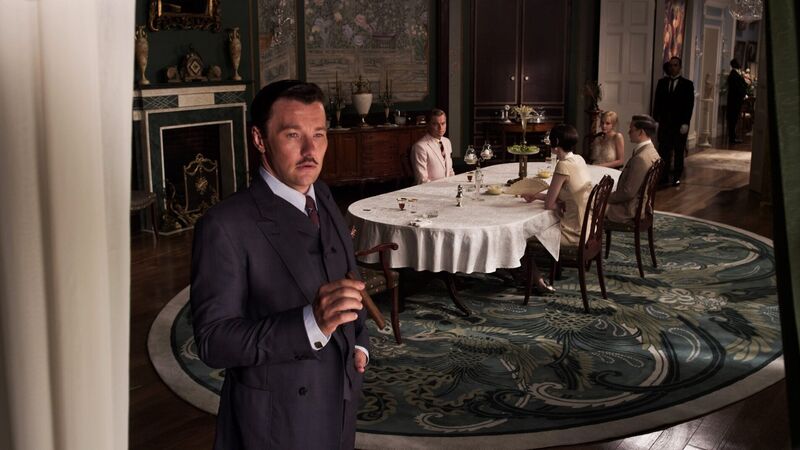
(Left to right) Joel Edgerton, Leonardo DiCaprio, Elizabeth Debicki, Carey Mulligan and Tobey Maguire in 'The Great Gatsby'. Jay Gatsby, for all his flaws, at least understood the need for discretion. File picture: Warner Bros

Remember the good old days when a man could become mysteriously rich and at least have the decency to be embarrassed about it.
Jay Gatsby, for all his linen suits and well-aged scotch, kept a certain hush around the origins of his fortune. There were whispers, certainly — bootlegging, organised crime, a hint of something vaguely unsavoury — but there was also, crucially, a sense that one ought not boast about it.
Wealth, if acquired dubiously, was to be worn like a slightly ill-fitting tuxedo: impressive at a distance, but faintly uncomfortable up close. Fast forward a century, and we have LinkedIn posts.
“Thrilled to announce I’ve 10x’d my portfolio betting on how many aid workers would be killed in airstrikes before dawn.” It’s not that the shame has gone, it’s just been replaced by emojis and follows.
Before we arrived at this new frontier of monetised misery, we had our apprenticeships.
First came cryptocurrency, that shimmering digital mirage sold as liberation from the tyranny of banks, governments, and basic comprehension.
It promised a decentralised utopia and delivered, instead, a decentralised panic.
You’ll remember the pitch. Money, but better. Invisible, but valuable. Volatile, but — this was the key — only in an upward direction.
A kind of financial helium balloon that would carry you gently skyward, provided you didn’t look down, ask questions, or attempt to cash out at an inconvenient moment.
It was, we were told, for everyone. The democratisation of finance. The little guy finally getting his shot. Which brings me to its target audience.
A school teacher. Sensible. The sort of man who owns a raincoat not because it’s fashionable but because it is, in fact, raining.
He had €10,000 in savings. A modest cushion, built up over years of marking essays on and confiscating phones during double maths.
He invested €5,000 of it in a cryptocurrency named after a titan from Greek mythology. He did not understand the mythology, nor did he understand cryptocurrency. This is not a criticism. Nobody did.
But he was told — by podcasts, by headlines, by a lad in the staff room who suddenly had strong opinions about “blockchain fundamentals” — that this was the future. And who wants to be the man who misses the future?
So he bought in. Not coins, exactly. Not something you could hold, or spend, or even convincingly describe to your missus. A series of numbers, stored somewhere, representing value that existed nowhere.
For all intents and purposes, he had purchased a thing that did not exist. And then, slowly, it continued not to exist.
Half of it evaporated. Not dramatically, not with a bang, but with the quiet dignity of a puddle on a warm day.
No one rang him to apologise. There was no office to visit, no manager to complain to. Just a graph, gently sloping downwards, like a polite suggestion that perhaps he should have kept his money in a credit union like his mother advised.
Who was cryptocurrency for? Not him, certainly. Not the cautious, the curious, or the merely hopeful. It was for those who got in early, got out earlier, and left the rest holding a bag full of digital air.
Then came NFTs.
If cryptocurrency was money that didn’t exist, NFTs were ownership of things that existed even less. Digital images — apes, appropriately — sold for sums that would have embarrassed Renaissance patrons.
You didn’t own the image, of course. You owned a token that pointed to the image. A receipt, essentially. A very expensive post-it note saying, “This jpeg is, in a metaphysical sense, mine.”
They were marketed as art, as community, as investment.
In reality, they were a test. Not of financial acumen, but of how convincingly one could pretend that something absurd was, in fact, profound.
And people did. Oh, they did. Entire ecosystems of influencers emerged, breathlessly explaining why a pixelated monkey smoking a cigar was not only worth six figures but was, in some intangible way, ‘culture’.
Again, who benefited? Not the latecomers. Not the school teachers. Not the ordinary people who saw headlines about overnight millionaires and thought, perhaps, they might have a small slice.
No, the winners were the usual suspects: early adopters, platform creators, and those with just enough cynicism to know when to cash out.
Which brings us, inevitably, to the next logical step.
If you can gamble on imaginary money, and speculate on imaginary ownership, why not bet directly on reality itself?
Enter Polymarket. An online platform where you can wager on the outcome of real-world events. Elections, wars, death tolls.
At first glance, it presents itself as a kind of crowdsourced prediction engine — a way of harnessing collective intelligence to forecast the future.
At second glance, it is a betting shop. At third glance, it is a betting shop where the odds are set by how much money people are willing to stake on human suffering.
You can, if you’re so inclined, place a bet on whether a ceasefire will hold. On how long a conflict will last. On outcomes that, for the people involved, are not abstract probabilities but lived realities.
There is something almost impressively bleak about it. We have taken the worst instincts of financial speculation — the detachment, the opportunism, the quiet thrill of profiting from volatility — and applied them not to markets, but to misery.
It is, in its way, the purest form of late capitalism yet devised.
Because at least with cryptocurrency, there was a veneer of innovation. With NFTs, a faint whiff of artistic pretension. Polymarket dispenses with all that. It is refreshingly honest.
This is gambling. This is profit. These are other people’s lives. And who is it for?
Not, again, for the school teacher. Not for those with €10,000 in savings and a vague sense that they should be doing something sensible with it.
The entry point may be low, but the game is not designed for them.
This is for those with capital to spare and the appetite to risk it. For people who can treat a geopolitical crisis as a line on a graph. For whom the outcome is, at worst, an interesting talking point over dinner.
“A terrible situation, of course, but the number of schoolchildren killed in the strike was over 100, so I did quite well out of it.”
The language around it is telling. “Markets.” “Positions.” “Liquidity.” It dresses itself in the vocabulary of finance, as if that somehow elevates it above the grubby world of gambling.
But a bet is a bet, whether you place it on a horse, a football match, or the duration of a war. The difference is that, traditionally, there were at least some boundaries.
Certain things were considered beyond the pale. You didn’t, for example, open a book on how many casualties might result from the next airstrike.
Not because it wasn’t theoretically possible, but because it was understood — quietly, implicitly — that some lines should not be crossed. Those lines, it seems, have been repurposed as revenue streams.
And the response? Applause. Engagement. A flurry of congratulatory comments from people who would, a decade ago, have struggled to explain what they actually did for a living, and now describe themselves as “macro traders” with a straight face.
Fools and their money are easily parted, we are told.
But it’s not just fools, is it? It’s the hopeful, the anxious, the ones who look at a world of rising costs and stagnant wages and think, perhaps, there is a shortcut.
A way to get ahead without waiting 30 years for a pension that may or may not materialise. They are not fools. They are, if anything, rational actors in an irrational system.
They should know that the system is not built for them to win. It is built for churn. For constant movement, constant speculation, constant engagement.
For a small number of people to make a great deal of money, and a much larger number to make a little less than they started with.
And all the while, the stakes escalate. From imaginary coins to imaginary ownership, to very real consequences.
Gatsby, for all his flaws, at least understood the need for discretion. There was a sense, however faint, that certain things were not to be flaunted.
Now, the more brazen the profit, the louder the applause. The less tangible the product, the greater the hype.
And the more closely tied your gains are to someone else’s loss, the more likely you are to be congratulated for your “insight”. It is, one suspects, not progress. But then again, progress has always been a matter of perspective.
If you’re the man placing the bet, it probably looks quite promising indeed.


CONNECT WITH US TODAY



Be the first to know the latest news and updates