Gareth O'Callaghan: The biggest mistake I ever made? Letting go of the soundtrack of my life
A lifetime vinyl collection once mapped the soundtrack of youth — until one impulsive decision sent it all away
Gareth O'Callaghan: The biggest mistake I ever made? Letting go of the soundtrack of my life

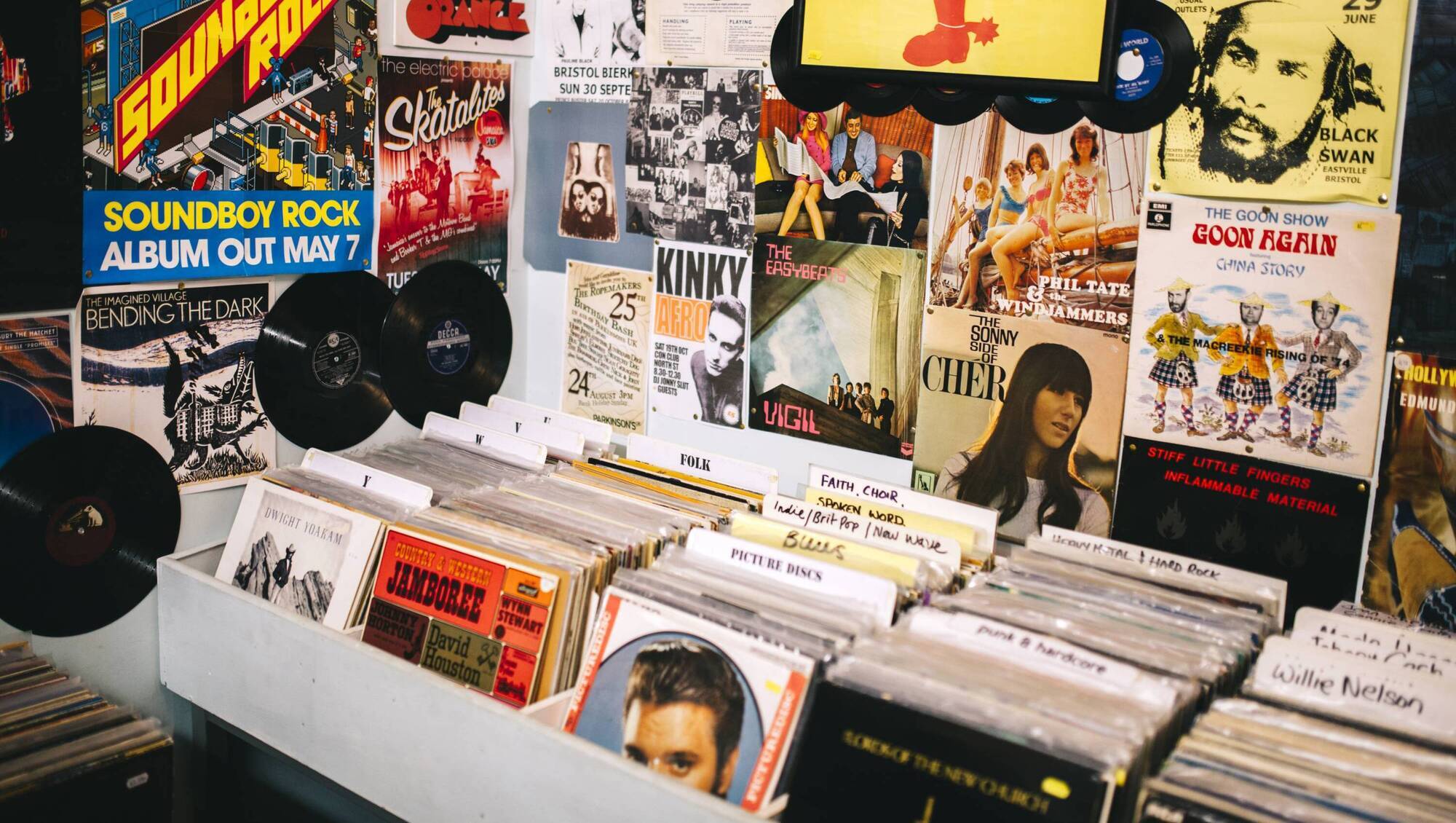
Browsing in a second-hand record shop, Gareth O'Callaghan made a shock discovery that catapulted him back to the 1970s and the start of his love for vinyl records. Picture: iStock

Imagine if you could travel back in time briefly and reverse a decision you made at some point that you still regret, what would it be? 

I was asked that question recently. For me, it’s something that still nags at me many years later. It had nothing to do with work choices, or bad investments, or buying a ridiculous sports car when I could least afford to. No, it’s something far more bittersweet.

I dearly wish to this day that I hadn’t ditched my vinyl music collection. To put it in context, this wasn’t a small tidy collection of LPs that you might neatly tuck away at the end of a bookshelf, or underneath a television screen.

This was a sprawling repertoire of thousands of vinyl albums that took up two full walls. Others were stacked in corners and cupboards. Another pile took up a corner of the hallway.

It was — in hindsight — a treasure trove of musical antiquity that mapped out a lifetime love of music in my childhood of the 1960s, my teenage years in the ’70s and on through my 20s.

We all have ways of recalling milestones in life that instantly take us back to those moments — medals and trophies, certificates, concert tickets, photograph albums, signed autographs, even boarding passes. 

Mine was music: Bridge Over Troubled Water, Tapestry, Songs of Love and Hate, Wish You Were Here, Blood on the Tracks, Born to Run, Songs in the Key of Life, Hotel California, Rumours, Bat Out of Hell, Heroes, Out of the Blue

Too many to mention here; all first editions, pristine in condition.
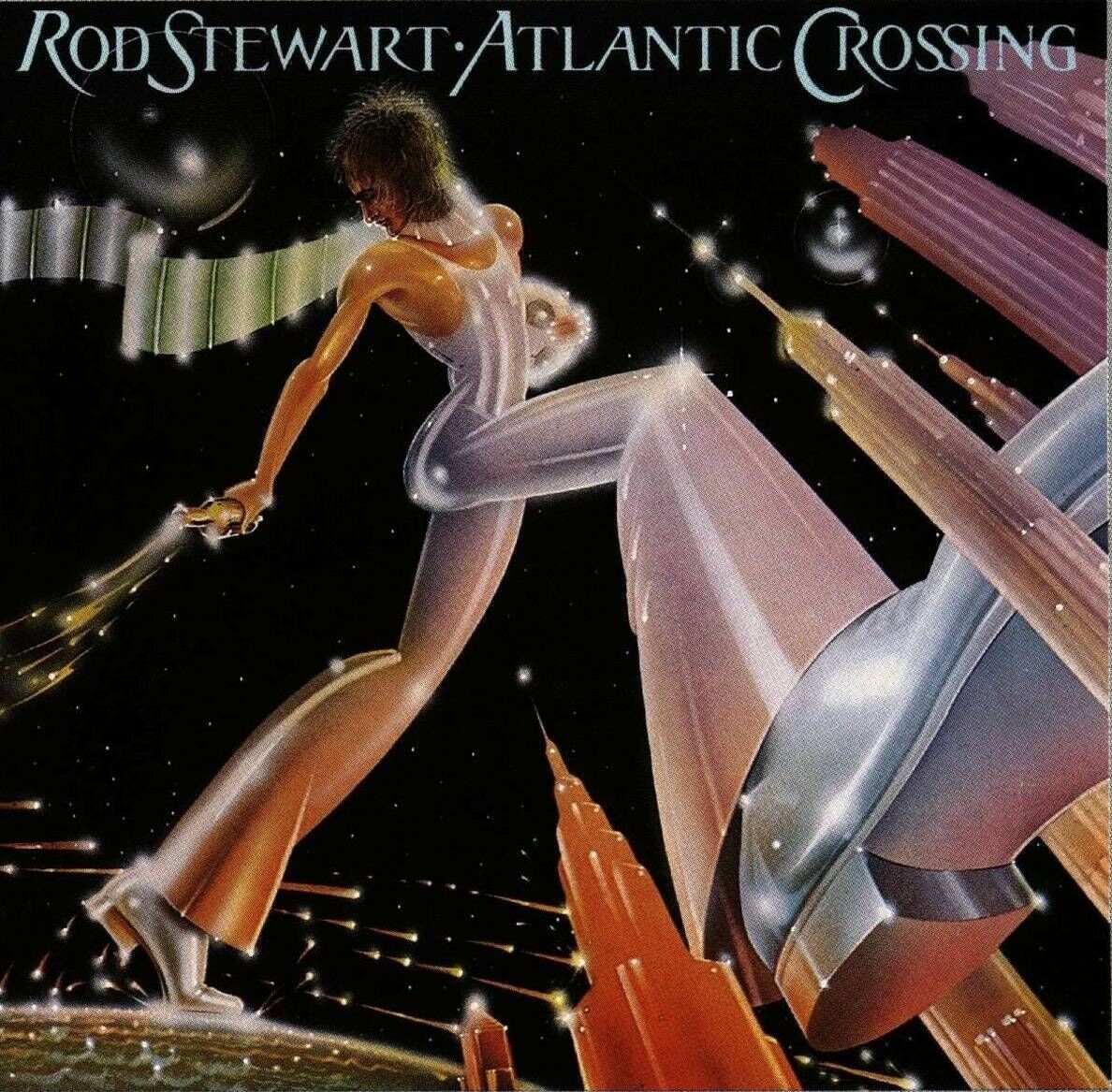
The first LP I ever bought was Atlantic Crossing by Rod Stewart

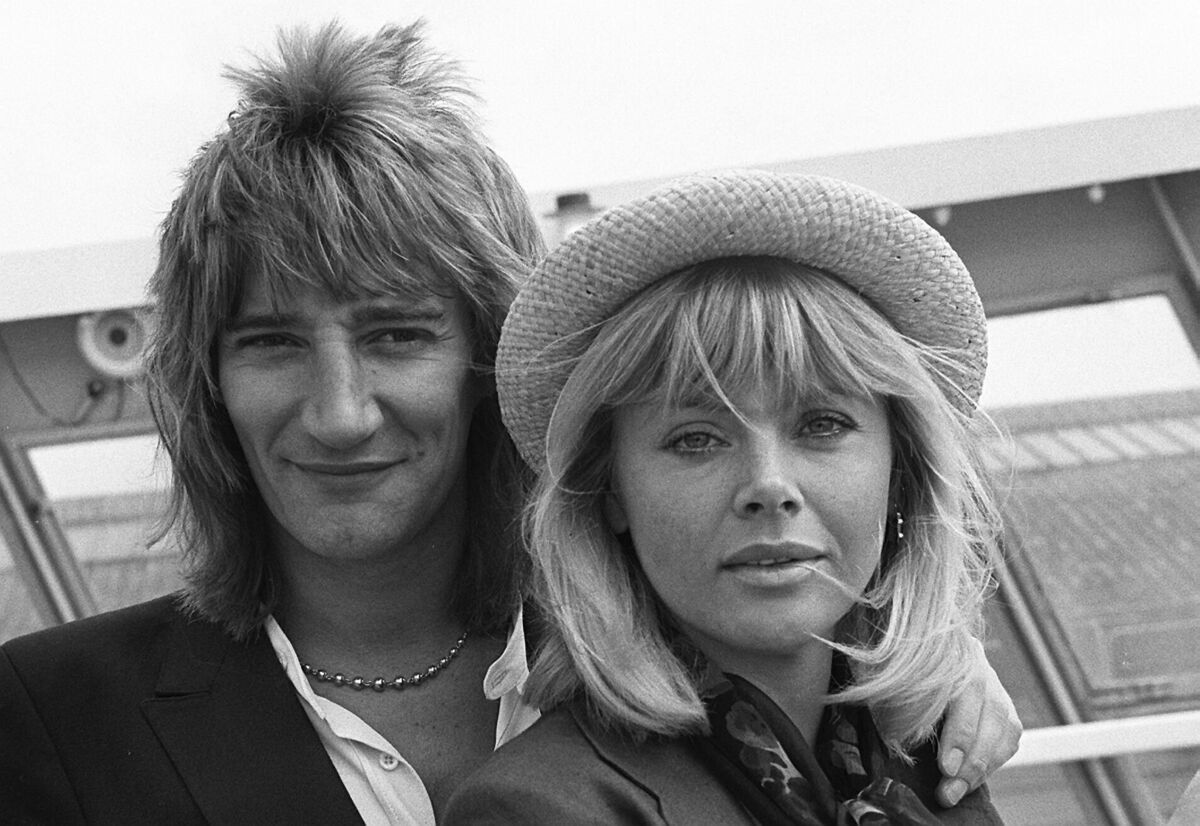
It was divided into a fast side and a slow side, as suggested to Stewart by his then-girlfriend Britt Ekland.

Rod Stewart with his then wife Britt Ekland in 1977. It was on Britt's suggestion that he divided his 1975 album 'Atlantic Crossing' into an upbeat side and a slower side. File picture: PA

It contained two of his greatest songs — Sailing and I Don’t Want to Talk About It. But it was his poignant retake of the Isley Brothers’ song This Old Heart of Mine that stole my heart. 

The album cost me the princely sum of £4.99.

Most records in the ’70s were being recorded for the first time in stereo which was a more expensive format than mono. Once stereo production started, vinyl records almost tripled in price. Then add to that the import charge of shipping them here from abroad.

Once I left school and found a job, most of my wages were spent on vinyl. But it was all part of a plan. I had no intentions of building a secure pensionable career in insurance or accountancy, where I had struggled for almost three years. I wanted to be on radio, and building a solid music collection was part of that dream. The rest, as they say, is history.

Looking back, I could have had a deposit for a house by the time I was 21 if I’d just had the willpower to walk past the record shops I spent hours in during those years, but that’s what the power of music did to me. In Andrew Lloyd Webber’s famous words, “Hear it, feel it, secretly possess you”.

Vinyl countdown 

There was nothing quite like the joy of carrying a brand new vinyl album home on the bus. It was a liberating experience for any teenager. Once back in my bedroom, the ritual began. 

I carefully unpacked the sleeve from the cover. Before taking out the vinyl, I would study the cover’s artwork. If I was lucky, the album might contain liner notes and art prints, maybe even lyric sheets.

Then came the moment of discovery. Watching the diamond stylus make contact with the vinyl, listening to the gentle familiar sound of the crackle as it drops. And then came the music, so breathtaking it’s still impossible to describe.

Vinyl has the ability to reproduce music with the finest clarity, unlike compressed digital formats which often lose the superior sound staging of vinyl. 

The old-fashioned LP retains the full frequency range of the master recording, which is why I can still hear every instrument finding its rightful place on those glorious tracks on Atlantic Crossing.

I got rid of my record collection 

But then, 20 years ago, I emptied off the shelves, cleaned up that hallway and got rid of the lot. Why? I have no idea. Whenever I look for a reason, it doesn’t make sense.

Perhaps it was a midlife crisis, or a blast of sheer madness. In the space of a week, every LP with its emotional links to some important aspect of the decades of my life was gone.

I was foolish to believe that vinyl was a thing of the past, but no one was talking about a vinyl revolution back then. What was once my pride and joy, a sign of my success, had become a daily reminder of hoarded clutter. It had to go.

Most of it went to charity shops. A few hundred here, a few hundred there. I set up a stall at a car boot sale. Classics that cost me an arm and a leg were sold for a pittance to a second-hand record shop in Dublin. Almost a hundred favourite albums bagged me barely €40. One of them was Atlantic Crossing.

Rod Stewart's classic 1975 album, 'Atlantic Crossing' was one of the thousands of vinyl albums that Gareth O'Callaghan sold off or gave away about 20 years ago. File picture

Yes I know, it’s a first-world problem, but I still kick myself. If the entire collection had been stolen then at least I could have blamed someone else. But this was all of my own doing.

Imagine giving away your gleaming black historic Mercedes convertible that you had lovingly restored to a blank stranger, or your villa in Quinta do Lago, or even your passport.

This wasn’t just a bundle of old dusty records. Each of these albums shared a part of my life. They helped me celebrate. And when the clouds came down, as Maya Angelou put it, “Music was my refuge. I could crawl into the space between the notes and curl my back to loneliness”.

You either get it or you don’t.

If you do, you’ll know that a vinyl collection slowly becomes a collective masterpiece that preserves moments in time. Not quite as moving as the ceiling of the Sistine Chapel maybe, but I’m a great believer in how beauty subjectively impacts the eye (and ears) of its beholder.

Record collection founded my dream

Like any relationship, a vinyl collection needs to be nurtured. It’s not a phone app. Unlike Alexa, it has seen you through years of joy and pain. It’s your go-to when you need to escape. It needs care and attention.

I remember dabbing those albums with watered-down isopropyl alcohol to keep them free from dust and restore their jet black shine.

Every album label bore the insignia TGM, written in black. Each new addition as it joined the collection was inscribed with the letters. It’s so long ago now that I can’t remember what the initialism stood for.

And then, out of the blue, I was reminded of it all when Paula and I were visiting friends in Scotland last year.

While out walking, we called into a second-hand record shop. Combing through old albums, I found Atlantic Crossing. Something told me this wasn’t just any old copy. And then, there it was — TGM. It was my album.

I asked the owner for a price. “It’s a rare original,” he said. “Fifty quid and it’s yours.” And to think I sold it for a measly 50c when it was mine. I put it back and left the shop.

With the help of an expert in collectibles and a long list of titles constructed from memory, I found out recently that my old vinyl arsenal would have a street value today in excess of five figures. If I still had it all, would I be tempted to sell? In a word, no. That collection was the foundation of a dream that came true.

In our modern soulless world of virtual experiences and instant gratification, I hope those vinyl LPs, wherever they are, are bringing as much joy to the strangers who bought them as they once did to this old heart of mine.

x

More in this section

Revoiced

Newsletter

Sign up to the best reads of the week from irishexaminer.com selected just for you.

Cookie Policy Privacy Policy Brand Safety FAQ Help Contact Us Terms and Conditions

© Examiner Echo Group Limited