Gareth O'Callaghan: Recording tragedies like Luke Hyde's should carry criminal penalties
A disturbing shift has emerged in Irish society — one where filming human tragedy trumps helping, or even feeling
Gareth O'Callaghan: Recording tragedies like Luke Hyde's should carry criminal penalties

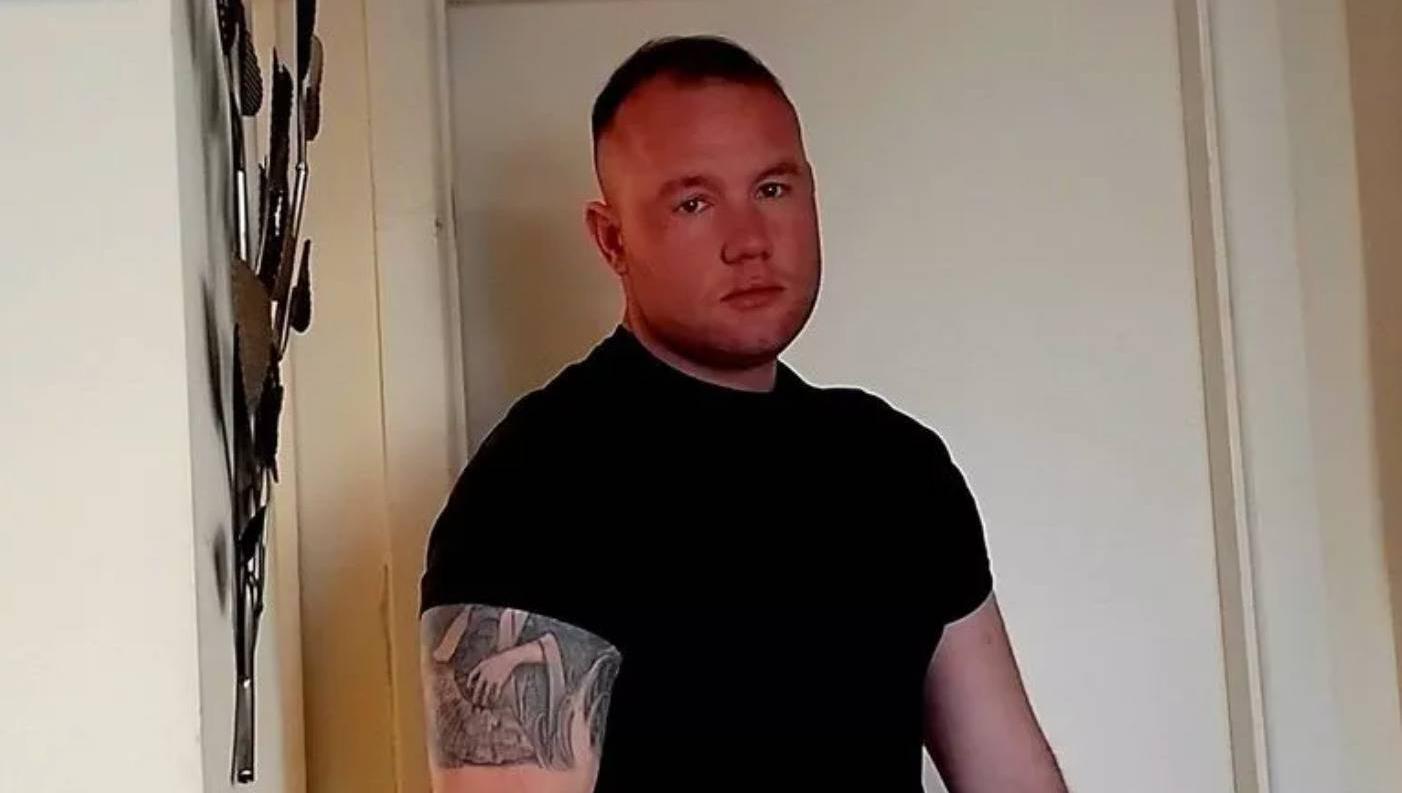
Luke Hyde who drowned in the River Lee last week while crowds of people filmed on their smartphone cameras.

Years ago, I reached the conclusion that life isn’t weird, it’s just the people in it.

An old acquaintance crossed my mind last week. Somewhere back along life’s timeline, I came to distantly know a man, who may have been described back then as a 'weirdo'. 

His favourite pastime involved tailgating ambulances and fire brigades on their way to road traffic accidents. He would spend hours eavesdropping on conversations between the emergency services on his digital radio scanner, while often being the first to arrive at accident locations.

In hindsight, he struck me as someone with an untreated mental illness — dangerously lost between reality and fantasy, perversely enjoying the adrenaline rush that he got from wailing sirens and flashing blue lights.

While the emergency crews tirelessly worked, he would discreetly snap away on his disposable camera, taking photos of seriously injured people trapped in that liminal state where living or dying is an even possibility. His gruesome hobby came to a sudden end one day when he was met by two detectives at the chemist where he dropped off his photo rolls for developing.

Years later, he took his own life.

Luke Hyde

I was reminded of him when news reached me just over a week ago, as reported on these pages, that a huge crowd had gathered on Pope’s Quay, and across the Shandon Footbridge, close to Cork City centre on what was a beautiful balmy Wednesday evening. A young man called Luke Hyde had got into difficulty as he was swimming across the north channel of the river to Lavitt’s Quay.

There was a time not so long ago when any passerby with a conscience who happened upon a life-threatening incident like this would have tried to do whatever they could, even to the point of risking their own life, to try to get him to safety. Instead, many in the crowd spent those crucial minutes training their smartphone cameras on a man who was desperately struggling to stay alive and videoed his final moments as he entered that liminal state where living or dying is an even possibility.

Luke Hyde drowned, while some of the crowd got what they wanted — photos and videos of a tragedy that could have been prevented. Luke’s friend who had been swimming with him survived. Questions need to be asked in the aftermath of this tragedy.

First, and most obvious: is anything — including the life of a young man — still sacred? It appears the answer is no, not any longer. Nothing is sacred. Conscionable respect is off the menu. For those who pointed their camera phones into the water that evening, everything in life today has simply become an ingredient for the fast food of self-gratification — a selfish craving that needs instant satisfying.

We have become the generation of schadenfreude — looking for every opportunity to gain some form of perverse pleasure from other human beings’ misfortunes

There are three lifebuoys on the wall at Pope’s Quay and another three on Lavitt’s Quay. Only one of them was thrown into the water. Why? How can a bunch of strangers simply dehumanise a person who is clearly dying in front of their eyes, while keeping their camera lenses perfectly still and focused on him as he flails about in the water begging for their help?

What’s going through their minds as they intrude on these shocking death throes, as the unfortunate victim of circumstance finally slips below the surface, unable to fight anymore?

The sad reality is that schadenfreude occurs when empathy — the ability to imagine ourselves in another’s place and understand how that person much be feeling — is absent.

Alfred Adler once said: “Empathy is seeing with the eyes of another, listening with the ears of another and feeling with the heart of another.” Without empathy, all conscience is lost. We no longer respond to being human in its pitying and most compassionate sense. Without empathy, we are nothing more than artificial intelligence — cold and void of feelings and affection.

Personal experience

Just over two years ago, I found myself on the receiving end of schadenfreude. I almost died that Sunday afternoon following a serious car crash on Horgan’s Quay, close to Kent railway station.

My injuries included a broken back, fractured neck, punctured lung, and internal bleeding. Fire crews had to resort to cutting the roof off our car in order to free me.

As I lay on a stretcher alongside the wreckage of the car while paramedics worked to stabilise my injuries before taking me to the ambulance, all I could move were my eyes. At that moment, I counted at least 10 passengers standing at the upstairs windows on a private coach that was moving slowly past the crash scene.

They were all videoing me, as I lay terrified in that liminal state where living or dying is an even possibility.

I had an idea how badly injured I was, and that my survival was out of my hands.

Despite the horrendous pain I was in, all I could do was watch them, as they recorded every second of my visible distress.

One of the paramedics called them “a bunch of evil bastards”.

Is evil too strong a word for people who video human tragedy? I don’t believe so.

Victim traumatisation is not a new phenomenon. It’s how conscionable people feel unsettled and emotionally overwhelmed when they witness the suffering of others. It doesn’t mean you’re weak or overly sensitive; it’s a reflection of your ability to feel empathy for others — including people you don’t know.

Those who stood around videoing a drowning man last Wednesday week weren’t traumatised by what they were witnessing. If they were, they would have reacted in a more compassionate way.

In November 2018, a police officer from Staffordshire Police was sacked for showing his colleagues footage from the aftermath of a fatal crash between a motorbike and a truck. Andrew Parry had transferred the images from his body cam to his phone. His bosses said he had betrayed his “responsibilities” to the deceased.

Is there really any meaningful justification for people who video tragic incidents? Ours is the culture of photos and videos; of how TikTok and Instagram, among others, have become the filters through which most people make sense of a life they share with other people they’ve never met.

Videos of a dog howling along with a fire engine siren, or a toddler laughing hysterically are cute and refreshingly uplifting. Sharing personal footage of drownings and car crash victims are not, and they should carry criminal penalties. When you video real-life tragedy, you are exploiting both the victim and the family.

Listening to Luke Hyde’s mother, Lily, talking to Cork’s Red FM in the aftermath of her son’s drowning was heartbreaking. “It was like a circus, watching my son drown, instead of trying to help him,” she said.

The Protection of Accident Victims from Non-Consensual Recording of Images Bill 2022 was introduced to an Oireachtas justice committee last June by Labour TD Duncan Smith. Under the private member’s bill proposed in the Dáil, recording and sharing images of victims of road traffic accidents and other such tragic situations would become a criminal offence, carrying fines of up to €5,000 and imprisonment of up to 12 months.

“Nobody should ever see the victim of a traffic accident in shock or a minor or serious injury or death on a WhatsApp message, TikTok, Instagram, Facebook or anything else,” Mr Smith told TDs.

Would such a law be enforceable? It’s difficult to see how, given the lengths many people go to on social media to hide their real identities, and given how under-resourced the gardaí are.

Throw in a string of legal challenges questioning the expectation of privacy in a public place, which in reality, it could be argued, is a contradiction. It won’t happen soon — that’s for certain.

In the meantime, finding fascination in what would make most decent people sick will continue, while victims and their families will go on being exploited by weirdos who are no different to my old acquaintance, and his ghoulish obsession with tragedy and suffering.

More in this section

Revoiced

Newsletter

Sign up to the best reads of the week from irishexaminer.com selected just for you.

Cookie Policy Privacy Policy Brand Safety FAQ Help Contact Us Terms and Conditions

© Examiner Echo Group Limited