Elaine Loughlin: Fate of special court would be parting gift to SF in power
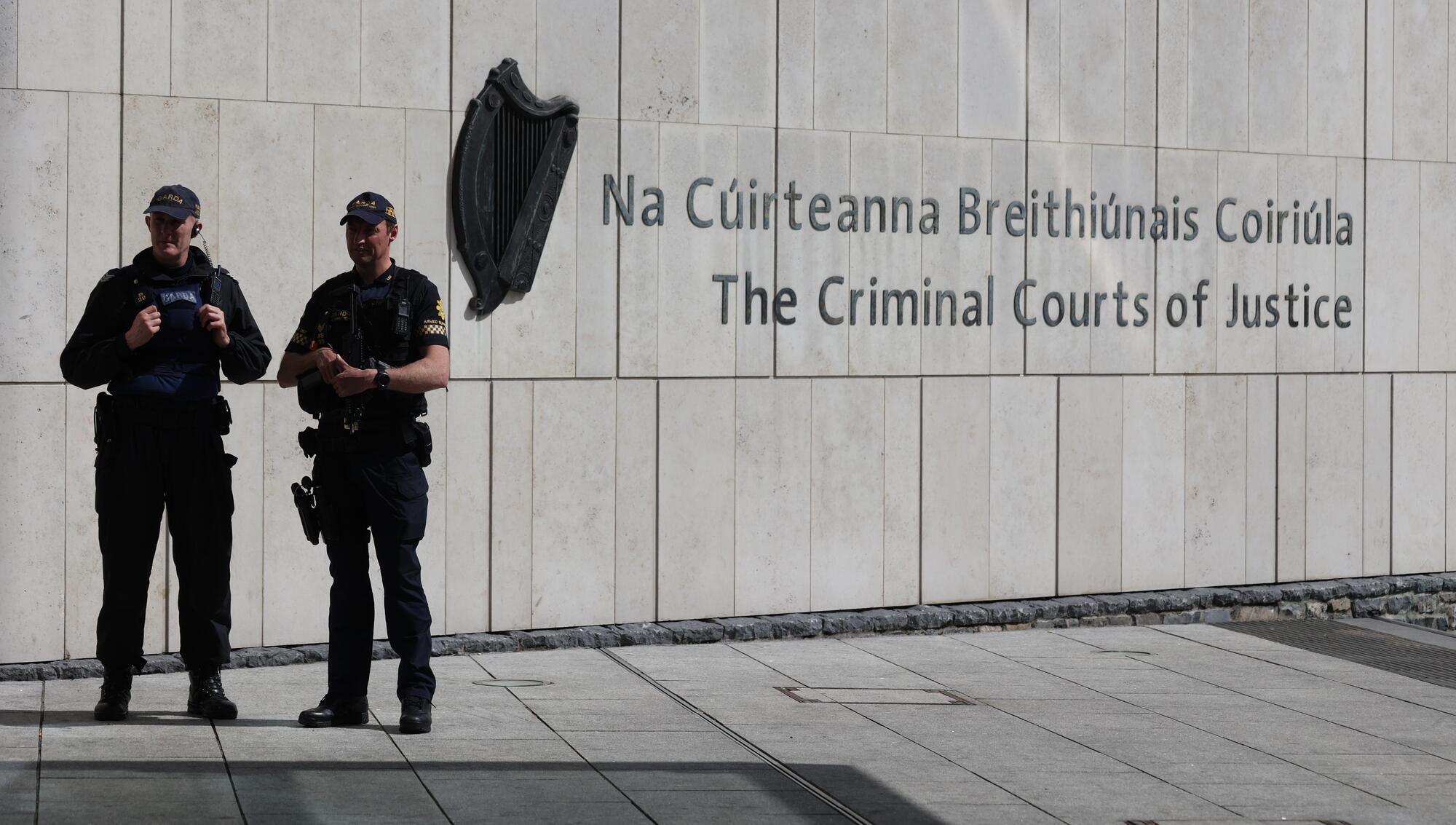
Members of the Garda Armed Support Unit outside the Special Criminal Court in Dublin.

If Sinn Féin wins the next election, one of its first tasks will be to make the Special Criminal Court a permanent fixture — this from a party that opposed the court for years.
The juryless court was established as an emergency measure to deal with what was a significant and very real threat from terrorist organisations to the State, but more than four decades on what was initially used as a temporary response remains in place.
The current government has now been provided with a series of recommendations setting out how the court must be reformed. Among the key recommendations are the establishment of a new and “improved” permanent non-jury court to replace the existing ‘emergency’ SCC and tighter laws over its use.
While the coalition accepts that such reform is needed, it is unlikely that ministers, especially those in Fine Gael, will want to act too swiftly for fear of giving Sinn Féin "an out" on the contentious issue ahead of the next general election.
Ministers have pointed to the complexity of such reforms and the need to ensure any changes do not create further problems down the line.
"I don't see it being done in the lifetime of this Government. I see substantial work being done but I don't see it being completed," said one senior government member this week.
Instead, the SCC will be a parting gift of this government to any new Sinn Féin-led coalition, but it's unlikely to be neatly parcelled up for them to deal with in a tidy fashion.
After receiving the recommendations of the independent expert review group, Justice Minister Helen McEntee stressed the need for input from the DPP, the gardaí, the courts and other government departments.
Sinn Féin had been staunchly opposed to the non-jury court until 2021 when the party's Ard Fheis voted to end its long-standing opposition, which has been used to try prominent gangland personalities and members of the illegal organisations such as the IRA.

It's among a number of policies that have been diluted in recent times as the party gains significantly more public support and veers closer to the middle.
The party also made a submission to the review group and has come round to the view that non-jury trials are acceptable in exceptional circumstances.
Sinn Féin does say, however, that each case would have to be decided on its merits and that reasonable and objective grounds would have to be given for any decision to hold a non-jury trial.
But it would undoubtedly be more than a little ironic if one of the first measures to pass under Mary Lou McDonald's leadership was to put the 'emergency' court on a permanent basis.
Or perhaps it is just another reminder of how far the party has come on many issues, including that of the SCC.
This week, Sinn Féin again abstained in a vote to retain the SCC, which comes under the Offences Against the State Act that must be renewed on an annual basis.
Sinn Féin had tabled its own amendment calling on the minister to bring forward legislation to implement the recently published recommendations of the Independent Review as soon as possible instead of continuing with the Criminal Justice Act in its current form.
But, of course, it's not as simple as that; the expert review group published both a majority and a minority report with differing recommendations in each.
Both reports agreed on repealing the Offences Against the State Acts but differ on what should replace it.
The 225-page majority report calls for a new permanent non-jury court, which should have “a stricter approach overall, with more checks and balances”.
It also suggests that the current “scheduled offences” that are sent to the court should be abolished and replaced with an “assessment” of the circumstances of each case.
Meanwhile, the minority report stated that rather than becoming a "normalised or permanent fixture of the court system", non-jury courts should be used only in circumstances where there is a "real and present danger of jury intimidation or tampering.”
It also disagreed with the majority recommendation that the non-court could be used for “any serious offence” where the ordinary courts were deemed inadequate and stated this was “too great a change” and could go “well beyond” terrorism and organised crime.
It means that before any work to overhaul the court can begin, decisions will have to be made as to which of the recommendations are adopted.
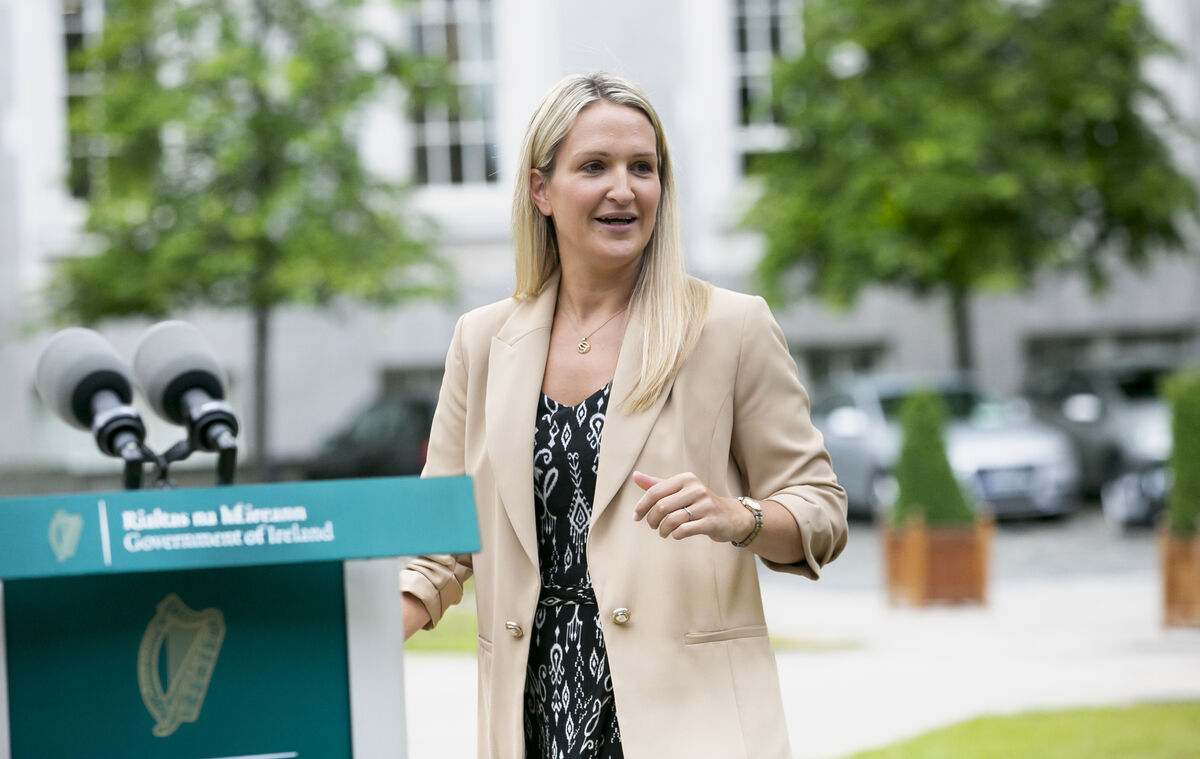
The Sinn Féin amendment did not fully spell out which options it wants the Government to accept and implement.
Ms McEntee strongly hit out at the opposition party over this lack of clarity, accusing them of continuing to "sit on their hands" when it comes to decisions of huge significance.
She accused Mary Lou McDonald's party of spending "decades defending and supporting attacks on our State and our criminal justice system — supporting those who murdered gardaí".
"Sinn Féin cannot be trusted with our criminal justice system. It can only be trusted with finding itself an excuse not to do the right thing."
But Féin's justice spokesperson Pa Daly hit back at the lack of urgency from Government stating that there is "no desire to grasp the baton from the review committee and to carry it along to the final lap to legislation to improve, to renew and to modernize" the SCC.
But it may be Sinn Féin that is fueling this "lack of desire" rather than any unwillingness to bring about change.
One minister said: "There is another timing issue going on here too. The suspicion is that Sinn Féin is moving towards the centre and is looking to this as a hook that Sinn Féin can use to finally support the Special Criminal Court."
He added: "It may not suit to give Sinn Féin that before the next general election."
Government sources do not believe that the new court will be in place ahead of next year's renewal vote.
"I don't see it being ready for next summer, one way or another because the Department of Justice is absolutely swamped and the people who would be doing this are already working on other priority legislation," one source said.
This was echoed by Senator Michael McDowell, who as a barrister and former justice minister himself, should have a fair idea of how long major reform of the judicial system might take.
"I think it will take longer than 12 months to get all the ducks in a row to do what is necessary," he said.
"There is no point in making a mess of this vital piece of legislation or rushing at it in a way that leaves loopholes, which will affect the security of the State."
This means that Sinn Féin will again be forced to abstain in a vote to continue with the SCC in its current format this time next year, the party will also go into a general election with a vague record at best on the controversial court.
"No matter what way it is, it will be an issue in the general election," said a senior Government course who added that this "certainly would not be a motivating factor to get it done quickly."
Calling out what he describes as the "lethargy, the prevarication and the excuses layering across each other" in relation to acting on the report, Mr Daly this week called on the Government to implement the recommendations.
In yet another political twist, he could well be the minister who finally introduces the changes and puts the SCC on a permanent footing.

CONNECT WITH US TODAY



Be the first to know the latest news and updates