Maeve Higgins: US saves the banks while the rest of society is left to rot
Our biggest crisis is global warming, yet we do not tackle it with any of the urgency as bailing out the banks
Maeve Higgins: US saves the banks while the rest of society is left to rot

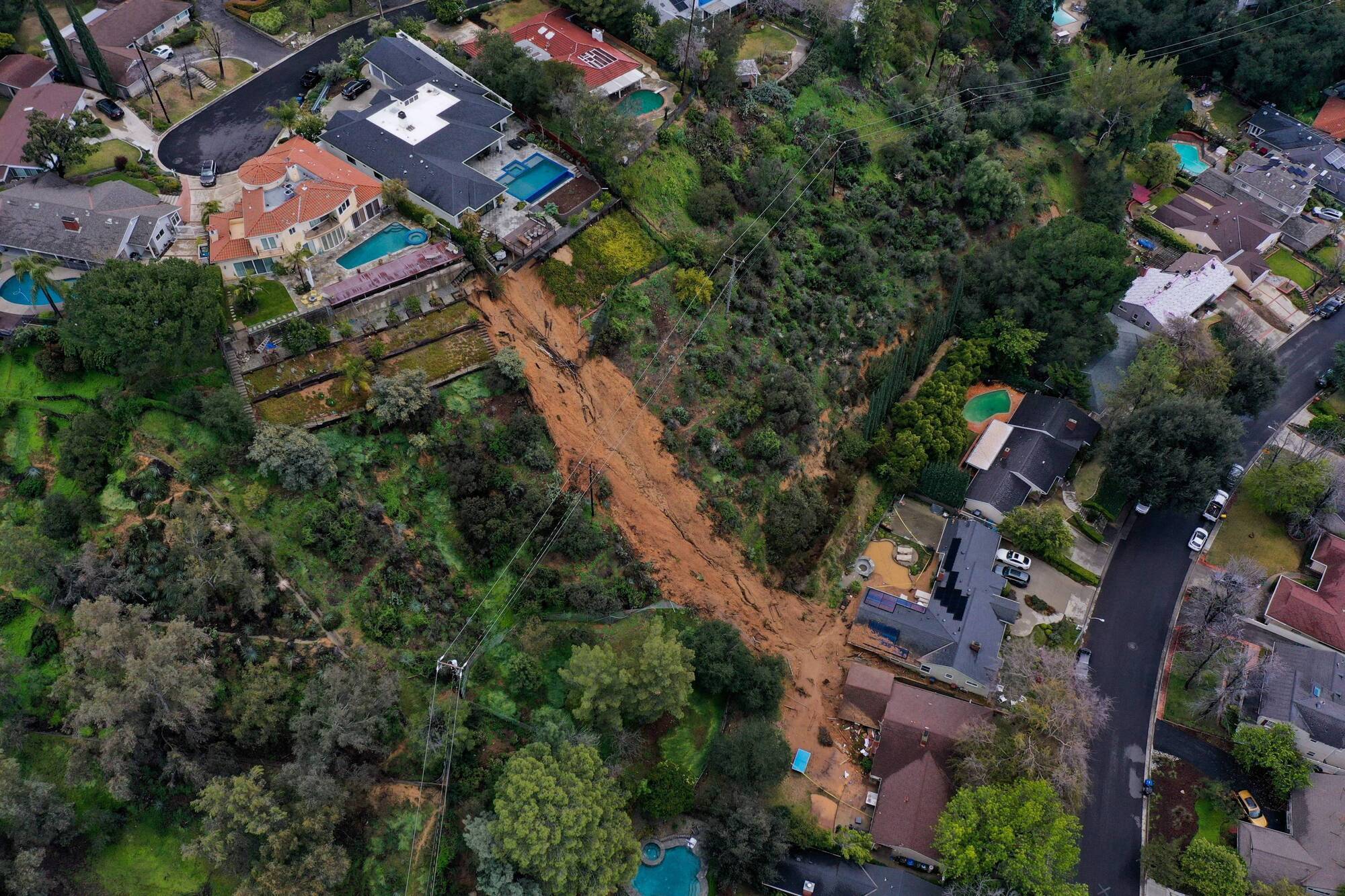
An aerial image shows mud flows from a landslide that damaged homes following heavy rain during winter storms last month in Flintridge, California. Picture: Patrick T Fallon/AFP via Getty Images

The state of California is named after a mythical paradise in a 16th-century Spanish novel. 

Perhaps it once seemed like a paradise, but today even the pockets of nature that survived the growth of cities and industry in the last two centuries are struggling to withstand the climate chaos caused, in part, by those very cities and industries.

On Tuesday, California governor Gavin Newsom expanded a state of emergency to cover most of the state's 58 counties as high winds and intense rain caused power outages and general havoc.

So it’s a stretch to call California a paradise, but it remains full of myths.

Two of the most sustained and powerful myths were present in different parts of the state last Sunday.

In Hollywood, the myth of the American dream was invoked by the actor Ke Huy Quan in his Oscar acceptance speech. 

He won the Oscar for best supporting actor in Everything Everywhere All At Once and said through tears: “My journey started on a boat. I spent a year in a refugee camp, and somehow I ended up here, on Hollywood’s biggest stage.”

For Ke Huy Quan, who won Best Supporting Actor in 'Everything Everywhere All at Once' the American Dream became a reality. But this is the exception rather than the rule. Picture: Doug Peters/PA Wire

For him, the American Dream myth finally became a reality.
That same Sunday, another myth shattered: the libertarian technocratic myth that capitalists are better off on their own, the myth that the free market is a great idea and they make their own luck. 

Once more, they needed all the help they could get following a frantic few days in the financial world that included an old school run on banks. And sure enough, on Sunday, the government announced a massive bank bailout.

The crisis was precipitated by the collapse of Silicon Valley Bank, headquartered 300 miles north of Hollywood.

For all nominees and their teams, the night before the Oscars has got to be nerve-wracking.

But it seems the real panic in California that night was happening in the financial sector, one we are all roped into, whether we like it or not.

In the New York Times, representative Ro Khanna, a California Democrat, said that he told Steve Ricchetti, a top White House aide and close adviser to President Biden, that they needed to save the Silicon Valley Bank.

“I said, Steve, this is a massive issue not just for Silicon Valley, but for regional banks around America,” he said.

As the red carpet filled up on Sunday, the Federal Deposit Insurance Corporation (FDIC), the Treasury Department and the Fed announced to depositors and investors of the bank that the FDIC would protect all of their funds.

As the Oscars kicked off, the Fed announced an emergency lending programme to cover even more deposits in other banks too — they pulled out all the stops to end the panic and get some confidence back in capitalism.

Of course, the speed and ease with which the government rescued money made me furious.

There are a thousand easy questions to ask and maddening comparisons to make. Why can’t the government fly into action and pay just a fraction of the bailout to provide clean drinking water to Flint, Michigan, years after their supply was found to be poisonous? 

Why is the Supreme Court working hard to block $10,000 of student debt instead of giving people some small amount of relief for what were often predatory loans when they tried to get educated?

On Monday morning, President Biden tried hard not to frame it as a bailout. He pointed out that the bank’s managers would be investigated and prosecuted if necessary, and that technically, no taxpayers’ money would be used.

For those of us who have lived through bank bailouts before, we know the drill. 

Sure, this time the bank itself was not saved and the shareholders in the bank and some unsecured creditors were not protected by the new guarantees. But there will simply be another bank promising the impossible — infinite growth — and crashing to Earth again soon.

This is all as predictable as the reasons for the bailout in the first place. 

Like the subprime mortgage fiasco — the one that led to the last global financial meltdown — this mess was caused by capitalists who simply would not contain their greed.

The details of this particular failure is that Silicon Valley Bank put much of its customers’ deposits into Treasury bonds and mortgage bonds that promised returns over many years — when interest rates were low. 

But with inflation jumping, the Fed increased rates and the value of those assets dropped. Yes, the bank ran out of money!

It’s tempting to say ‘you had one job’ here, but that would only work if the bank’s job actually was looking after people’s money. 

That is not what banks do, they exist to profit from us and our money, and when they get even that wrong, they demand to be saved and we save them. Silicon Valley Bank failed because it got too big too fast and put profit over people.

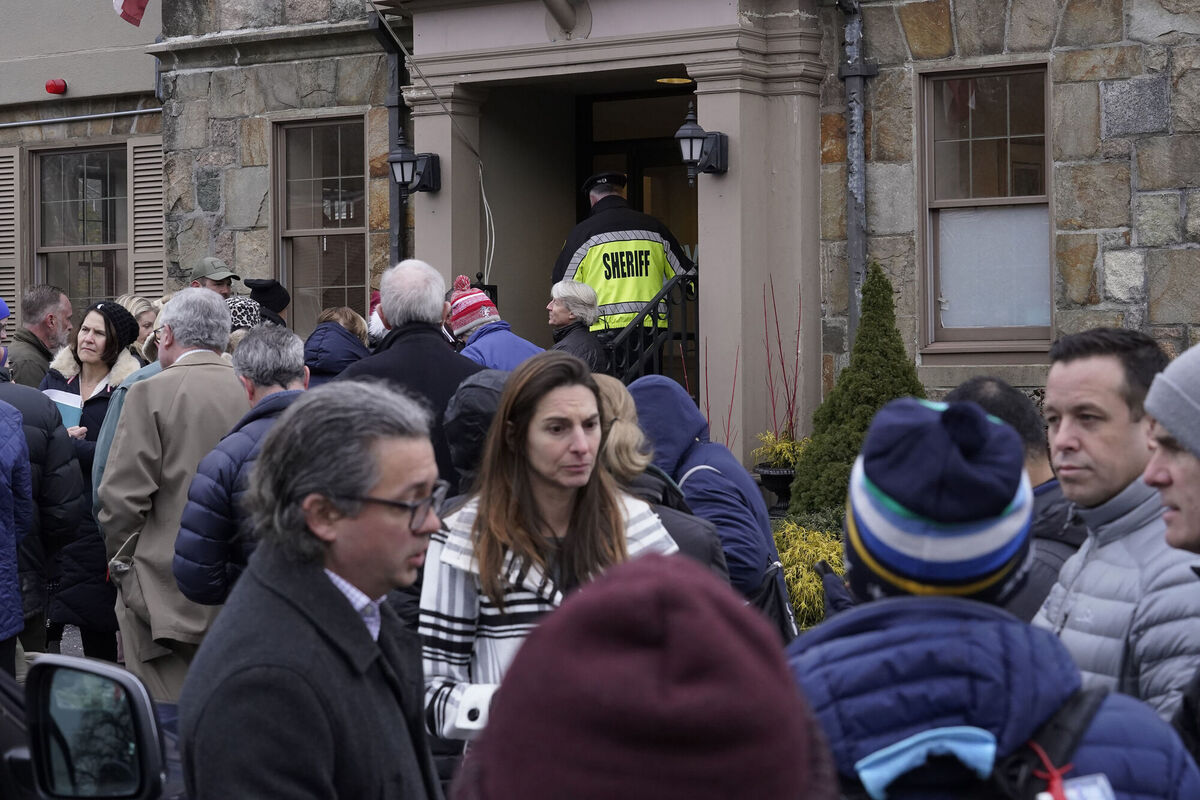
A law enforcement official stands in an entryway to a branch of Silicon Valley Bank this week as customers and bystanders line up outside. Picture: AP Photo/Steven Senne

The story is not yet over. As I write this there are other banks, far from California, wobbling now too because they’ve been caught cheating and lying. Perhaps they will crumble.

The myth of the free market and the American Dream collided on the Oscars stage in the final moments of the ceremony. Continuing its victorious sweep, Everything Everywhere All At Once won the Best Picture Oscar. 

The film’s producer, Jonathan Wang, thanked his father “who like so many immigrant parents, worked himself into an early grave”.

“I know he would be so proud of us, not because we won this award, but because we made this film with the values he instilled in me,” Wang said.

He continued, full of emotion: “No person is more important than profits.”

That was a slip-up, it was obvious he meant the exact opposite, that people are more important than profit.

Ironically, what he did say was exactly the right sentiment for that night in California, as profits were protected and people were not.

Outside theatres in Hollywood and banks in Silicon Valley, the weather raged

The wind reached hurricane speeds, knocking out power and smashing the glass windows of a skyscraper in San Francisco. 

Rivers breached their levees in Monterey county and water flooded homes and washed out roads.  Tons of snow has blanketed the San Bernardino mountains, causing at least one fatal car accident and trapping people in their homes for up to 10 days.

The extreme weather is caused by atmospheric rivers, made much more intense by warmer air caused by global warming. 

But somehow, that crisis, the biggest one facing us all, does not create the same urgency.

The banking industry is complicit in global warming, funding other industries and corporations that profit from the chaos and death that the climate crisis will continue to cause. 

Yet the banking industry — the money and the people who prize that money over everything else — is what we save.

CLIMATE & SUSTAINABILITY HUB

More in this section

Revoiced

Newsletter

Sign up to the best reads of the week from irishexaminer.com selected just for you.

Cookie Policy Privacy Policy Brand Safety FAQ Help Contact Us Terms and Conditions

© Examiner Echo Group Limited